President William Ruto has placed the expansion of the Standard Gauge Railway (SGR) at the centre of Kenya’s plan to stay competitive in regional trade, arguing that faster rail transport is crucial to job creation, safer roads, and the country’s position as the main gateway for East and Central Africa.
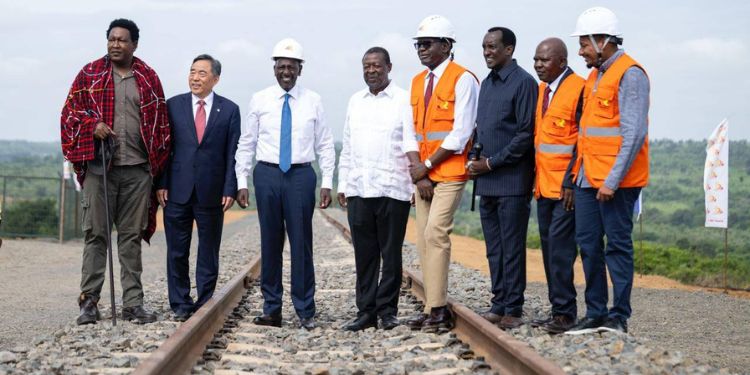
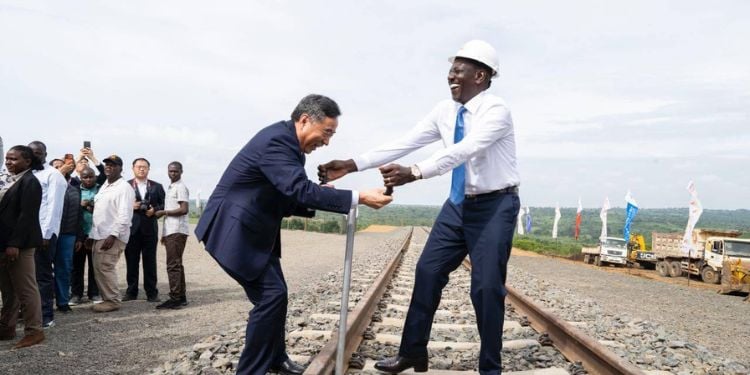
Speaking at the groundbreaking ceremony for the Naivasha–Kisumu section of the SGR in Narok County on March 19, the President said Kenya cannot afford slow, congested transport corridors at a time when regional trade is growing, and competition from alternative routes is increasing.
Ruto pointed out that millions of tonnes of cargo pass through the Port of Mombasa every year, with a large share destined for neighbouring countries such as Uganda, Rwanda, South Sudan, and the Democratic Republic of Congo.
However, he noted that delays along the Northern Corridor remain a major challenge, with cargo still taking several days to move from the coast to the western border.
“Yet today, cargo still takes up to 80 hours from Mombasa to Malaba, and over 100 hours to Kampala. A slow transport corridor inevitably loses business and weakens our competitiveness as a nation,” noted President Ruto.
According to the President, extending the SGR beyond Naivasha will help cut these delays by shifting more cargo from roads to rail, which he described as faster, cheaper, and more reliable for bulk transport. He said improving efficiency is critical if Kenya is to retain regional business that could easily shift to competing corridors.
Also Read: Towns Kisumu SGR Will Pass Through as Govt Opts for Southern Route, Ditches Eldoret Path
Ruto Links SGR Extension to Jobs and Growth in Local Economies
President Ruto said the SGR extension is also expected to generate widespread economic benefits by creating jobs and supporting new business opportunities along the rail corridor.
He explained that employment will be created during the construction phase, while long‑term jobs will emerge once the railway becomes operational.
According to the President, the project will stimulate economic activity through the development of logistics hubs, rail stations, and supporting infrastructure, which will in turn attract private investment and enterprise in surrounding areas. He said sectors such as agriculture, trade, manufacturing, and transport services stand to benefit directly from improved connectivity and reduced transport costs.
“It will create jobs and enterprise opportunities during construction, through logistics hubs, and across agriculture, trade, and manufacturing,” stated the President.
Ruto added that farmers and producers in western Kenya will gain easier access to both local and international markets, allowing goods such as agricultural produce to reach buyers more quickly and at lower cost. He said this improved market access is expected to raise incomes, support value addition, and strengthen supply chains linking rural producers to regional and global trade routes.
Traffic Relief and Regional Trade Connectivity
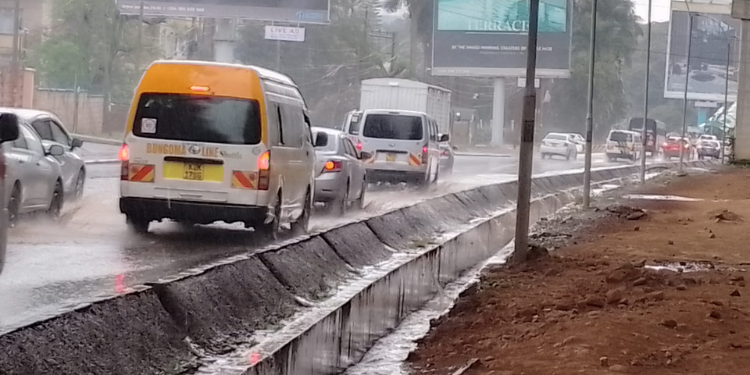
According to the President, heavy reliance on road transport has placed significant pressure on highways linking Mombasa to western Kenya, leading to congestion, frequent accidents, and high road maintenance costs.
Also Read: Ruto’s Government Cuts Development Spending to Ksh20 Billion as Debt Payments Surge
He said shifting more freight to rail will remove hundreds of trucks from major roads, easing traffic and improving safety for motorists and other road users.
Ruto added that the SGR extension to Kisumu will allow better coordination between rail, road, and lake transport. He said this integration is expected to turn Kisumu into a regional distribution centre, enabling goods to move efficiently within Kenya and to neighbouring countries through Lake Victoria connections.
While acknowledging that the project requires significant investment, the President said the government plans to build the railway in phases and focus on freight demand to ensure it delivers economic value.
He said the long‑term goal is to complete a continuous rail link from Mombasa to the western border, strengthening Kenya’s role as the preferred route for regional trade.
“We are fully conscious that this is a major investment. This project will require significant resources, running into hundreds of billions of shillings, at a time when we are managing our debt prudently and consolidating our fiscal position,” President Ruto said.
Ruto said the SGR expansion is not just about transport infrastructure, but also about protecting jobs, lowering the cost of goods, improving road safety, and securing Kenya’s place in regional trade amid growing competition.