The Kenya National Commission on Human Rights (KNCHR) has listed 1,224 Kenyans as victims eligible for compensation under a proposed national reparations framework.
In a statement issued on April 1, the Commission said the list is part of its ongoing work to develop a framework for compensating victims of historical human rights violations in Kenya.
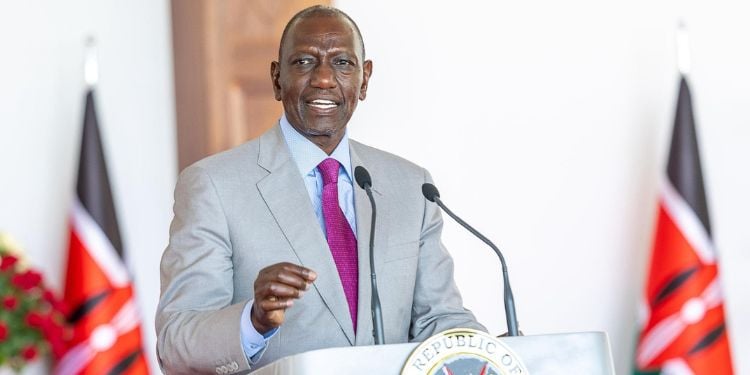
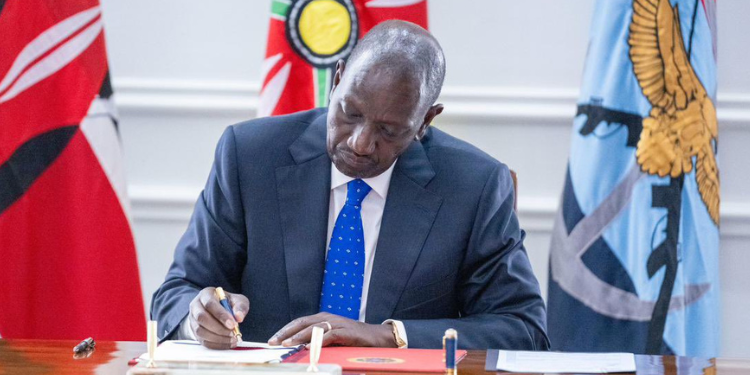
KNCHR said the process follows a directive by President William Ruto, issued through Gazette Notice of March 14, requiring the Commission to submit a comprehensive report on a reparations framework within 60 days.
The directive is anchored in Article 254(2) of the Constitution, which requires independent commissions to report to the President.
“The Kenya National Commission on Human Rights (KNCHR) was established under the Constitution of Kenya, 2010, to promote respect for human rights and freedoms, to monitor and investigate the observance of human rights, and to report on the state of human rights in the country,” read part of the statement.
KNCHR Cites Funding Delays as Outreach Remains Limited
According to the Commission, it has already developed a strategy and prepared a working document to guide consultations with survivors, stakeholders, civil society organizations, and different arms of government.
These engagements will inform the development of a draft reparations framework, which will subsequently undergo public participation in line with constitutional requirements.
Also Read: KNCHR Invites Victims of Protests to Submit Applications for Compensation: How to Submit
The Commission said the 1,224 victims identified so far largely consist of individuals or families who suffered serious human rights abuses.
“So far, KNCHR has compiled a list of 1,224 victims of human rights violations,” stated the Human Rights Commission. The authority added, “This list is undergoing a verification process in line with the established eligibility criteria to ensure accuracy, fairness, and credibility.”
The violations include extrajudicial killings, torture, abductions and enforced disappearances, forced evictions, sexual and gender‑based violence, loss of property, and loss of livelihoods.
KNCHR said the verified list will be submitted to the President, along with the final reparations framework, once the process is complete.
However, the Commission noted that it has been unable to carry out nationwide outreach as originally planned due to a lack of exchequer funding. KNCHR urged the National Treasury to urgently release funds already approved by Parliament to enable the Commission to carry out its work effectively.
“The Commission continues to urge the National Treasury to release the funds allocated by Parliament without further delay, so that KNCHR can fully discharge this critical constitutional and human rights mandate,” read part of the statement.
Victims Given April 3 Deadline to Submit Claims
To expand the scope of the process, KNCHR has invited additional victims to submit their claims and supporting documents before the April 3 deadline.
Required documents include protest records, medical reports, OB extracts, post‑mortem reports, witness statements, and any other evidence to support the claims.
Also Read: Measures President Ruto Took to Stabilise Kenyan Shilling
The Commission said its offices will remain open on Friday, April 3, despite it being a public holiday, to allow victims to submit reports. Submissions can be made at the head office in Nairobi or at regional offices across the country.
Victims may also submit information online via the KNCHR website, by email at [email protected], or by SMS, WhatsApp, or phone using the contacts provided by the Commission.
KNCHR said reparations are an important step toward justice, healing, and national reconciliation for victims of past human rights violations.
Verified Protest Victims to Benefit from Sh2 Billion Compensation Fund
The compensation process is expected to be supported by a KSh 2 billion allocation from the government for victims of protest‑related human rights violations.
The funds form part of the first Supplementary Budget for the 2025/2026 Financial Year. President Ruto confirmed the allocation on March 10, 2026, during a joint parliamentary group meeting of UDA and ODM members held at the Kenyatta International Convention Center (KICC) in Nairobi.
During the meeting, Ruto directed that compensation for victims of protests and related human rights violations committed between 2017 and 2025 be completed by June 2026.
The money is meant to compensate victims of verified cases of gross human rights violations, including extrajudicial killings, injuries, torture, sexual and gender‑based violence, and the loss of property and livelihoods linked to protests.
However, the funds have not yet been fully released as verification is still ongoing. The final list of victims and the completed reparations framework will guide the actual payments.