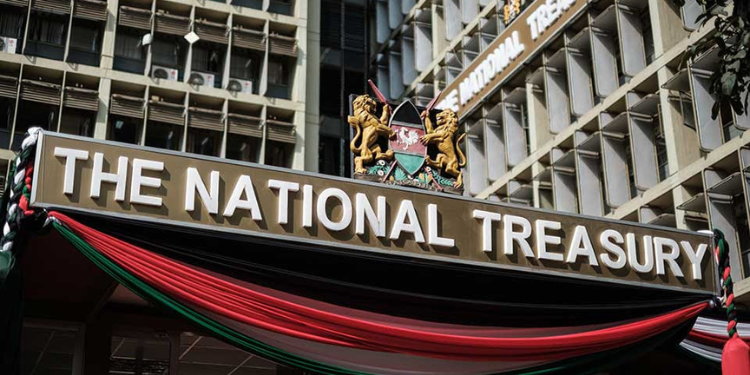
Cabinet Secretary for the National Treasury and Economic Planning, John Mbadi, on April 12, acknowledged gaps in Kenya’s budgeting process, citing regret in salary increments for the Kenya Police Service.
According to the CS, the government’s initial salary increment for the Kenya Police Service left out the Kenya Defense Forces, a discrepancy that was later resolved.
“Mistake that we made was when we increased or varied the salary of police, we left out the Kenyan Defence Forces, and we had to capture that,” Mbadi stated during an interview with the TV 47.
The Kenya Police Service, after the salary increment, was earning more than the Kenyan Defense Forces (KDF), according to the CS.
Additionally, John Mbadi questioned the poor planning by the government during the salary increment.
CS John Mbadi on Supplementary Budget
Questioned on the place of the supplementary budget, the CS stated that he was not in support of the supplementary budget, alleging that the budgets are a result of poor planning at the budgeting stage.
According to the CS, a few years ago, Kenya started having three supplementary budgets in a single financial year, introduced in November or December, unlike this year, when the first supplementary budget was in April.
The Kenyan government, the president, and the cabinet have, however, agreed to have a maximum of one supplementary budget per year, according to the CS.
Also Read: Mbadi Warns Treasury Staff Over Poor Timekeeping
April Supplementary Budget
Explaining the reason for the supplementary budget this year in April, the CS noted that the government had omitted some donor-funded projects from the budget.
Some of the donor-funded projects that had not been included in the National budget were nearing completion, according to the CS.
In addition to the donor-funded project, the CS also explained that very necessary personnel emoluments also contributed to the supplementary budget.
He cited that CBAs contributed more to the personal emolument since some CBAs had been suspended by the courts, making the government liable.
Expenditure also increased due to the pressure from lecturers who asked for increased salaries.
Mbadi explained that the error in the salary shift for the Kenya police, which omitted the KDF, also necessitated the supplementary budget.
Further request by the Kenya Revenue Authority (KRA) to receive more funding from the government to enhance the generation of revenue was also a factor that led to the April supplementary budget.
According to the CS, the government increased KRA funding to almost 20 billion, but the parliament reduced the initial funding to 17 billion.
Over 13 billion was also spent by the government in solving the drought crisis, leading to the need for a supplementary budget.
Also Read: CS Mbadi Woos More Kenyans to Buy KPC Shares, Allays Debt Fears
Government Limited Power to Cut Expenditure
According to CS John Mbadi, pressures from collective bargaining agreements, the security sector, and demands for salary increases limit the government’s power to cut expenditure.
Additionally, the inflation index requires the government to regularize, therefore, it is unable to reduce the wage bill by much.
Cutting on austerity and the budget travel affects businesses, and for this reason, the government allows the projects into the national budget.
In addition, the government also deals with expenditure rationalization, where the procurement is done for the money used.
Currently, the government has rolled out the EGP with no exemptions for the next financial year, requiring everyone to move to e-procurement.