Tuesday, July 14, 2026
  • News
    • Latest News
    • Breaking News
    • Fact Check
    • Investigations
    • Explainers
  • Politics
    • Global Politics
    • Elections
    • Government & Policy
    • Diplomacy
    • Conflicts & Security
    • Political Analysis
  • Business
    • Global Economy
    • Markets
    • Technology
    • Startups
    • Energy
    • Finance
  • World News
    • Americas
    • Asia
    • Asia Pacific
    • Africa
    • Europe
    • Middle East
  • Africa
    • Central Africa
    • East Africa
    • West Africa
    • Southern Africa
  • Health
    • Global Health
    • Public Health
    • Health Policy
    • Medical Research
    • Diseases & Conditions
    • Mental Health
    • Nutrition
    • Climate & Health
    • Health Explainers
  • Sports
    • World Cup 2026
    • Athletics
    • Basketball
    • Boxing
    • Cricket
    • Football
    • Formula 1
    • Golf
    • Rugby
  • Weather
    • Climate Business
    • Climate Change
    • Climate Solutions
    • Living Green
  • Culture
    • Arts
    • Film & TV
    • Food
    • Music
    • Lifestyle
    • Travel
  • Opinion
    • Editorials
    • Letters
  • Behind The Brand
REGISTER
LOGIN
No Result
View All Result
The Kenya Times
  • News
    • Latest News
    • Breaking News
    • Fact Check
    • Investigations
    • Explainers
  • Politics
    • Global Politics
    • Elections
    • Government & Policy
    • Diplomacy
    • Conflicts & Security
    • Political Analysis
  • Business
    • Global Economy
    • Markets
    • Technology
    • Startups
    • Energy
    • Finance
  • World News
    • Americas
    • Asia
    • Asia Pacific
    • Africa
    • Europe
    • Middle East
  • Africa
    • Central Africa
    • East Africa
    • West Africa
    • Southern Africa
  • Health
    • Global Health
    • Public Health
    • Health Policy
    • Medical Research
    • Diseases & Conditions
    • Mental Health
    • Nutrition
    • Climate & Health
    • Health Explainers
  • Sports
    • World Cup 2026
    • Athletics
    • Basketball
    • Boxing
    • Cricket
    • Football
    • Formula 1
    • Golf
    • Rugby
  • Weather
    • Climate Business
    • Climate Change
    • Climate Solutions
    • Living Green
  • Culture
    • Arts
    • Film & TV
    • Food
    • Music
    • Lifestyle
    • Travel
  • Opinion
    • Editorials
    • Letters
  • Behind The Brand
  • News
    • Latest News
    • Breaking News
    • Fact Check
    • Investigations
    • Explainers
  • Politics
    • Global Politics
    • Elections
    • Government & Policy
    • Diplomacy
    • Conflicts & Security
    • Political Analysis
  • Business
    • Global Economy
    • Markets
    • Technology
    • Startups
    • Energy
    • Finance
  • World News
    • Americas
    • Asia
    • Asia Pacific
    • Africa
    • Europe
    • Middle East
  • Africa
    • Central Africa
    • East Africa
    • West Africa
    • Southern Africa
  • Health
    • Global Health
    • Public Health
    • Health Policy
    • Medical Research
    • Diseases & Conditions
    • Mental Health
    • Nutrition
    • Climate & Health
    • Health Explainers
  • Sports
    • World Cup 2026
    • Athletics
    • Basketball
    • Boxing
    • Cricket
    • Football
    • Formula 1
    • Golf
    • Rugby
  • Weather
    • Climate Business
    • Climate Change
    • Climate Solutions
    • Living Green
  • Culture
    • Arts
    • Film & TV
    • Food
    • Music
    • Lifestyle
    • Travel
  • Opinion
    • Editorials
    • Letters
  • Behind The Brand
No Result
View All Result
The Kenya Times ~ Trending, Breaking News and Videos
No Result
View All Result
ADVERTISEMENT

Africa Has the Capacity to Survive and Thrive Without Foreign Aid – How to Do it

Peter OngerabyPeter Ongera
February 7, 2025
Reading Time: 8 mins read
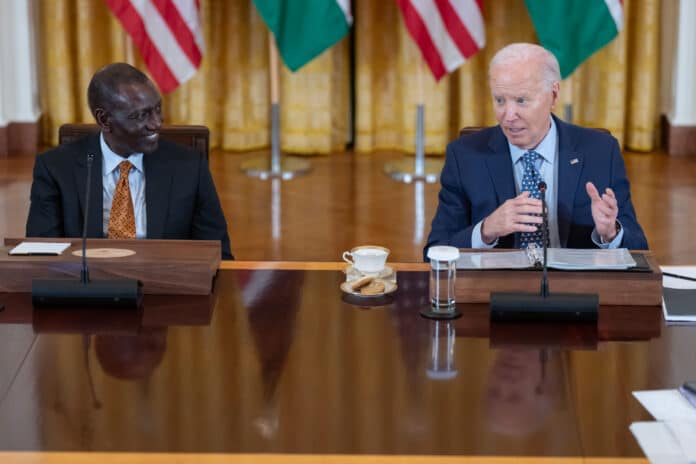
Us-Africa Ties Under Biden: Mismatch Between Talk And Action. Us-Africa Ties Under Biden: Mismatch Between Talk And Action

President Joe Biden and President William Ruto at a past event. PHOTO/PCS.

FacebookTwitterLinkedInRedditWhatsApp
Advertisement

Africa, a continent rich in natural resources and a growing consumer base, has long been a source of immense wealth for multinational corporations (MNCs). These companies extract vast amounts of natural resources, generate massive profits, and then repatriate their earnings to their home countries. In contrast, African nations remain heavily dependent on foreign aid, a system that, paradoxically, is often funded by the same economies benefiting from the continent’s resources. This intricate cycle raises fundamental questions about economic fairness, sustainability, and Africa’s long-term development.

Multinational corporations operate in virtually every sector of Africa’s economy, from oil and gas to mining, telecommunications, agriculture, and consumer goods.

The oil-rich nations of Nigeria, Angola, and Libya are dominated by global energy giants like ExxonMobil, Shell, and TotalEnergies, who extract billions of dollars’ worth of crude oil annually.

Meanwhile, companies such as Glencore, Anglo American, and Barrick Gold control vast swaths of Africa’s mining industry, exploiting essential minerals like cobalt, gold, and diamonds.

Deportation Of Kenyans From Us: What It Means, Legal Options
President Donald Trump after signing several Executive Orders of January 20, 2025.

Africa, a sleeping giant 

Beyond raw materials, multinational companies profit from Africa’s growing digital economy and consumer market. Telecom giants like MTN, Airtel, and Vodafone reap billions from mobile phone subscriptions and internet services.

Tech companies like Google, Microsoft, and Meta (Facebook) generate vast revenues through advertising, digital services, and data mining.

ADVERTISEMENT

Also Read: Why Ole Sapit is a Happy Man After Trump Stopped Billions


Meanwhile, consumer goods corporations such as Coca-Cola, Nestlé, and Unilever dominate Africa’s retail landscape, selling products that cater to an expanding middle class.

Despite these enormous profits, the financial benefits do not remain in Africa. Instead, much of the wealth is repatriated to corporate headquarters in Western and Asian nations, leaving African economies struggling to fund critical services like education, healthcare, and infrastructure.

Economic imbalance 

A significant issue in Africa’s economic imbalance with multinational corporations is profit repatriation—the process where companies transfer their profits out of African countries to foreign bank accounts, investors, or tax havens. This deprives African nations of tax revenues that could otherwise be used for national development.

One common tactic used by multinational firms is transfer pricing, where a company artificially shifts profits to subsidiaries in low-tax jurisdictions.

For example, a mining company operating in Africa may sell minerals at a deliberately low price to a subsidiary in Switzerland, where corporate tax rates are minimal. This manipulation reduces the declared profits in the African country, thereby minimizing taxes owed to the host government.

ADVERTISEMENT

As a result, African countries lose billions in potential revenue. According to the United Nations Conference on Trade and Development (UNCTAD), Africa loses an estimated $88.6 billion annually due to illicit financial flows, much of it linked to tax avoidance by multinational corporations. These losses significantly exceed the total amount of foreign aid received by the continent each year.

Aid from the West

While Africa generates wealth for multinational corporations, it remains heavily dependent on foreign aid from Western governments and international organizations. Countries like the United States, United Kingdom, Germany, and China provide billions in financial assistance, often in the form of development programs, humanitarian aid, and infrastructure projects.

However, much of this aid does not directly benefit African economies. A large portion of foreign aid is spent on administrative costs, salaries for Western consultants, and foreign NGOs rather than being invested in African-led initiatives.

The Bill & Melinda Gates Foundation, for instance, has donated billions to Africa’s healthcare system, particularly in combating diseases like malaria and HIV/AIDS. While these programs save lives, they do not create long-term economic independence.


Also Read: Catholic Church, KU and M-Kopa Among Top USAID Beneficiaries in Kenya [List]


Moreover, foreign aid has been criticized for reinforcing dependency. When aid is tied to political conditions, African governments may find themselves prioritizing donor interests over their own development strategies.

Instead of empowering local industries, aid often fosters a cycle where governments rely on external funding rather than implementing sustainable economic reforms.

Trump Shocker

U.S. President Donald Trump made headlines when he threatened to cut U.S. foreign aid to African nations, particularly targeting South Africa over its land expropriation policies. Trump’s administration questions whether U.S. taxpayers should continue funding African programs, arguing that the money is not being used effectively.

The potential loss of aid raises concerns, particularly in sectors such as healthcare, where U.S. funding plays a major role in combating HIV/AIDS through initiatives like PEPFAR (President’s Emergency Plan for AIDS Relief).

However, Africa has the capacity to survive and thrive without foreign aid. Economic experts argue that reducing aid dependency requires African nations to focus on domestic revenue generation, regional trade, and industrialization.

Countries must strengthen their ability to collect corporate taxes, enforce anti-corruption measures, and negotiate fair contracts with multinational corporations. Investments in infrastructure, agriculture, and digital innovation can also help African economies become more self-reliant.

The Future of Africa

According to a report by the Brookings Institution, Africa’s future lies in harnessing its youth population, investing in skills training, and developing intra-African trade under the African Continental Free Trade Area (AfCFTA). By producing more value-added goods instead of exporting raw materials, Africa can keep more of its wealth within the continent.

The paradox of Africa receiving foreign aid from countries that profit off its resources highlights a moral dilemma in global economics.

Critics argue that instead of sending aid, the West and China should ensure that African countries receive a fair share of the wealth generated from their own resources. If multinational corporations paid fair taxes and stopped exploiting loopholes, African governments would not need as much foreign aid.

Nobel Prize-winning economist Joseph Stiglitz has emphasized that “the solution to Africa’s economic challenges is not charity but fairness.” He advocates for corporate accountability, fair trade agreements, and stronger financial regulations to prevent wealth extraction at the expense of African development.

China’s President Xi Jinping Hosts African Leaders During China Africa Forum 2024 In Beijing. Photo/Pcs.
China’s President Xi Jinping hosts African leaders during China Africa Forum 2024 in Beijing. PHOTO/PCS.
For Africa to break free from this cycle, several steps must be taken:

Tax Reforms & Corporate Accountability: African nations must enforce stricter tax regulations on multinational corporations. Countries like Ghana and Kenya have started reviewing tax treaties to prevent unfair profit repatriation.

Industrialization & Value Addition: Instead of exporting raw materials, African nations should process and manufacture goods locally. This would create jobs and increase local revenues.

Regional Economic Cooperation: The AfCFTA, which aims to create a single market for goods and services, has the potential to reduce Africa’s dependence on external economies. Strengthening trade within Africa will lead to self-sufficiency.

Investment in Infrastructure & Digital Economy: Countries like Rwanda and Nigeria are emerging as hubs for technology startups and fintech innovation. Expanding digital infrastructure can drive Africa’s economic growth.

Reducing Aid Dependency: While foreign aid remains essential for emergencies, African governments must prioritize economic policies that generate wealth internally rather than relying on external assistance.

Unsustainable cycle 

The cycle where multinational corporations extract Africa’s wealth, repatriate profits, and then Western countries provide aid to Africa is unsustainable. While foreign aid has played a crucial role in humanitarian efforts, it is not a substitute for fair economic policies and investment in local industries.

Africa’s future depends on economic sovereignty—ensuring that its resources benefit its people rather than foreign corporations. By enforcing tax regulations, promoting industrialization, and leveraging regional trade agreements, Africa can break free from its dependency on aid and create a sustainable economic future.

The question remains: Will the global economic system change to allow Africa to thrive, or will the cycle of wealth extraction continue?

Follow our WhatsApp Channel and join our WhatsApp Group for real-time news updates.
Tags: AfCFTADonald TrumpUSAID
Peter Ongera

Peter Ongera

Peter Ongera is an award-winning investigative journalist whose fearless reporting has exposed corruption, human rights violations, and illicit financial flows across Kenya and the African continent. With over a decade of experience, Peter has become a trusted voice on issues of governance, electoral integrity, and democratic accountability. His deeply researched stories have been featured by respected platforms including the Thomson Reuters Foundation, Internews, Africa Check, Lida Network, Hivos, and Context. Trained in digital forensics, open-source intelligence (OSINT), and fact-checking, Peter combines cutting-edge verification techniques with a passion for evidence-based storytelling. He has also mentored emerging journalists across the globe, equipping them to hold power to account. Through his work, Peter champions a journalism that not only informs but drives systemic reform; empowering communities to demand transparency, justice, and lasting change. You can reach him at [email protected].

Related Posts

Ruto Responds To Uhuru’s Criticism On Linda Mama Program

Kenya Youth Unemployment: Why Relief Programs Fail and Real Development Is Needed

July 13, 2026
Expert Explains Why Kenya Must Choose Peace: Stop Political Violence And Goonism Before 2027 Elections

When Violence Becomes Politics, Kenya Must Choose Peace

July 9, 2026
President William Ruto At A Previous Rally. Photo/Pcs.

Opinion | The Political Cost of Unfinished Grief in Ruto’s Re-election Calculus

July 8, 2026
Kenyans To Pay More For Uber And Bolt In Govt'S Move To Set New Minimum Fares

Kenya Is Becoming a Compliance State Instead of a Developmental State

July 6, 2026
ADVERTISEMENT

The Kenya Times Facebook

LATEST NEWS

  • World’s Most Powerful Air Forces in 2026: U.S. Dominates Top 5 as India Beats China
  • Lindsey Graham’s Sister Breaks Silence After Trump Backs Her for Senate Seat
  • Affordable Food Spots Around University of Nairobi Where Students Can Eat and Chill on a Budget
  • Trump’s IRS Settlement Thrown Out as Judge Orders Sanctions
  • Ruto’s Secret Plan to Use KSh65 Billion Eurobond Money to Tame Spiralling Debt
  • Trump Reveals the Only Time Lindsey Graham Let Him Down
  • The Untold Story of Jovial: How a Mama Fua Job Helped Shape Kenya’s Afro-Pop Star
  • Why More Kenyans Oppose Than Support Broad-Based Government
  • Dollar Check: Kenya Shilling Strengthens to 129.19 Against USD as Week Begins
  • Volkswagen Announces 50,000 Job Cuts: What It Means for the Company
  • Mildred Cheche: Trailblazing Tactician Behind Kenya’s Second World Cup Qualification
  • Full List of SHA-Approved Hospitals and Health Facilities in Meru County
  • Matiang’i Takes Lead Over Ruto, Gachagua in Mt Kenya Presidential Poll
  • Ruto Takes Early Lead in Latest InfoTrak Presidential Poll
  • How Sheryl Gabriella Built Her Career From Waitressing to Online Stardom and Trending Videos
ADVERTISEMENT

Company

About Us

Our Authors

Our Experts

Social Media

Policies

Privacy Policy

House Rules

Standards and Policies

Terms and Conditions

Subscription

My Account

Contact Us

Contact Us

Join Our Team

Advertise With Us

© Copyright 2026 | The Kenya Times | All Rights Reserved

Welcome Back!

Sign In with Facebook
Sign In with Google
Sign In with Linked In
OR

Login to your account below

Forgotten Password? Sign Up

Create New Account!

Sign Up with Facebook
Sign Up with Google
Sign Up with Linked In
OR

Fill the forms below to register

All fields are required. Log In

Retrieve your password

Please enter your username or email address to reset your password.

Log In
Your Privacy and Cookies
We use cookies on our website to give you the most relevant experience by remembering your preferences and repeat visits. By clicking “Accept”, you consent to the use of ALL the cookies.
Do not sell my personal information.
Cookie settingsACCEPT
Privacy & Cookies Policy

Privacy Overview

This website uses cookies to improve your experience while you navigate through the website. Out of these cookies, the cookies that are categorized as necessary are stored on your browser as they are essential for the working of basic functionalities of the website. We also use third-party cookies that help us analyze and understand how you use this website. These cookies will be stored in your browser only with your consent. You also have the option to opt-out of these cookies. But opting out of some of these cookies may have an effect on your browsing experience.
Necessary
Always Enabled
Necessary cookies are absolutely essential for the website to function properly. This category only includes cookies that ensures basic functionalities and security features of the website. These cookies do not store any personal information.
Functional
Functional cookies help to perform certain functionalities like sharing the content of the website on social media platforms, collect feedbacks, and other third-party features.
Performance
Performance cookies are used to understand and analyze the key performance indexes of the website which helps in delivering a better user experience for the visitors.
Analytics
Analytical cookies are used to understand how visitors interact with the website. These cookies help provide information on metrics the number of visitors, bounce rate, traffic source, etc.
Advertisement
Advertisement cookies are used to provide visitors with relevant ads and marketing campaigns. These cookies track visitors across websites and collect information to provide customized ads.
Others
Other uncategorized cookies are those that are being analyzed and have not been classified into a category as yet.
SAVE & ACCEPT
LOGIN | REGISTER
  • Login
  • Sign Up
  • Cart
No Result
View All Result
  • News
    • Latest News
    • Breaking News
    • Investigations
    • Explainers
    • Fact Check
  • Politics
    • Global Politics
    • Conflicts & Security
    • Elections
    • Diplomacy
    • Government & Policy
    • Political Analysis
  • Business
    • Global Economy
    • Markets
    • Technology
    • Startups
    • Energy
    • Finance
  • World News
    • Americas
    • Asia
    • Asia Pacific
    • Africa
    • Europe
    • Middle East
  • Africa
    • East Africa
    • West Africa
    • Southern Africa
    • Central Africa
  • Health
    • Global Health
    • Public Health
    • Health Policy
    • Medical Research
    • Diseases & Conditions
    • Mental Health
    • Nutrition
    • Climate & Health
    • Health Explainers
  • Sports
    • World Cup 2026
    • Athletics
    • Basketball
    • Boxing
    • Cricket
    • Football
    • Formula 1
    • Golf
    • Rugby
  • Weather
    • Climate Business
    • Climate Change
    • Climate Solutions
    • Living Green
  • Culture
    • Arts
    • Film & TV
    • Food
    • Lifestyle
    • Music
    • Travel
  • Opinion
    • Editorials
    • Letters
  • Behind The Brand
  • Contact Us

Not enough quota to unlock this post
Unlock left : 0
Are you sure want to cancel subscription?