Rising defense spending and the wars in Ukraine and the Middle East have put air power back at the center of military planning, bringing the world’s strongest air forces into focus.
The 2026 rankings released by the World Directory of Modern Military Aircraft (WDMMA) show the United States maintaining overwhelming dominance in military aviation.
Four American military branches occupy the top five positions, while Russia remains the only non-U.S. force among the world’s five strongest air arms.
India also emerged ahead of China, reinforcing its growing position as a major military aviation power.
The WDMMA annual assessment uses the organization’s TrueValueRating (TvR) to measure the operational strength of military aviation branches.
Instead of just the number of aircraft, the measure takes into account the quality of aircraft, diversity of the fleet, modernization, logistics, and maintenance capability. It also measures overall operational effectiveness.
U.S. Air Power Continues to Dominate
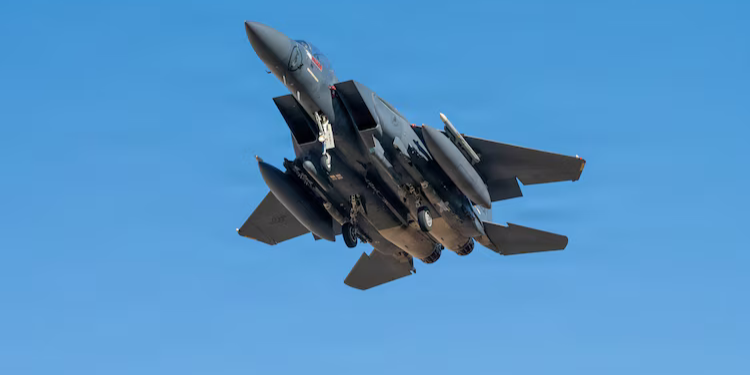
The United States Air Force retained the top position with a TvR score of 242.9 and more than 5,000 aircraft.
Its fleet includes large numbers of F-22 Raptor and F-35 Lightning II stealth fighters.
These give the USAF unmatched air superiority, sensor fusion, and global strike ability backed by tanker aircraft and strategic bombers.
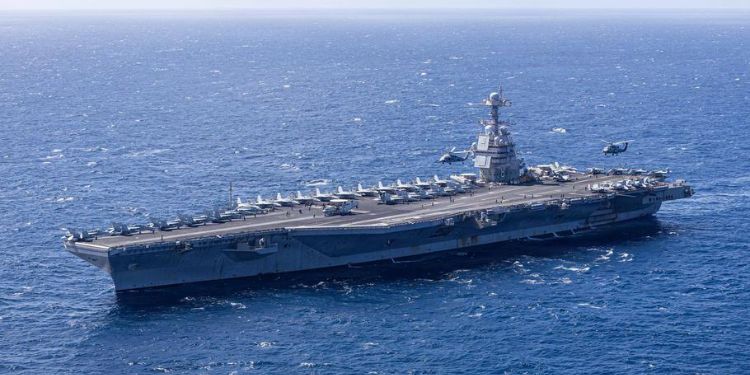
In second place is the United States Navy with a TvR of 142.4. The Navy operates from at least 11 aircraft carriers and fields F-35C jets and F/A-18 Super Hornets. This gives it strong sea-based power projection anywhere in the world.
The Russian Air Force came in third with a TvR of 114.2, still the top non-American air arm despite losing aircraft in the war in Ukraine. It still fields many Su-35 fighters and older but capable strategic bombers such as the Tu-95 and Tu-160.
Also Read: The World’s Most Powerful Militaries in 2026: Where the U.S., China, Russia, Israel and Iran Rank
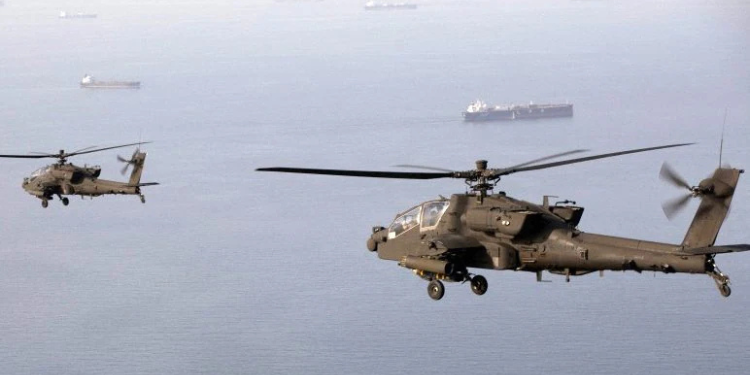
Fourth is the United States Army with a TvR of 112.6. This is mainly due to the massive helicopter fleet, which consists of AH-64 Apache attack helicopters and UH-60 Black Hawk helicopters, both of which can be used for transport, reconnaissance, medical evacuation, and attacks in various operational environments.
Fifth goes to the United States Marine Corps at 85.3 TvR. It focuses on expeditionary missions with F-35B short-takeoff-and-landing jets and MV-22 Osprey tiltrotors that operate well from ships and remote bases.
India Air Force Edges China in Global Rankings
The Indian Air Force is sixth with a TvR of 69.4 and 1,716 aircraft. India operates a mix of Russian Su-30s, French Rafales and its own Tejas fighters. It’s been steadily climbing up the ranks through modernization and use of diverse suppliers.
China’s People’s Liberation Army Air Force comes in seventh with a TvR of 63.8 despite a large fleet of 3,733 aircraft. The PLAAF has grown quickly with J-20 stealth fighters, but analysts say it still trails in experience, engine technology, and overall integration.
Japan, Israel and France Complete the Top 10
Japan Air Force ranked eighth with a TrueValueRating of 58.1. Japan fields modern F-35s and focuses on high-quality defensive capabilities in the Indo-Pacific.
Ninth is the Israeli Air Force with a TvR of 56.3. Israel’s relatively small fleet continues to rank highly because of its advanced technology, operational readiness, and extensive combat experience. Israel’s pilots have extensive combat experience. The force uses advanced F-35s and regularly upgrades its aircraft with domestic technology.
France completed the top ten with a TrueValueRating of 55.3, supported by modern multirole fighter aircraft, aerial refueling assets, and strategic transport capabilities.
How the Rankings Are Calculated
Unlike rankings based purely on fleet size, WDMMA’s TrueValueRating measures overall aviation capability.
The assessment considers aircraft age, modernization, mission diversity, logistics, pilot training, maintenance support, mission readiness, and the ability to sustain military operations over time.
That methodology explains why countries with fewer aircraft can still outperform those with larger fleets if their aviation assets are newer, more capable, and better supported.
The ranking also separates military aviation branches instead of combining them into a single national score.
This allows organizations such as the U.S. Air Force, Navy, Army, and Marine Corps to be evaluated independently.
Also Read: Trump Warns 1,000 Missiles Ready to Strike Iran if Assassination Attempt Happens
The rankings come as many countries continue expanding military aviation budgets in response to rising global tensions.
The war in Ukraine has highlighted the importance of drones, electronic warfare, precision-guided weapons and integrated air defense systems.
Meanwhile, recent military operations in the Middle East have reinforced the value of long-range strike aircraft, aerial surveillance, intelligence gathering and rapid deployment capabilities.
Many countries are investing heavily in stealth fighters, unmanned aircraft, advanced radar systems and next-generation missiles as military planners prepare for increasingly technology-driven conflicts.