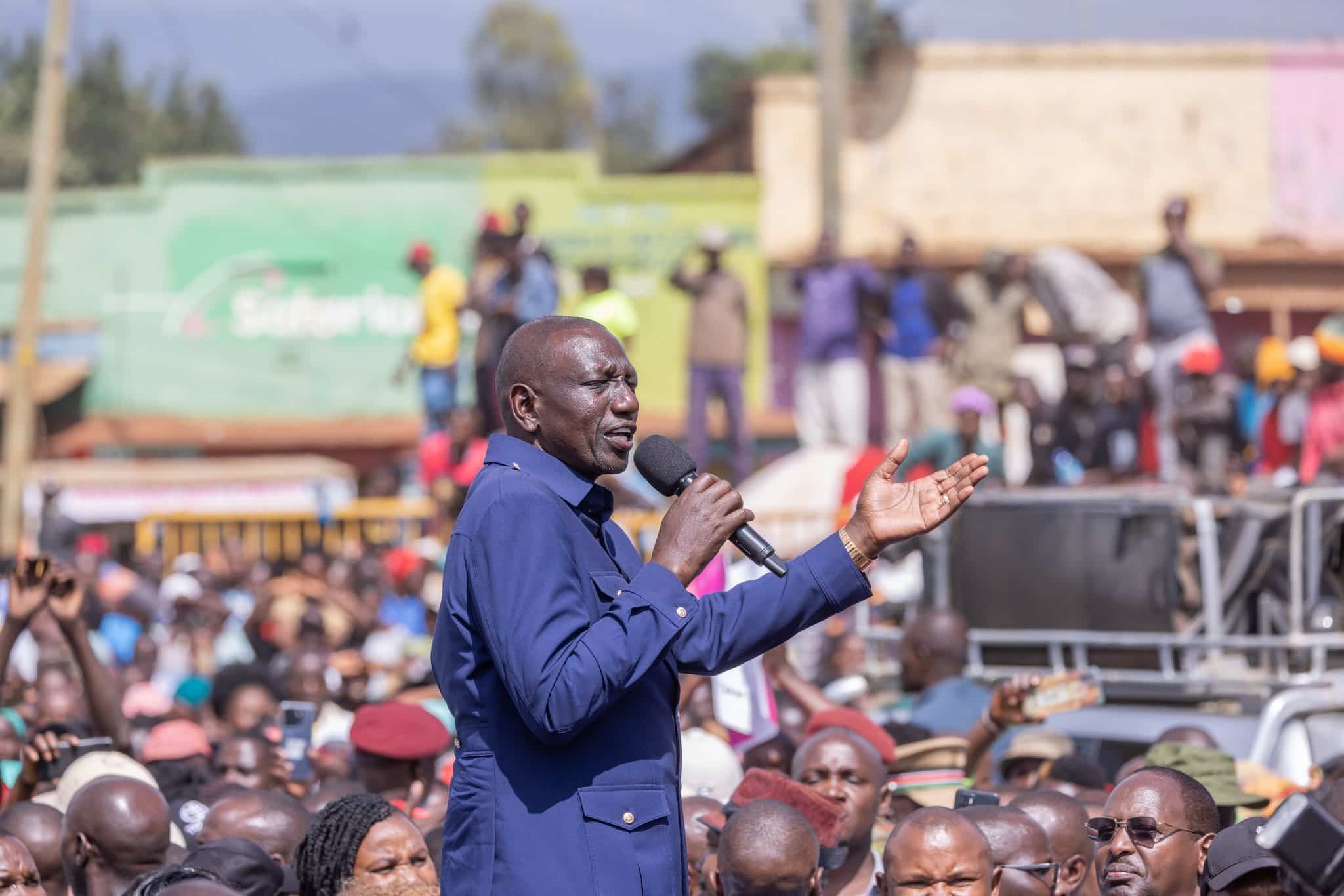
By midday on June 25, Nairobi once again looked like a city forced to remember what power would rather manage. Roads into the central business district were heavily controlled, businesses stayed shut, police presence was visible, and protesters moved through familiar streets carrying flags, flowers, placards, photographs, anger, and grief. For some people, it was another protest day to be survived through traffic updates and security warnings. For families who lost children during the 2024 Gen Z protests, it was something much heavier than a public order event.
It was memory returning to the streets.
That distinction matters because governments often prepare for demonstrations but rarely understand remembrance. A protest can be dispersed, delayed, infiltrated, negotiated with, or pushed away from strategic buildings. Memory behaves differently because it does not need permission from police, organizers, opposition leaders, or civil society platforms. It lives inside families, peer groups, phones, songs, funerals, anniversaries and the stubborn silence of homes where a young person no longer sits at the table.
That is what makes June 25 politically consequential for President William Ruto.
The date is no longer only about the storming of Parliament in 2024 or the anger over the Finance Bill. It has become a symbol of youthful defiance, state violence, broken trust and unresolved accountability. Every year it returns, it asks the same question in a different form: did the country merely move on, or did the state genuinely account for the blood that was shed?
Unfinished Grief and Compensation Without Closure
The government appears to recognize part of the problem. The compensation process for Professor Makau Mutua reflects an acknowledgment that victims and their families cannot simply be ignored. Compensation matters because grief also has practical costs. Families lose breadwinners, parents lose children they educated with sacrifice, and injured survivors carry medical, psychological and economic burdens that slogans cannot pay for.
Yet compensation alone cannot close a wound that politics keeps reopening.
A cheque may relieve a family’s financial pressure, but it cannot replace truth, accountability and dignity. It cannot answer who gave orders, who fired, who abducted, who covered up, who mocked victims, or who treated grieving families as a political inconvenience. Worse still, whatever healing such a process may attempt is easily undermined when senior political actors speak recklessly, dismiss protesters, ridicule grief, or frame every youth mobilization as criminality waiting to happen.
Reconciliation cannot be handled by one hand while the other hand keeps aggravating the wound. A government cannot speak compensation in boardrooms and contempt on campaign platforms. Families do not hear state communication in separate compartments; they hear the whole government speaking, even when the voices contradict each other.
That contradiction carries serious political consequences because June 25 will not arrive in ordinary political time in 2027. If the election calendar holds, the commemoration will fall in the middle of the campaign season. That means the anniversary will not be a distant human rights issue competing with routine politics; it will become part of the campaign atmosphere itself.
Also Read: Why Wage Increases Won’t Fix What’s Broken in Kenya’s Economy
That should concern every serious strategist around Ruto.
By June 25, 2027, opposition actors will have strong incentives to frame the memory of the killed protesters as a central moral indictment of the administration. The language will likely be simple and emotionally resonant: young people died under this government; justice remains incomplete; compensation without accountability is insufficient; a government that promised empowerment is now associated with fear among its youth.
The government may dismiss such framing as political messaging, but politics does not operate only through official facts. It also operates through lived experience, repeated images and moral impressions that settle in the public mind. Once a government becomes associated with the death of young citizens, it must work deliberately to reshape that narrative.
So far, Ruto has struggled to find a consistently persuasive language on this issue.
He remains politically skilled, energetic and capable of tactical adjustment. Yet his administration has often oscillated between outreach and force, apology and warning, compensation and confrontation. Each cycle risks reinforcing the impression of a government trying to manage grief rather than fully engage with its moral weight.
That is unlikely to be sufficient.
The Risk of a Heavy-Handed Response
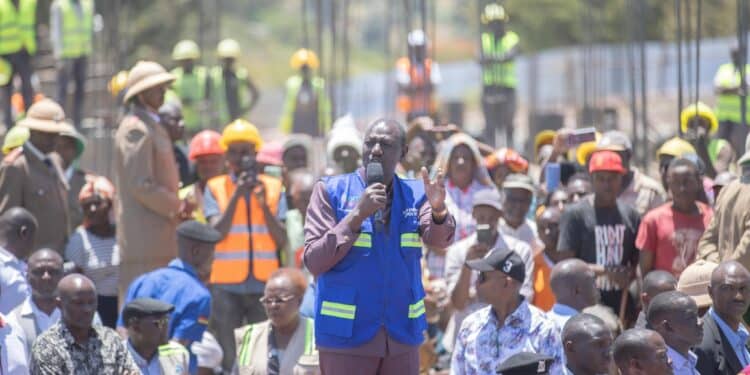
The danger is that 2027 could produce a difficult political moment. If June 25 commemorations grow during the campaign season, the state may be tempted to respond with heavy security measures – roadblocks, restrictions, arrests, and crowd control tactics. In a highly connected society, images from such responses would circulate rapidly. Any injuries or fatalities would revive unresolved grievances and intensify political tensions.
This is less about abstract notions of karma and more about consequences. Actions that are not fully accounted for do not disappear; they resurface when the political environment amplifies them. In 2027, that amplification could occur between June 25 and the final stretch of the campaign, when voters are attentive, opposition messaging is sharpened, and scrutiny is heightened.
A government that understands power primarily as control risks miscalculation.
Security measures may protect buildings for a day, but they do not secure legitimacy. Warnings may deter some citizens, but they cannot erase images of loss. Compensation may assist families, but it cannot substitute for truth. Campaign messaging may shift headlines, but it cannot easily overcome the quiet disillusionment of a generation that feels unheard.
This is why unfinished grief carries political weight.
Governments often assume that the main challenge after protest deaths is preventing further demonstrations. That is a limited view. The deeper challenge is preventing private grief from evolving into a broader moral judgment about the state. Once that shift occurs, the government is no longer responding only to protests; it is responding to a narrative about its character.
Also Read: Kenya Is Becoming a Compliance State Instead of a Developmental State
In that narrative, every excessive police response, dismissive statement, delayed investigation, or uneven compensation process becomes part of the evidence.
That is how governments lose moral authority, gradually, then decisively.
What Would Real Accountability Look Like?
Ruto still has time to influence this trajectory, but time alone does not guarantee resolution. The government would need a credible public accounting of the deaths, more transparent engagement with affected families, meaningful action where wrongdoing is established, protection of lawful commemoration, and language from the highest office that acknowledges pain without defensiveness. Such steps would not signal weakness; they would reflect strategic leadership.
The alternative is to continue treating June 25 primarily as a security concern.
That would be short-sighted.
A quiet city is not necessarily a healed country. A dispersed march is not a resolved grievance. A compensated family is not automatically a reconciled one. A state that confuses control with closure may manage the streets temporarily but struggle with the longer memory of its citizens.
That is the lesson June 25 continues to present.
Power can disperse a crowd, but it cannot erase unfinished grief. It can only address it, acknowledge it, and work toward reconciliation. If that lesson is not absorbed before the 2027 campaign season, June 25 may become more than an anniversary of loss; it may become a defining issue in the election itself.
This article was written by George Nyongesa, a lecturer of philosophy and logic at the University of Nairobi and Chuka University
Follow our WhatsApp Channel and X Account for real-time news updates.