Friday, August 28, 2026
  • News
    • Latest News
    • Breaking News
    • Fact Check
    • Investigations
    • Explainers
  • Politics
    • Global Politics
    • Elections
    • Government & Policy
    • Diplomacy
    • Conflicts & Security
    • Political Analysis
  • Business
    • Global Economy
    • Markets
    • Technology
    • Startups
    • Energy
    • Finance
  • World News
    • Americas
    • Asia
    • Asia Pacific
    • Africa
    • Europe
    • Middle East
  • Africa
    • Central Africa
    • East Africa
    • West Africa
    • Southern Africa
  • Health
    • Global Health
    • Public Health
    • Health Policy
    • Medical Research
    • Diseases & Conditions
    • Mental Health
    • Nutrition
    • Climate & Health
    • Health Explainers
  • Sports
    • World Cup 2026
    • Athletics
    • Basketball
    • Boxing
    • Cricket
    • Football
    • Formula 1
    • Golf
    • Rugby
  • Weather
    • Climate Business
    • Climate Change
    • Climate Solutions
    • Living Green
  • Culture
    • Arts
    • Film & TV
    • Food and Recipes
    • Music
    • Lifestyle
    • Travel
  • Opinion
    • Editorials
    • Letters
  • Behind The Brand
REGISTER
LOGIN
No Result
View All Result
The Kenya Times
  • News
    • Latest News
    • Breaking News
    • Fact Check
    • Investigations
    • Explainers
  • Politics
    • Global Politics
    • Elections
    • Government & Policy
    • Diplomacy
    • Conflicts & Security
    • Political Analysis
  • Business
    • Global Economy
    • Markets
    • Technology
    • Startups
    • Energy
    • Finance
  • World News
    • Americas
    • Asia
    • Asia Pacific
    • Africa
    • Europe
    • Middle East
  • Africa
    • Central Africa
    • East Africa
    • West Africa
    • Southern Africa
  • Health
    • Global Health
    • Public Health
    • Health Policy
    • Medical Research
    • Diseases & Conditions
    • Mental Health
    • Nutrition
    • Climate & Health
    • Health Explainers
  • Sports
    • World Cup 2026
    • Athletics
    • Basketball
    • Boxing
    • Cricket
    • Football
    • Formula 1
    • Golf
    • Rugby
  • Weather
    • Climate Business
    • Climate Change
    • Climate Solutions
    • Living Green
  • Culture
    • Arts
    • Film & TV
    • Food and Recipes
    • Music
    • Lifestyle
    • Travel
  • Opinion
    • Editorials
    • Letters
  • Behind The Brand
  • News
    • Latest News
    • Breaking News
    • Fact Check
    • Investigations
    • Explainers
  • Politics
    • Global Politics
    • Elections
    • Government & Policy
    • Diplomacy
    • Conflicts & Security
    • Political Analysis
  • Business
    • Global Economy
    • Markets
    • Technology
    • Startups
    • Energy
    • Finance
  • World News
    • Americas
    • Asia
    • Asia Pacific
    • Africa
    • Europe
    • Middle East
  • Africa
    • Central Africa
    • East Africa
    • West Africa
    • Southern Africa
  • Health
    • Global Health
    • Public Health
    • Health Policy
    • Medical Research
    • Diseases & Conditions
    • Mental Health
    • Nutrition
    • Climate & Health
    • Health Explainers
  • Sports
    • World Cup 2026
    • Athletics
    • Basketball
    • Boxing
    • Cricket
    • Football
    • Formula 1
    • Golf
    • Rugby
  • Weather
    • Climate Business
    • Climate Change
    • Climate Solutions
    • Living Green
  • Culture
    • Arts
    • Film & TV
    • Food and Recipes
    • Music
    • Lifestyle
    • Travel
  • Opinion
    • Editorials
    • Letters
  • Behind The Brand
No Result
View All Result
The Kenya Times ~ Trending, Breaking News and Videos
No Result
View All Result
ADVERTISEMENT

The Constitution Has Not Ordered Ruto Out of Office on Tuesday

Prof. Gitile NaitulibyProf. Gitile Naituli
August 9, 2026
Reading Time: 7 mins read
Ruto Announces Ksh5 Million For Kenya Music Festival Winners, Full Government Funding For Arts Festivals

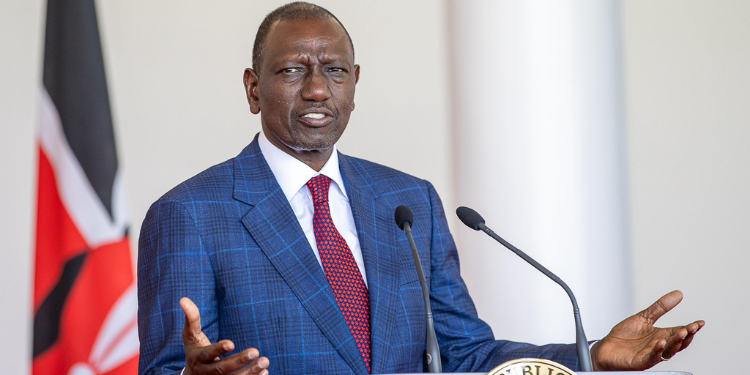
President William Ruto. PHOTO/PCS

FacebookTwitterLinkedInRedditWhatsApp
Advertisement

There is an increasingly dramatic interpretation of the Malindi High Court judgment circulating on social media. According to this argument, President William Ruto’s constitutional authority expires at midnight on Tuesday, 11 August 2026; he must thereafter become some form of temporary or caretaker President; and the Independent Electoral and Boundaries Commission must immediately organize a General Election.

Some have gone further and declared that because courts cannot “suspend the Constitution,” any continuation of the present government beyond Tuesday would itself amount to an unconstitutional occupation of office. It is a powerful political slogan. It is much less convincing as constitutional law.

Whatever one thinks about the reasoning of the Malindi judgment, the starting point must be the judgment the Court actually delivered, not the judgment social media wishes it had delivered.

The Court addressed an extremely consequential constitutional question concerning the meaning of the requirement that elections be held on the second Tuesday in August “in every fifth year.” On its interpretation of the relevant provisions and computation of constitutional time, the Court concluded that the applicable date was 11 August 2026.

That finding deserves serious constitutional debate. But the Court did not stop there. It confronted the practical and constitutional consequences of its interpretation. And this is where much of the current commentary becomes problematic.

Court on General Election

The Court did not order IEBC to conduct a General Election on 11 August 2026. It declined to issue the mandatory order sought, recognizing that organising an immediate General Election was practically impossible and potentially destabilizing.

ADVERTISEMENT

That was not an accidental omission. It was part of the remedy. Even more significantly, the Court suspended the operation of its declaration so that the constitutional and institutional consequences could be addressed without throwing the Republic into disorder.

One cannot therefore embrace the Court’s reasoning while conveniently deleting the Court’s remedy. A judgment must be read as a whole. The proposition that President Ruto somehow transforms into a “temporary incumbent” at midnight on Tuesday raises another basic problem: where exactly does this constitutional office come from?

Kenya’s Constitution recognizes the office of President. It provides mechanisms for temporary incumbency in particular circumstances. It regulates presidential incapacity, vacancy, succession and the exercise of presidential authority.

But constitutional offices cannot be invented through political commentary. If someone claims that on Wednesday morning President Ruto will possess fewer constitutional powers than he possessed on Tuesday, the obvious question must be: which provision of the Constitution or which paragraph of the Court’s orders removes those powers? A President’s constitutional authority cannot be reduced by social-media inference.


Also Read: High Court Rules Next Elections Should Have Been Held in 2026, Not 2027


Kenyan Constitution on Election

If the Court intended to prohibit appointments, restrict executive powers, create a caretaker presidency or terminate the incumbent’s authority on 11 August, it could have addressed the appropriate relief within the limits of the case before it. It did not. This is where Article 142 becomes particularly important.

ADVERTISEMENT

Whatever disagreements may now exist concerning the relationship between Articles 136 and 142, the Constitution expressly provides for continuity in presidential office until the next President is sworn in.

That architecture exists for an obvious reason. The Constitution abhors a vacuum at the center of executive authority. Kenya cannot wake up one morning and discover through interpretation by Facebook, X or WhatsApp that nobody knows whether the Commander-in-Chief can command, whether Cabinet can function, whether appointments remain valid, whether treaties can be executed or whether the ordinary machinery of the Executive still possesses constitutional authority.

Constitutions are designed precisely to prevent such uncertainty. There is another important distinction being lost in the public excitement: a declaration is not necessarily a mandatory order. Courts routinely declare what the law or Constitution means. But declaratory relief and coercive relief perform different legal functions.

A declaration may establish the constitutional position without commanding an institution to perform a particular act immediately. That distinction becomes especially important here because the Court itself declined to compel IEBC to conduct an immediate election.

We cannot manufacture through political interpretation the mandatory order that the Court itself declined to issue. Neither should the phrase “courts cannot suspend the Constitution” become a substitute for legal analysis.

Of course, courts cannot amend the Constitution. Neither can judges casually switch constitutional provisions on and off. But constitutional courts possess remedial authority precisely because constitutional adjudication sometimes produces consequences that require careful management.

Courts may suspend declarations of invalidity or structure remedies to give institutions time to cure constitutional defects, particularly where immediate implementation would produce greater constitutional disorder.

That is not necessarily suspending the Constitution. It is constitutional remedial jurisprudence. The alternative proposition produces extraordinary consequences. If the entire constitutional government effectively expires on Tuesday, what happens to Parliament? What happens to governors? What happens to county assemblies?

The Constitution deliberately coordinates presidential, parliamentary and county elections. The election-date provisions affecting these offices therefore cannot sensibly be discussed as though Article 136 exists on an island.

If the reasoning means that the presidential election was constitutionally required in 2026, difficult questions necessarily arise concerning Articles 101, 177 and 180 and the institutional terms connected to them. That is precisely why this controversy requires appellate clarification rather than constitutional improvisation.

There is, moreover, a deeper jurisprudential issue. Previous Kenyan decisions concerning election dates and constitutional tenure have emphasized holistic constitutional interpretation.

The Constitution is not interpreted by selecting one attractive sentence, counting years, and ignoring provisions that produce inconvenient consequences. Article 259 itself demands interpretation that promotes constitutional purposes, values, the rule of law and good governance.


Also Read: David Ndii Explains Why Kenya’s Election Date Dispute Is a Mathematics Problem


President Ruto’s Responsibility Ahead of General Elections

The courts must therefore ultimately reconcile election dates, presidential tenure, parliamentary tenure, county-government terms, constitutional computation of time and the requirement for coherent simultaneous elections.

Reasonable constitutional lawyers can disagree about how that reconciliation should ultimately be achieved. What we cannot responsibly do is manufacture remedies that the Court never granted.

This judgment should neither be trivialized nor sensationalized. Those who disagree with it should challenge its reasoning through the appellate process. Those who support it should equally respect the limits of the orders actually issued. Constitutionalism requires both.

There are therefore two equally dangerous reactions to the Malindi judgment. The first is to pretend that nothing happened. Something important happened. A superior court has raised a fundamental question concerning Kenya’s constitutional electoral calendar, and that interpretation deserves urgent institutional and appellate attention.

The second danger is to exaggerate the judgment into an order overthrowing the existing constitutional arrangement.

It did no such thing. President Ruto does not cease being President at midnight on 11 August merely because somebody has declared it on social media. There is no constitutionally invented office called “temporary incumbent President” waiting for him on Wednesday morning. IEBC has not been ordered to conduct an instant General Election. Nor did the Court strip the presidency of its enumerated constitutional powers.

The rule of law requires something more demanding than choosing whichever paragraph of a judgment suits our politics. It requires respecting the reasoning, the remedy and the limits of the remedy. The Malindi judgment has opened an enormously important constitutional debate. That debate will almost certainly require authoritative appellate clarification.

Until then, Kenya should resist constitutional theatre. The Constitution exists simultaneously to restrain power and preserve lawful government. Accountability and continuity are not enemies. Both are components of constitutional order.

The Constitution should never be manipulated to prolong political power. But neither should it be interpreted recklessly to manufacture a governmental vacuum that neither its text nor the Court’s orders created. The Court has spoken. Now let the appellate constitutional process work. The Republic does not expire at midnight on Tuesday.

Prof. Naituli teaches Constitutionalism and Governance at Multimedia University of Kenya and is a Fellow of the Kenya National Academy of Sciences

Follow our WhatsApp Channel and X Account for real-time news updates.
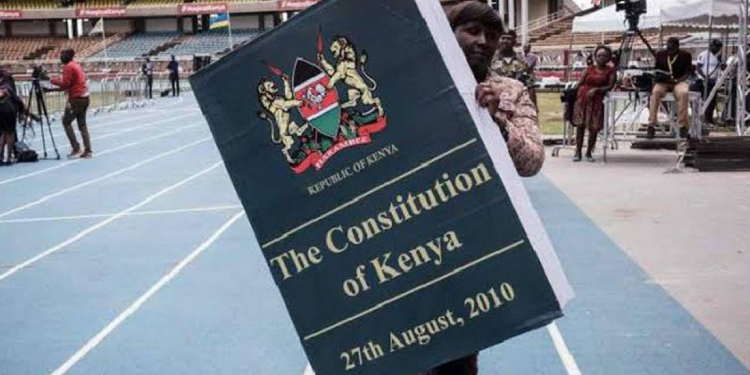
Kenya&Amp;Apos;S Constitution Recognizes The Office Of President. It Provides Mechanisms For Temporary Incumbency In Particular Circumstances. It Regulates Presidential Incapacity, Vacancy, Succession And The Exercise Of Presidential Authority.
A photo of a citizen holding a Constitution 2010 banner. PHOTO/AFP
Tags: 2010 Kenya constitutionPresident William Ruto
Prof. Gitile Naituli

Prof. Gitile Naituli

Prof. Gitile Naituli teaches Constitutionalism and Governance at Multimedia University of Kenya and is a Fellow of the Kenya National Academy of Sciences. He can be reached at: [email protected].

Related Posts

The Role Of The United Nations In Addressing Severe Diseases In Africa 

The Role of the United Nations in Addressing Severe Diseases in Africa 

August 28, 2026
Antinuclear Misinformation Debunked Using Google Maps.

Antinuclear Misinformation Debunked Using Google Maps

August 28, 2026
Ruto’s Real Opposition Is The Kenyan People

Ruto’s Real Opposition Is the Kenyan People

August 24, 2026
Kenya Airways Announces Dubai Repatriation Flights Amid Middle East Crisis

Kenya Airways: The Paradox of a National Asset That Cannot Yet Convert Opportunity into Wealth

August 21, 2026

Leave a Reply Cancel reply

Your email address will not be published. Required fields are marked *

ADVERTISEMENT

The Kenya Times Facebook

LATEST NEWS

  • Milk Shortage in Kenya? Supermarkets Limit Purchases as Popular Brands Disappear From Shelves
  •  From Healthcare Pioneer to Microsoft East Africa Boss: Angela Nganga’s Unlikely Path to Power  
  • KCB Publicly Mourns Rosemary Koech as KSh 1M Children’s Fund Is Seeded
  • The Role of the United Nations in Addressing Severe Diseases in Africa 
  • Who Is Fredah Onduso, the Actress Now Making Waves in Linda Mwananchi?
  • How Kenyans Can Check and Claim HELB Refunds After Overpaying Their Loans
  • Njeri Maina Wants DCI to Probe Wangui Ngirici Over Gachagua Rally Violence
  • Kericho Referral Hospital Upgrades Bring New Services Closer to Residents
  • Kenya’s Next Football Stars Are Rising Through the SportPesa League
  • Protests Erupt in Nairobi CBD After Govt Directive
  • Another Police Recruitment Coming Before 2027 Elections?
  • CBK Invites Investors to Bid in KSh10 Billion Treasury Bond Switch Auction
  • Key Features of New Police Uniform Unveiled by Ruto
  • Gladys Wanga Recounts Her Battle with Cancer and Role Beth Mugo Played in Her Journey
  • Ruto Honors Top Police Recruits: What the Awards Mean
ADVERTISEMENT

Company

About Us

Our Authors

Our Experts

Social Media

Policies

Privacy Policy

House Rules

Standards and Policies

Terms and Conditions

Subscription

My Account

Contact Us

Contact Us

Join Our Team

Advertise With Us

© Copyright 2026 | The Kenya Times | All Rights Reserved

Welcome Back!

Sign In with Facebook
Sign In with Google
Sign In with Linked In
OR

Login to your account below

Forgotten Password? Sign Up

Create New Account!

Sign Up with Facebook
Sign Up with Google
Sign Up with Linked In
OR

Fill the forms below to register

All fields are required. Log In

Retrieve your password

Please enter your username or email address to reset your password.

Log In
Your Privacy and Cookies
We use cookies on our website to give you the most relevant experience by remembering your preferences and repeat visits. By clicking “Accept”, you consent to the use of ALL the cookies.
Do not sell my personal information.
Cookie settingsACCEPT
Privacy & Cookies Policy

Privacy Overview

This website uses cookies to improve your experience while you navigate through the website. Out of these cookies, the cookies that are categorized as necessary are stored on your browser as they are essential for the working of basic functionalities of the website. We also use third-party cookies that help us analyze and understand how you use this website. These cookies will be stored in your browser only with your consent. You also have the option to opt-out of these cookies. But opting out of some of these cookies may have an effect on your browsing experience.
Necessary
Always Enabled
Necessary cookies are absolutely essential for the website to function properly. This category only includes cookies that ensures basic functionalities and security features of the website. These cookies do not store any personal information.
Functional
Functional cookies help to perform certain functionalities like sharing the content of the website on social media platforms, collect feedbacks, and other third-party features.
Performance
Performance cookies are used to understand and analyze the key performance indexes of the website which helps in delivering a better user experience for the visitors.
Analytics
Analytical cookies are used to understand how visitors interact with the website. These cookies help provide information on metrics the number of visitors, bounce rate, traffic source, etc.
Advertisement
Advertisement cookies are used to provide visitors with relevant ads and marketing campaigns. These cookies track visitors across websites and collect information to provide customized ads.
Others
Other uncategorized cookies are those that are being analyzed and have not been classified into a category as yet.
SAVE & ACCEPT
LOGIN | REGISTER
  • Login
  • Sign Up
  • Cart
No Result
View All Result
  • News
    • Latest News
    • Breaking News
    • Investigations
    • Explainers
    • Fact Check
  • Politics
    • Global Politics
    • Conflicts & Security
    • Elections
    • Diplomacy
    • Government & Policy
    • Political Analysis
  • Business
    • Global Economy
    • Markets
    • Technology
    • Startups
    • Energy
    • Finance
  • World News
    • Americas
    • Asia
    • Asia Pacific
    • Africa
    • Europe
    • Middle East
  • Africa
    • East Africa
    • West Africa
    • Southern Africa
    • Central Africa
  • Health
    • Global Health
    • Public Health
    • Health Policy
    • Medical Research
    • Diseases & Conditions
    • Mental Health
    • Nutrition
    • Climate & Health
    • Health Explainers
  • Sports
    • World Cup 2026
    • Athletics
    • Basketball
    • Boxing
    • Cricket
    • Football
    • Formula 1
    • Golf
    • Rugby
  • Weather
    • Climate Business
    • Climate Change
    • Climate Solutions
    • Living Green
  • Culture
    • Arts
    • Film & TV
    • Food and Recipes
    • Lifestyle
    • Music
    • Travel
  • Opinion
    • Editorials
    • Letters
  • Behind The Brand
  • Contact Us

Not enough quota to unlock this post
Unlock left : 0
Are you sure want to cancel subscription?