Wednesday, October 14, 2026
  • News
    • Latest News
    • Breaking News
    • Fact Check
    • Investigations
    • Explainers
  • Politics
    • Global Politics
    • Elections
    • Government & Policy
    • Diplomacy
    • Conflicts & Security
    • Political Analysis
  • Business
    • Global Economy
    • Markets
    • Technology
    • Startups
    • Energy
    • Finance
  • World News
    • Americas
    • Asia
    • Asia Pacific
    • Africa
    • Europe
    • Middle East
  • Africa
    • Central Africa
    • East Africa
    • West Africa
    • Southern Africa
  • Health
    • Global Health
    • Public Health
    • Health Policy
    • Medical Research
    • Diseases & Conditions
    • Mental Health
    • Nutrition
    • Climate & Health
    • Health Explainers
  • Sports
    • World Cup 2026
    • Athletics
    • Basketball
    • Boxing
    • Cricket
    • Football
    • Formula 1
    • Golf
    • Rugby
  • Weather
    • Climate Business
    • Climate Change
    • Climate Solutions
    • Living Green
  • Culture
    • Arts
    • Film & TV
    • Food and Recipes
    • Music
    • Lifestyle
    • People
    • Travel
  • Opinion
    • Editorials
    • Letters
  • Behind The Brand
REGISTER
LOGIN
No Result
View All Result
The Kenya Times
  • News
    • Latest News
    • Breaking News
    • Fact Check
    • Investigations
    • Explainers
  • Politics
    • Global Politics
    • Elections
    • Government & Policy
    • Diplomacy
    • Conflicts & Security
    • Political Analysis
  • Business
    • Global Economy
    • Markets
    • Technology
    • Startups
    • Energy
    • Finance
  • World News
    • Americas
    • Asia
    • Asia Pacific
    • Africa
    • Europe
    • Middle East
  • Africa
    • Central Africa
    • East Africa
    • West Africa
    • Southern Africa
  • Health
    • Global Health
    • Public Health
    • Health Policy
    • Medical Research
    • Diseases & Conditions
    • Mental Health
    • Nutrition
    • Climate & Health
    • Health Explainers
  • Sports
    • World Cup 2026
    • Athletics
    • Basketball
    • Boxing
    • Cricket
    • Football
    • Formula 1
    • Golf
    • Rugby
  • Weather
    • Climate Business
    • Climate Change
    • Climate Solutions
    • Living Green
  • Culture
    • Arts
    • Film & TV
    • Food and Recipes
    • Music
    • Lifestyle
    • People
    • Travel
  • Opinion
    • Editorials
    • Letters
  • Behind The Brand
  • News
    • Latest News
    • Breaking News
    • Fact Check
    • Investigations
    • Explainers
  • Politics
    • Global Politics
    • Elections
    • Government & Policy
    • Diplomacy
    • Conflicts & Security
    • Political Analysis
  • Business
    • Global Economy
    • Markets
    • Technology
    • Startups
    • Energy
    • Finance
  • World News
    • Americas
    • Asia
    • Asia Pacific
    • Africa
    • Europe
    • Middle East
  • Africa
    • Central Africa
    • East Africa
    • West Africa
    • Southern Africa
  • Health
    • Global Health
    • Public Health
    • Health Policy
    • Medical Research
    • Diseases & Conditions
    • Mental Health
    • Nutrition
    • Climate & Health
    • Health Explainers
  • Sports
    • World Cup 2026
    • Athletics
    • Basketball
    • Boxing
    • Cricket
    • Football
    • Formula 1
    • Golf
    • Rugby
  • Weather
    • Climate Business
    • Climate Change
    • Climate Solutions
    • Living Green
  • Culture
    • Arts
    • Film & TV
    • Food and Recipes
    • Music
    • Lifestyle
    • People
    • Travel
  • Opinion
    • Editorials
    • Letters
  • Behind The Brand
No Result
View All Result
The Kenya Times ~ Trending, Breaking News and Videos
No Result
View All Result
ADVERTISEMENT

Drivers of electoral violence in Kenya: Red flags to watch out for

Emma ElfverssonbyEmma Elfversson
May 2, 2022
Reading Time: 8 mins read
FacebookTwitterLinkedInRedditWhatsApp
Advertisement

Kenya’s National Cohesion and Integration Commission recently listed 23 counties that are considered potential violence hotspots ahead of the country’s August 2022 elections.

This mapping is part of the commission’s mission to ensure a peaceful election. Several of Kenya’s past polls have seen high levels of violence. The violence that broke out after the 2007 elections stands out in particular. It caused over a thousand fatalities and led to a national crisis.

Hiding behind a barricade, an armed Police Officer shoots at rioters

This was eventually resolved through a coalition government and constitutional reform.

Election-related violence in Kenya often takes the form of inter-communal violence. This involves groups – without formal organization – clashing along identity lines. Violence between ethnic groups aligned with Kenya’s main political parties has erupted in connection to the 1992, 1997, 2008 and 2017 elections.

Existing research indicates that patronage politics, a history of violent conflict and high-stakes elections increase the risks of poll violence. These studies have mainly focused on national-level drivers of violence.

My research has explored the causes of communal violence at a more local level. Much of my work has focused on Kenya.

ADVERTISEMENT

I highlight a few key drivers of communal conflict that could inform efforts to predict and prevent election violence in Kenya.

Drivers of conflict

Communal violence erupts in connection with elections for different reasons. Firstly, some of it is directly election related.

For instance, politicians may instigate violence to frighten opponents. They may also use hate speech, which makes groups more hostile to each other and increases the risk of violence.

Secondly, violence may erupt due to local conflicts that aren’t directly election related. The uncertainty and re-negotiation of power relations during the election period causes conflict to intensify.

To understand local risks of violence, it’s therefore important to look at local-level conflict dynamics and what is at stake in the elections.
ADVERTISEMENT
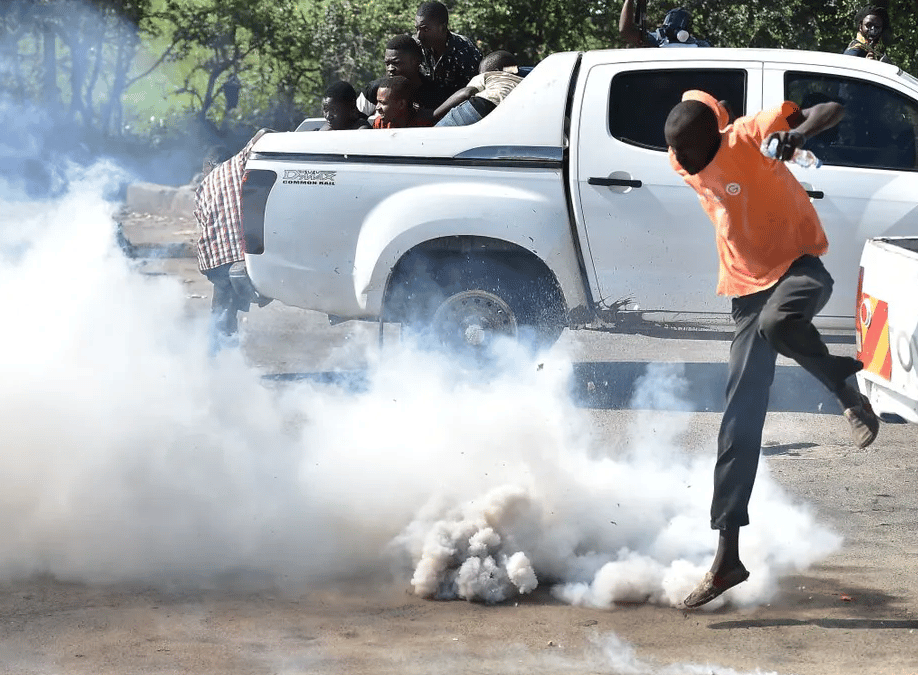
A man flees from teargas fired by anti-riot police in Nairobi after Kenya’s 2017 elections | AFP

While analyses of past episodes of election violence in Kenya have often focused on national-level political actors, the current devolved system of governance matters for local violence risks.

The 2010 constitution allocates significant financial and political power to Kenya’s 47 counties. In part, devolution was aimed at decreasing the risks of large-scale election violence by diminishing the importance of national power.

However, it increased the importance of which political bloc wins at the county level. This has implications for those who have access to local resources and patrimonial networks.

The fact that elections in Kenya often heighten inter-communal tensions has roots in political developments during and after colonial rule. Successive political leaders and aspirants have used group-based grievances to mobilize voters and, at times, violent militias.
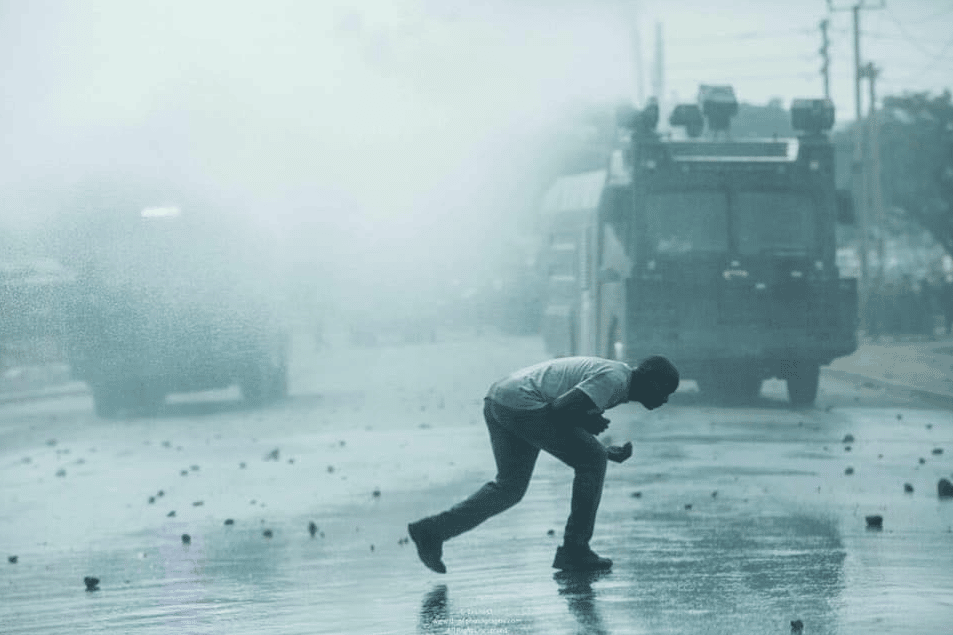
Importantly, land tenure has remained closely connected to communal identity in Kenya. Land is important for livelihood but also for belonging. Narratives about ancestral land and first-comer status have often played a role in political mobilization. For example, former President Daniel Moi threatened his constituents in the Rift Valley that they would lose access to their ancestral land if they voted for the opposition.

Regions where land conflicts are prominent – and politicians are mobilizing based on these conflicts – are areas to watch for signs of violence. Such conflicts may be very localized, with relatively small geographic areas contested along group lines. If such conflicts are perceived as intertwined with election outcomes, the risk of election-related violence increases.

The risk of violence also depends on perceptions of vulnerability and state bias.

If local communities don’t trust the government to impartially protect their interests and basic needs, they are more likely to support violence to ensure that political candidates who claim to represent them win.

Research by others has shown how people who felt their ethnic community had long been neglected by the government turned to violence when they perceived ‘their’ candidate was robbed of victory in the 2007 election.

Conflict may also erupt in reaction to changed local boundaries. Redrawing boundaries or creating new constituencies can affect local election outcomes and has been frequent in Kenya since the 1990s. Such shifts may change the balance of power and local election outcomes.

This can spark a violent response in cases where inter-group tension is high. For example, in Mandera, the creation of new districts fueled tensions that erupted into major inter-clan violence in 2005.
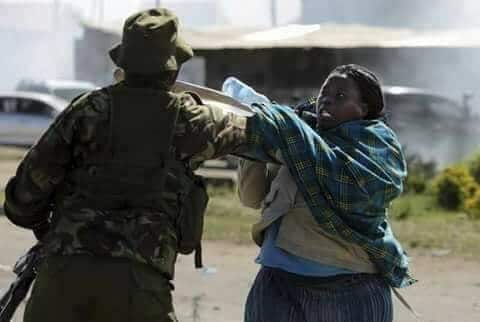
Kenyan police roughs up a woman, during the 2017 post-election riots

Finally, drivers of communal violence can differ between urban and rural areas. Cities have high density and mobilization potential.

They also have the starkest inequality between the rich and poor. These factors can be used to instigate violence.

After the 2007 elections, Nairobi and other cities saw high levels of violence, particularly in informal settlements. Kenya’s cohesion commission points to informal settlements as a risk factor for election violence. Not all informal settlements become violent, however.

Mobilization strategies and connections between political aspirants and local violent gangs are important factors to consider when analyzing which urban settlements are at risk. It’s also necessary to consider local violence prevention and conflict resolution strategies.

Strengthening solutions

My research in Kerio Valley illustrates how mediation and dialogue can yield peaceful solutions to local conflicts. More generally, local dialogue can reduce tensions between communal groups and increase perceptions of security.

It’s, therefore, important to pay attention to local dialogue and prevention efforts when predicting local risks of violence. However, the mere presence of dialogue or agreement may not be sufficient.

Others have found that local peace agreements are more likely to be effective if they are facilitated by trusted and legitimate mediators. They also need to include clear implementation and enforcement of stipulations.

Sometimes, communities agree on how to share local power after elections, for instance by nominating different county positions from different groups. A study from Nigeria found that such arrangements promote inter-group tolerance, reduce fears of exploitation and make politicians less likely to use divisive rhetoric.

Presidential Candidate Raila Odinga’s bulletproof car shot at

In the Kenyan context, a comparison of two violence-affected areas indicated that the presence of such an arrangement in Nakuru County decreased hostility and confrontation during the gubernatorial race in 2017. Political discourse in Uasin Gishu, which had no such agreement, was more antagonistic and intimidating. 

Risks in ‘mapping hotspots’

Kenya’s cohesion commission uses a 13-point risk matrix to identify areas at high risk of election violence. Many of the variables it uses resonate with existing research on communal violence. It is also encouraging that the commission pays attention to prevention strategies, as well as risk factors.

However, a note of caution. While the approach of mapping risk areas may help prevent violence – for instance by devoting more resources to certain counties – there are risks in this.

Research in Haiti has highlighted that the mapping of risk areas can have adverse effects on the local economy. In the worst case, it can become a self-reinforcing prophecy as it increases threat perceptions.

Given that antagonistic political rhetoric in Kenya has often played on communities’ fears of victimization, this risk needs to be kept in mind.The Conversation

Emma Elfversson, Associate professor, Uppsala University

This article is republished from The Conversation under a Creative Commons license. Read the original article.
Tags: Elections 2022 KeHate SpeechKenyaPEVPost-Election Violence
Emma Elfversson

Emma Elfversson

My research interests concern ethnic politics and communal conflict, the role of state and non-state actors in addressing communal conflicts, and rural/urban dimensions of organized violence. I currently lead the project The Urban Dilemma. I employ both qualitative and quantitative methods; field research focuses on cases in Kenya. I hold a Ph.D. (2017) from Uppsala University. My doctoral thesis is entitled Central Politics and Local Peacemaking: The Conditions for Peace after Communal Conflict. Prior to my Ph.D. studies, I worked for two years as a research assistant with the Uppsala Conflict Data Program (UCDP)

Related Posts

Binge-Eating Among College Students With Abundant Junk Food, A Common Setting Linked To Binge-Eating Risks.

How Globalization and Food Insecurity Fuel Disordered Eating Behavior in Young Adults

October 14, 2026
From Knowledge To Impact: A New Era Of Kenya–Uk Science Diplomacy

From Knowledge Sharing to Innovation: A New Chapter in Kenya–UK Science Diplomacy

October 10, 2026
Kenyan Teaching And Teachers Received Awards For Outstanding Contributions On October 5, At The Kasarani Indoor Arena During National World Teachers’ Day.

What Would a Truly Professional Teaching Profession Look Like in Kenya?

October 7, 2026
Beyond Borders: Why Science Diplomacy Must Drive The Next Era Of Development

Why Science Diplomacy Must Drive the Next Era of Development

October 5, 2026
ADVERTISEMENT

The Kenya Times Facebook

LATEST NEWS

  • Court Clears Path for Dangote’s Lamu Oil Refinery
  • EPRA Announces New Fuel Prices for October-November Cycle
  • Kenya Confirms Second Ebola Case
  • How to Import Milk Buffaloes from India to Kenya: Costs, Licenses and Process
  • KCSE 2026 Timetable: Date and Time Each Paper Will Be Examined
  • Bobby Ogolla: How Gor Mahia’s ‘Six Million Dollar Man’ Made His Name
  • Motorist Jumps Out of Car, Recovers iPhone 15 Pro Max After Police Chase
  • Fastest Routes to Get From JKIA to Nairobi CBD
  • UDA Secretary General Hassan Omar Summoned
  • Kenyan MP Wins Global Award
  • Profile of Esther Arunga, Former KTN Anchor Who Dropped Husband’s Surname After 16 Years
  • How Mamlaka Hill Chapel Grew From 80 Worshippers Under Bishop Ng’ang’a Before His Dismissal
  • Why SRC Asked 2 Senior Judges to Step Aside From High-Profile Car Allowance Case
  • India Issues Kenya Travel Advisory Over New Entry Requirement
  • Can You Drop Your Ex-Husband’s Name After Divorce in Kenya? What the Law Says
ADVERTISEMENT

Company

About Us

Our Authors

Our Experts

Social Media

Policies

Privacy Policy

House Rules

Standards and Policies

Terms and Conditions

Subscription

My Account

Contact Us

Contact Us

Join Our Team

Advertise With Us

© Copyright 2026 | The Kenya Times | All Rights Reserved

Welcome Back!

Sign In with Facebook
Sign In with Google
Sign In with Linked In
OR

Login to your account below

Forgotten Password? Sign Up

Create New Account!

Sign Up with Facebook
Sign Up with Google
Sign Up with Linked In
OR

Fill the forms below to register

All fields are required. Log In

Retrieve your password

Please enter your username or email address to reset your password.

Log In
Your Privacy and Cookies
We use cookies on our website to give you the most relevant experience by remembering your preferences and repeat visits. By clicking “Accept”, you consent to the use of ALL the cookies.
Do not sell my personal information.
Cookie settingsACCEPT
Privacy & Cookies Policy

Privacy Overview

This website uses cookies to improve your experience while you navigate through the website. Out of these cookies, the cookies that are categorized as necessary are stored on your browser as they are essential for the working of basic functionalities of the website. We also use third-party cookies that help us analyze and understand how you use this website. These cookies will be stored in your browser only with your consent. You also have the option to opt-out of these cookies. But opting out of some of these cookies may have an effect on your browsing experience.
Necessary
Always Enabled
Necessary cookies are absolutely essential for the website to function properly. This category only includes cookies that ensures basic functionalities and security features of the website. These cookies do not store any personal information.
Functional
Functional cookies help to perform certain functionalities like sharing the content of the website on social media platforms, collect feedbacks, and other third-party features.
Performance
Performance cookies are used to understand and analyze the key performance indexes of the website which helps in delivering a better user experience for the visitors.
Analytics
Analytical cookies are used to understand how visitors interact with the website. These cookies help provide information on metrics the number of visitors, bounce rate, traffic source, etc.
Advertisement
Advertisement cookies are used to provide visitors with relevant ads and marketing campaigns. These cookies track visitors across websites and collect information to provide customized ads.
Others
Other uncategorized cookies are those that are being analyzed and have not been classified into a category as yet.
SAVE & ACCEPT
LOGIN | REGISTER
  • Login
  • Sign Up
  • Cart
No Result
View All Result
  • News
    • Latest News
    • Breaking News
    • Investigations
    • Explainers
    • Fact Check
  • Politics
    • Global Politics
    • Conflicts & Security
    • Elections
    • Diplomacy
    • Government & Policy
    • Political Analysis
  • Business
    • Global Economy
    • Markets
    • Technology
    • Startups
    • Energy
    • Finance
  • World News
    • Americas
    • Asia
    • Asia Pacific
    • Africa
    • Europe
    • Middle East
  • Africa
    • East Africa
    • West Africa
    • Southern Africa
    • Central Africa
  • Health
    • Global Health
    • Public Health
    • Health Policy
    • Medical Research
    • Diseases & Conditions
    • Mental Health
    • Nutrition
    • Climate & Health
    • Health Explainers
  • Sports
    • World Cup 2026
    • Athletics
    • Basketball
    • Boxing
    • Cricket
    • Football
    • Formula 1
    • Golf
    • Rugby
  • Weather
    • Climate Business
    • Climate Change
    • Climate Solutions
    • Living Green
  • Culture
    • Arts
    • Film & TV
    • Food and Recipes
    • Lifestyle
    • Music
    • People
    • Travel
  • Opinion
    • Editorials
    • Letters
  • Behind The Brand
  • Contact Us

Not enough quota to unlock this post
Unlock left : 0
Are you sure want to cancel subscription?