Saturday, August 29, 2026
  • News
    • Latest News
    • Breaking News
    • Fact Check
    • Investigations
    • Explainers
  • Politics
    • Global Politics
    • Elections
    • Government & Policy
    • Diplomacy
    • Conflicts & Security
    • Political Analysis
  • Business
    • Global Economy
    • Markets
    • Technology
    • Startups
    • Energy
    • Finance
  • World News
    • Americas
    • Asia
    • Asia Pacific
    • Africa
    • Europe
    • Middle East
  • Africa
    • Central Africa
    • East Africa
    • West Africa
    • Southern Africa
  • Health
    • Global Health
    • Public Health
    • Health Policy
    • Medical Research
    • Diseases & Conditions
    • Mental Health
    • Nutrition
    • Climate & Health
    • Health Explainers
  • Sports
    • World Cup 2026
    • Athletics
    • Basketball
    • Boxing
    • Cricket
    • Football
    • Formula 1
    • Golf
    • Rugby
  • Weather
    • Climate Business
    • Climate Change
    • Climate Solutions
    • Living Green
  • Culture
    • Arts
    • Film & TV
    • Food and Recipes
    • Music
    • Lifestyle
    • Travel
  • Opinion
    • Editorials
    • Letters
  • Behind The Brand
REGISTER
LOGIN
No Result
View All Result
The Kenya Times
  • News
    • Latest News
    • Breaking News
    • Fact Check
    • Investigations
    • Explainers
  • Politics
    • Global Politics
    • Elections
    • Government & Policy
    • Diplomacy
    • Conflicts & Security
    • Political Analysis
  • Business
    • Global Economy
    • Markets
    • Technology
    • Startups
    • Energy
    • Finance
  • World News
    • Americas
    • Asia
    • Asia Pacific
    • Africa
    • Europe
    • Middle East
  • Africa
    • Central Africa
    • East Africa
    • West Africa
    • Southern Africa
  • Health
    • Global Health
    • Public Health
    • Health Policy
    • Medical Research
    • Diseases & Conditions
    • Mental Health
    • Nutrition
    • Climate & Health
    • Health Explainers
  • Sports
    • World Cup 2026
    • Athletics
    • Basketball
    • Boxing
    • Cricket
    • Football
    • Formula 1
    • Golf
    • Rugby
  • Weather
    • Climate Business
    • Climate Change
    • Climate Solutions
    • Living Green
  • Culture
    • Arts
    • Film & TV
    • Food and Recipes
    • Music
    • Lifestyle
    • Travel
  • Opinion
    • Editorials
    • Letters
  • Behind The Brand
  • News
    • Latest News
    • Breaking News
    • Fact Check
    • Investigations
    • Explainers
  • Politics
    • Global Politics
    • Elections
    • Government & Policy
    • Diplomacy
    • Conflicts & Security
    • Political Analysis
  • Business
    • Global Economy
    • Markets
    • Technology
    • Startups
    • Energy
    • Finance
  • World News
    • Americas
    • Asia
    • Asia Pacific
    • Africa
    • Europe
    • Middle East
  • Africa
    • Central Africa
    • East Africa
    • West Africa
    • Southern Africa
  • Health
    • Global Health
    • Public Health
    • Health Policy
    • Medical Research
    • Diseases & Conditions
    • Mental Health
    • Nutrition
    • Climate & Health
    • Health Explainers
  • Sports
    • World Cup 2026
    • Athletics
    • Basketball
    • Boxing
    • Cricket
    • Football
    • Formula 1
    • Golf
    • Rugby
  • Weather
    • Climate Business
    • Climate Change
    • Climate Solutions
    • Living Green
  • Culture
    • Arts
    • Film & TV
    • Food and Recipes
    • Music
    • Lifestyle
    • Travel
  • Opinion
    • Editorials
    • Letters
  • Behind The Brand
No Result
View All Result
The Kenya Times ~ Trending, Breaking News and Videos
No Result
View All Result
ADVERTISEMENT

Everyone Is Corrupt? Why That Lie Is Still Killing Kenya

Peter OngerabyPeter Ongera
December 9, 2025
Reading Time: 6 mins read
President William Ruto Has Vowed To Transform Kenya Into Singapore. Says The Ebola Quarantine Is Unstoppable

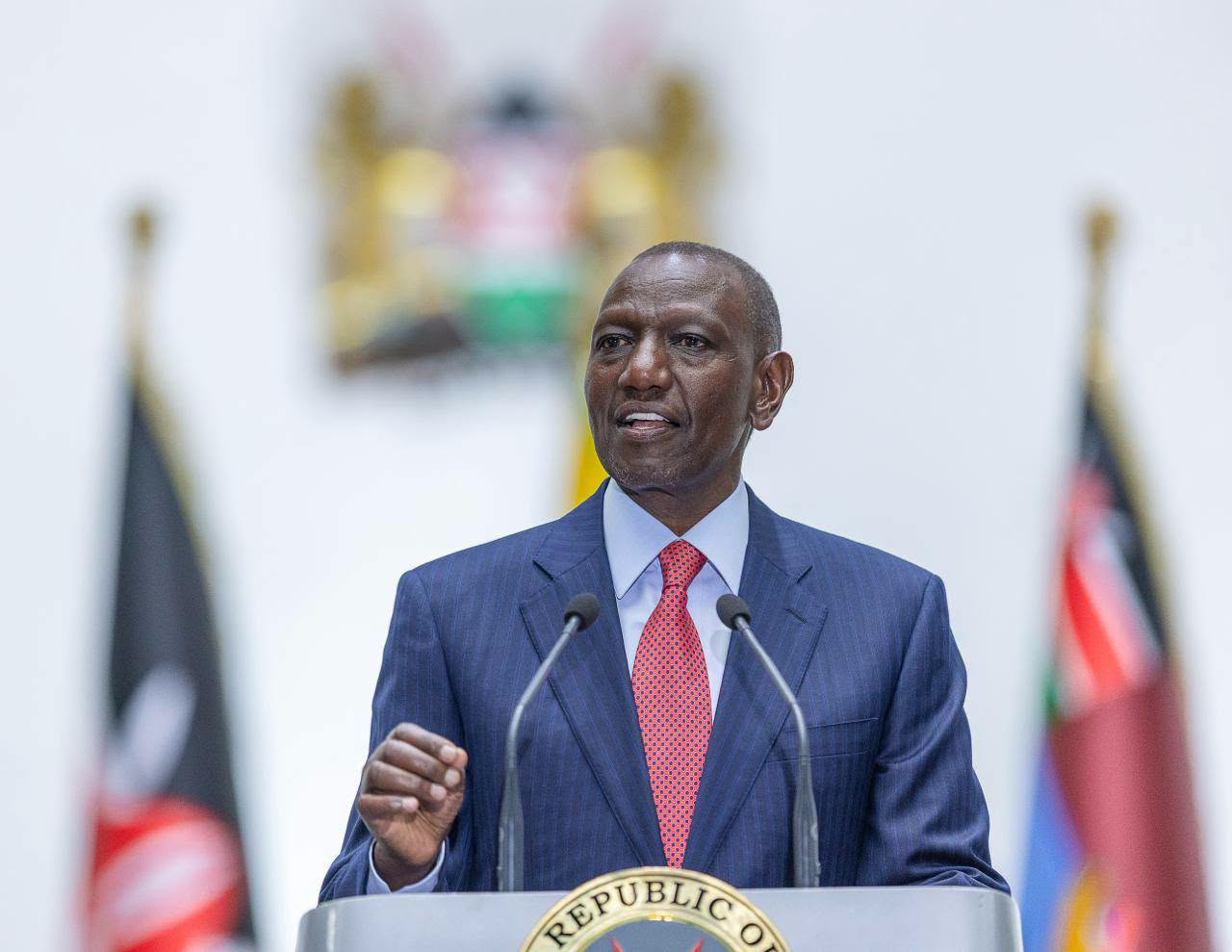
President William Ruto at State House Nairobi. PHOTO/PCS.

FacebookTwitterLinkedInRedditWhatsApp
Advertisement

In Kenya, corruption is no longer whispered about in corners. It is discussed openly in matatus, lamented over tea, joked about on social media, and shrugged off in public offices. It has morphed from a moral outrage into an everyday inconvenience — something to work around rather than confront. And perhaps the most dangerous phrase keeping it alive is this one: “Everyone is corrupt. Why not me?”

That sentence, casually uttered or silently believed, has become one of the most potent enablers of Kenya’s stalled development.

Corruption in Kenya is often framed as a personal moral failure — a matter of greedy individuals lacking integrity. But this framing is incomplete, and frankly dishonest. Corruption here is systemic. It is embedded in institutions, normalised in service delivery, protected by political power, and rationalised by economic hardship. When corruption becomes the rule rather than the exception, honesty begins to feel naïve — even self-destructive.

And that is exactly the tragedy.

A nation trapped by its own cynicism

Recent surveys paint a grim picture. Most Kenyans today believe corruption is either getting worse or staying the same. Despite endless task forces, new laws, high-profile arrests and presidential promises, the lived reality for ordinary citizens has barely changed. You still “facilitate” documents. You still “talk to someone” to access services. You still pay under the table to avoid delays intentionally built into the system.

The result is widespread cynicism. When citizens repeatedly see powerful officials steal with impunity, cases collapse in court, and looted money recycled into politics, the public stops believing that integrity matters. The question quietly shifts from “Is this right?” to “Why should I be the only fool playing by the rules?”

ADVERTISEMENT

This mindset does not emerge from nowhere. It is cultivated.

When the system punishes honesty

Consider the everyday Kenyan: struggling with a high cost of living, limited opportunities, collapsing public services, and shrinking social safety nets. In such an environment, corruption often masquerades as survival. A bribe becomes “lunch money.” A kickback becomes “a small appreciation.” Inflated tenders become “business.”


Also Read: Senior Govt Officials Put on Notice Over Fake Academic Certificates


The real scandal is not just that corruption exists, but that the system often punishes those who refuse to participate in it. Whistle-blowers lose jobs. Ethical officers are transferred. Law-abiding entrepreneurs are undercut by those who grease palms. Citizens who refuse to pay bribes wait longer, suffer more, and are reminded daily that principles come at a cost.

So when leaders tell Kenyans to “stop corruption,” without first fixing the structures that reward it, the message rings hollow.

ADVERTISEMENT

Big fish, small consequences

Kenya does not lack anti-corruption laws. It lacks consequences. The country has built an impressive architecture of watchdog institutions, but many are under-resourced, politically constrained, or undermined by overlapping mandates. Investigations drag on. Prosecutions collapse. Asset recovery is slow and selective.

Most damaging is the perception — and often the reality — that corruption enforcement is unequal. Petty offenders are paraded. Low-level officials are disciplined. But politically connected “big fish” continue swimming freely, shielded by power, lawyers, and influence.

This selective justice feeds public apathy. Why take a stand if the corrupt remain untouchable?

Corruption is not culture — it is design

We must reject the lazy argument that corruption is “our culture.” Cultures are shaped. Systems are designed. Kenya’s corruption is not the result of some inherent national defect; it is the outcome of weak accountability, opaque governance, political patronage, and economic inequality.

Labeling corruption as cultural becomes a convenient excuse — a way to absolve leadership of responsibility. It shifts the blame for policy failures onto the people, while ignoring how state systems themselves manufacture corruption.

Yet history shows that societies change when incentives change. When transparency is enforced, when consequences are certain, and when public service is rewarded rather than exploited, behavior follows.

The cost we all pay

Corruption is not a victimless crime. It steals from hospitals and schools. It inflates taxes and prices. It kills infrastructure projects. It deepens inequality and erodes trust. It tells young people that success requires shortcuts, not skill. And it slowly hollows out the social contract between the state and its citizens.


Also Read: Irony as Nigerian Legislators Tour Kenya for Anti-Corruption Lessons


Most painfully, corruption robs Kenyans of hope. It normalizes despair. It teaches resignation.

But resignation is exactly what corruption needs to survive.

Breaking the “why not me” cycle

Ending corruption does not begin with slogans or arrests. It begins with dismantling the systems that make corruption profitable and honesty painful. That means consistent enforcement of the law — regardless of status. It means protecting whistle-blowers. It means simplifying public services and eliminating discretionary power where bribery thrives. It means transparent procurement and real asset recovery.

But it also requires citizen courage.

Refusing to normalize corruption — especially petty corruption — matters more than we admit. Every small refusal challenges the lie that “everyone is corrupt.” Every insistence on accountability, however inconvenient, chips away at the culture of silence.

A final truth

The truth is this: not everyone is corrupt. Many Kenyans are simply trapped in a broken system. But a system survives only as long as people accept it as inevitable.

Corruption thrives on our silence, our cynicism, and our resignation. Once we stop asking “why not me?” and start demanding “why this system?” — that is when real change begins.

And Kenya, weary but not hopeless, is long overdue for that reckoning.

Follow our WhatsApp Channel and X Account for real-time news updates.
Tags: CorruptionEACCOginde
Peter Ongera

Peter Ongera

Peter Ongera is an award-winning investigative journalist whose fearless reporting has exposed corruption, human rights violations, and illicit financial flows across Kenya and the African continent. With over a decade of experience, Peter has become a trusted voice on issues of governance, electoral integrity, and democratic accountability. His deeply researched stories have been featured by respected platforms including the Thomson Reuters Foundation, Internews, Africa Check, Lida Network, Hivos, and Context. Trained in digital forensics, open-source intelligence (OSINT), and fact-checking, Peter combines cutting-edge verification techniques with a passion for evidence-based storytelling. He has also mentored emerging journalists across the globe, equipping them to hold power to account. Through his work, Peter champions a journalism that not only informs but drives systemic reform; empowering communities to demand transparency, justice, and lasting change. You can reach him at [email protected].

Related Posts

Ruto Orders Police To Go After Politicians Funding Goons

Why Kenya Never Finishes a Presidential Election 

August 29, 2026
Kenya Politics And Hate Speech: Institutionalize Communication In Leaders’ Offices

Kenya Hate Speech: Why Political Offices Need Professional Communication Units

August 29, 2026
The Role Of The United Nations In Addressing Severe Diseases In Africa 

The Role of the United Nations in Addressing Severe Diseases in Africa 

August 28, 2026
Antinuclear Misinformation Debunked Using Google Maps.

Antinuclear Misinformation Debunked Using Google Maps

August 28, 2026
ADVERTISEMENT

The Kenya Times Facebook

LATEST NEWS

  • Why Kenya Never Finishes a Presidential Election 
  • Nairobi Hospital Announces New Changes to Its Board
  • Kenya Met Lists Areas to Receive Rain, Warns of Temperatures of Up to 38°C
  • Who Owns Nalitex Limited? The Company Behind Kenya’s New Police Uniforms
  • Kenyan Shilling Holds Firm as Forex Reserves Drop by $221Million
  • Kenya Hate Speech: Why Political Offices Need Professional Communication Units
  • Besigye Rushed to Hospital as Wife Sends Emotional Message to Museveni
  • KRA Raids YouTube Earnings with New Mandatory Deductions
  • Nation Media Group Announces Major Leadership Changes After Takeover by Tanzanian Tycoon
  • Milk Shortage in Kenya? Supermarkets Limit Purchases as Popular Brands Disappear From Shelves
  •  From Healthcare Pioneer to Microsoft East Africa Boss: Angela Nganga’s Unlikely Path to Power  
  • KCB Publicly Mourns Rosemary Koech as KSh 1M Children’s Fund Is Seeded
  • The Role of the United Nations in Addressing Severe Diseases in Africa 
  • Who Is Fredah Onduso, the Actress Now Making Waves in Linda Mwananchi?
  • How Kenyans Can Check and Claim HELB Refunds After Overpaying Their Loans
ADVERTISEMENT

Company

About Us

Our Authors

Our Experts

Social Media

Policies

Privacy Policy

House Rules

Standards and Policies

Terms and Conditions

Subscription

My Account

Contact Us

Contact Us

Join Our Team

Advertise With Us

© Copyright 2026 | The Kenya Times | All Rights Reserved

Welcome Back!

Sign In with Facebook
Sign In with Google
Sign In with Linked In
OR

Login to your account below

Forgotten Password? Sign Up

Create New Account!

Sign Up with Facebook
Sign Up with Google
Sign Up with Linked In
OR

Fill the forms below to register

All fields are required. Log In

Retrieve your password

Please enter your username or email address to reset your password.

Log In
Your Privacy and Cookies
We use cookies on our website to give you the most relevant experience by remembering your preferences and repeat visits. By clicking “Accept”, you consent to the use of ALL the cookies.
Do not sell my personal information.
Cookie settingsACCEPT
Privacy & Cookies Policy

Privacy Overview

This website uses cookies to improve your experience while you navigate through the website. Out of these cookies, the cookies that are categorized as necessary are stored on your browser as they are essential for the working of basic functionalities of the website. We also use third-party cookies that help us analyze and understand how you use this website. These cookies will be stored in your browser only with your consent. You also have the option to opt-out of these cookies. But opting out of some of these cookies may have an effect on your browsing experience.
Necessary
Always Enabled
Necessary cookies are absolutely essential for the website to function properly. This category only includes cookies that ensures basic functionalities and security features of the website. These cookies do not store any personal information.
Functional
Functional cookies help to perform certain functionalities like sharing the content of the website on social media platforms, collect feedbacks, and other third-party features.
Performance
Performance cookies are used to understand and analyze the key performance indexes of the website which helps in delivering a better user experience for the visitors.
Analytics
Analytical cookies are used to understand how visitors interact with the website. These cookies help provide information on metrics the number of visitors, bounce rate, traffic source, etc.
Advertisement
Advertisement cookies are used to provide visitors with relevant ads and marketing campaigns. These cookies track visitors across websites and collect information to provide customized ads.
Others
Other uncategorized cookies are those that are being analyzed and have not been classified into a category as yet.
SAVE & ACCEPT
LOGIN | REGISTER
  • Login
  • Sign Up
  • Cart
No Result
View All Result
  • News
    • Latest News
    • Breaking News
    • Investigations
    • Explainers
    • Fact Check
  • Politics
    • Global Politics
    • Conflicts & Security
    • Elections
    • Diplomacy
    • Government & Policy
    • Political Analysis
  • Business
    • Global Economy
    • Markets
    • Technology
    • Startups
    • Energy
    • Finance
  • World News
    • Americas
    • Asia
    • Asia Pacific
    • Africa
    • Europe
    • Middle East
  • Africa
    • East Africa
    • West Africa
    • Southern Africa
    • Central Africa
  • Health
    • Global Health
    • Public Health
    • Health Policy
    • Medical Research
    • Diseases & Conditions
    • Mental Health
    • Nutrition
    • Climate & Health
    • Health Explainers
  • Sports
    • World Cup 2026
    • Athletics
    • Basketball
    • Boxing
    • Cricket
    • Football
    • Formula 1
    • Golf
    • Rugby
  • Weather
    • Climate Business
    • Climate Change
    • Climate Solutions
    • Living Green
  • Culture
    • Arts
    • Film & TV
    • Food and Recipes
    • Lifestyle
    • Music
    • Travel
  • Opinion
    • Editorials
    • Letters
  • Behind The Brand
  • Contact Us

Not enough quota to unlock this post
Unlock left : 0
Are you sure want to cancel subscription?