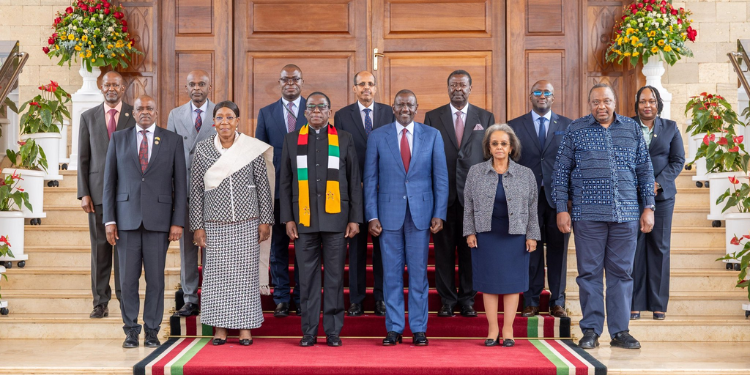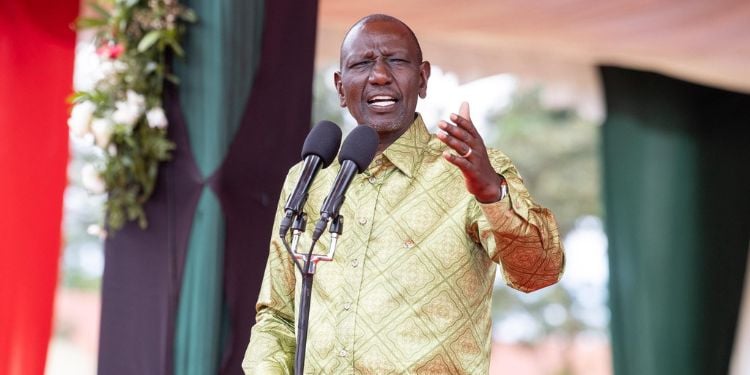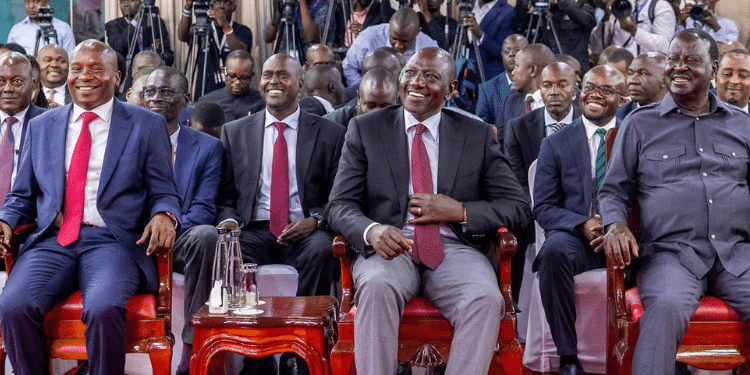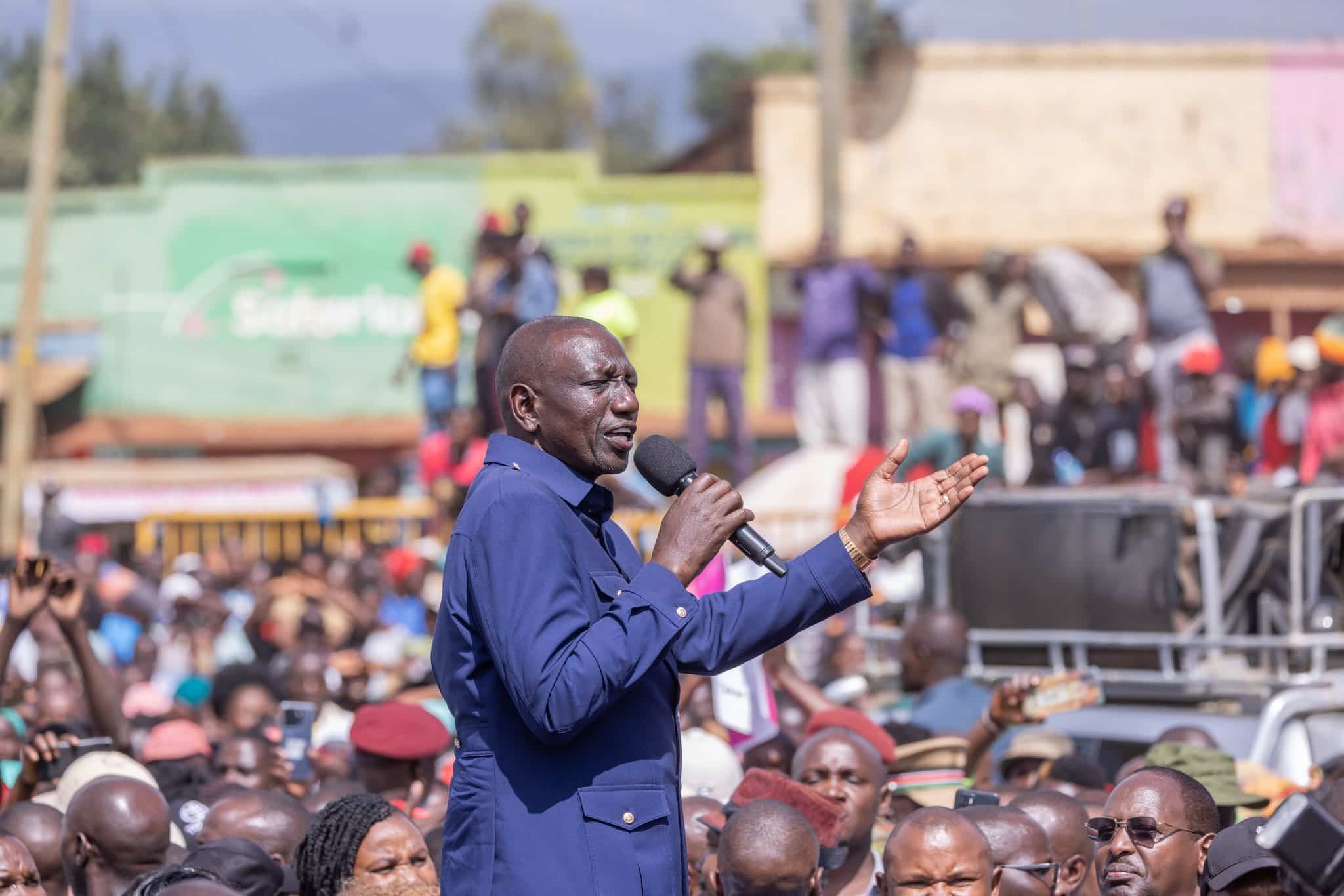

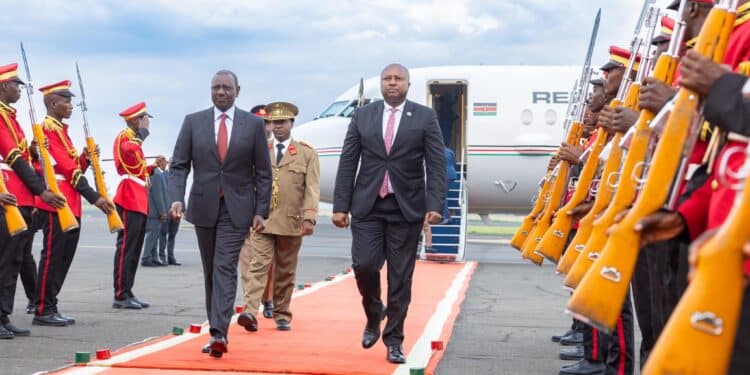
Kenya’s President William Ruto has received heavy criticism after remarks made during his meeting with MSMEs at State House, which has become the epicentre of his campaign. In the run-up to the 2022 elections, he used the Deputy President’s residence for campaigns, and now he has a better, bigger venue in State House; he has also increased the State House budget, probably to fund his 2027 campaigns indirectly. He has met Muslims, Chiefs and sub-chiefs, and security guards, using these forums to make emotional appeals, such as changing the names of the security guards and chiefs.
President Ruto made the remarks on 2 September 2026 at State House, Nairobi, while addressing MSMEs and small-scale traders. His comments were directed at foreign nationals engaged in small-scale retail, hawking and similar businesses.
He stated that there is a Bill in Parliament that says there are some trading activities that foreigners can’t do in Kenya.”He also directed the authorities to begin enforcement against foreign nationals operating small businesses, with the directive taking effect 7 September.
Kenya has every right to enforce its immigration, labour and business laws. It also has a duty to protect the interests of its citizens, particularly small traders and enterprises struggling to survive in an increasingly competitive economy.
But a fundamental question must accompany the current debate over Burundian nationals doing business in Kenya: Are we building Kenyan competitiveness, or simply trying to eliminate competition?
There is a profound difference.
If a Burundian trader can enter the Kenyan market with modest capital and successfully compete with a Kenyan trader, the answer cannot simply be to remove the Burundian. We must ask why the Kenyan trader is operating under conditions that make competition so difficult.
This is where President William Ruto’s administration needs to demonstrate economic leadership.
Also Read: Kenya Issues Fresh Warning to Foreigners on Visa-Free Entry
Kenya needs an economic strategy that makes its citizens more productive, innovative, and competitive—not one that creates the illusion of competitiveness by restricting its neighbours.
Burundi is not an enemy state. It is an East African Community partner, a neighbouring country and an integral part of the African family. Indeed, Burundi’s President Évariste Ndayishimiye currently chairs the African Union. That reality should encourage Kenya to approach this matter with diplomatic maturity and strategic foresight.
Kenya has ambitions to be a continental economic leader. A continental leader cannot afford to behave as though a neighbouring African economy is an existential threat.
The real competition Kenya is productivity
The Kenyan trader needs less protection from a Burundian trader than an enabling economic environment.
Give the Kenyan entrepreneur affordable credit. Give him reliable electricity. Give her access to technology, skills, markets and modern logistics. Reduce unnecessary regulatory costs. Support value addition. Open regional and global markets.
Then competition becomes an opportunity, not a threat.
My Solomonic Economics is founded on a simple principle: economic policy must ultimately serve the poor. When Kenyan traders are losing business, government must intervene—but the intervention should empower them to compete, not merely exclude somebody else.
The answer is not to make the competitor disappear. The answer is to make the Kenyan unbeatable.
This is also at the heart of my EVOLVE Doctrine, which argues that Kenya’s next economic transformation must be driven by enterprise, value addition, technology, science, innovation, human capital and ethical leadership.
Kenya cannot claim the mantle of an African economic hub while simultaneously fearing small-scale competition from citizens of neighbouring countries.
Enforcement must be lawful, but also intelligent
There is nothing xenophobic about enforcing immigration and business regulations. Every sovereign country has the right to determine who may work, trade and invest within its borders.
But enforcement must be lawful, consistent and respectful of human dignity.
We should not create an environment in which being Burundian, Ugandan, Tanzanian, Congolese or any other nationality becomes synonymous with illegality.
Kenya must also be careful not to undermine the very regional integration project it has helped champion.
The East African Community was created precisely because individual national markets are too small to deliver the prosperity that a deeply integrated regional economy can generate.
Kenya should therefore pursue a twin-track strategy: strict enforcement of the law and deeper regional economic integration.
We cannot embrace regional integration when Kenyan companies are looking for markets across East Africa, then retreat into economic nationalism when competition comes into our own market.
Do not underestimate our neighbours
Another dangerous temptation in this debate is the assumption that citizens of poorer countries are somehow less capable competitors.
That is the wrong mindset.
A person’s nationality, country of origin or level of national development does not determine his intelligence, entrepreneurial capacity or ambition.
Also Read: President Ruto Orders Immediate Shutdown of Chinese Shops in Kenya
Burundi may have a smaller economy than Kenya, but Burundians are not Kenya’s economic enemies. They are potential consumers, entrepreneurs, investors, partners and fellow Africans.
Kenya should want Burundians buying Kenyan products, investing in Kenyan businesses and participating in legitimate regional commerce.
That is what economic leadership looks like.
President Ruto must think bigger
President Ruto should therefore ask a different question: How do we make Kenya and Kenyans so competitive that no neighbouring trader can threaten their livelihoods?
That requires cheaper capital, reliable energy, stronger infrastructure, better education and skills, digital transformation, technology adoption and access to continental and global markets.
It also requires the government to address corruption, excessive taxation and regulatory burdens that make it unnecessarily expensive to do business in Kenya.
Kenya does not need an economic scapegoat.
It needs an economic revolution.
My message to President Ruto is simple:
Do not make Kenya competitive by making Burundi smaller. Make Kenya competitive by making Kenyans stronger.
If a Burundian with modest capital can compete successfully with a Kenyan entrepreneur, that is not primarily a Burundian problem. It signals that Kenya must improve its productivity and competitiveness.
Solomonic Economics tells us to protect the poor. EVOLVE tells us to empower them. The future of Kenya cannot be built by fearing our neighbours. It will be built by giving Kenyans the capacity to compete—and win—in Africa and the world.
Follow our WhatsApp Channel and X Account for real-time news updates.