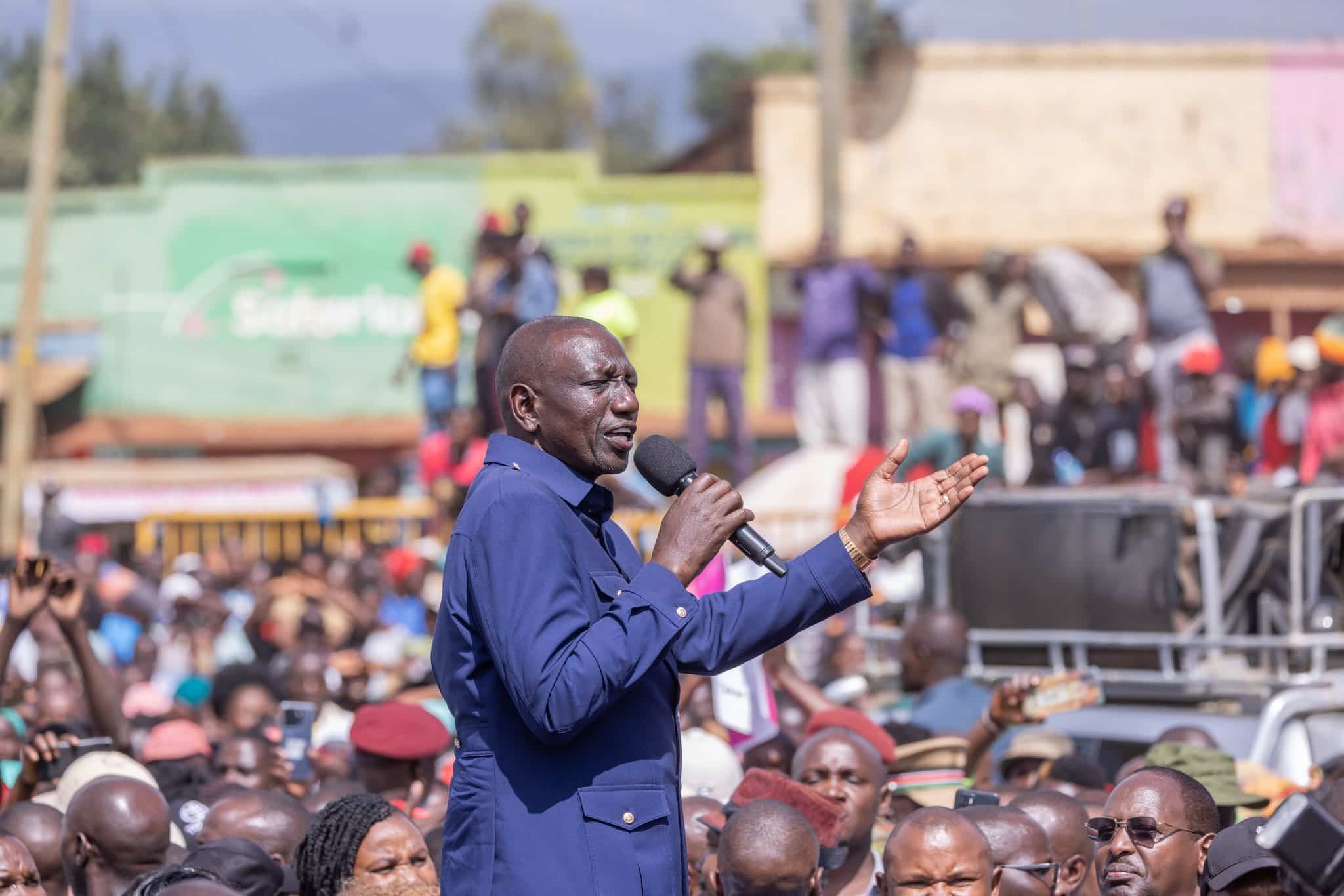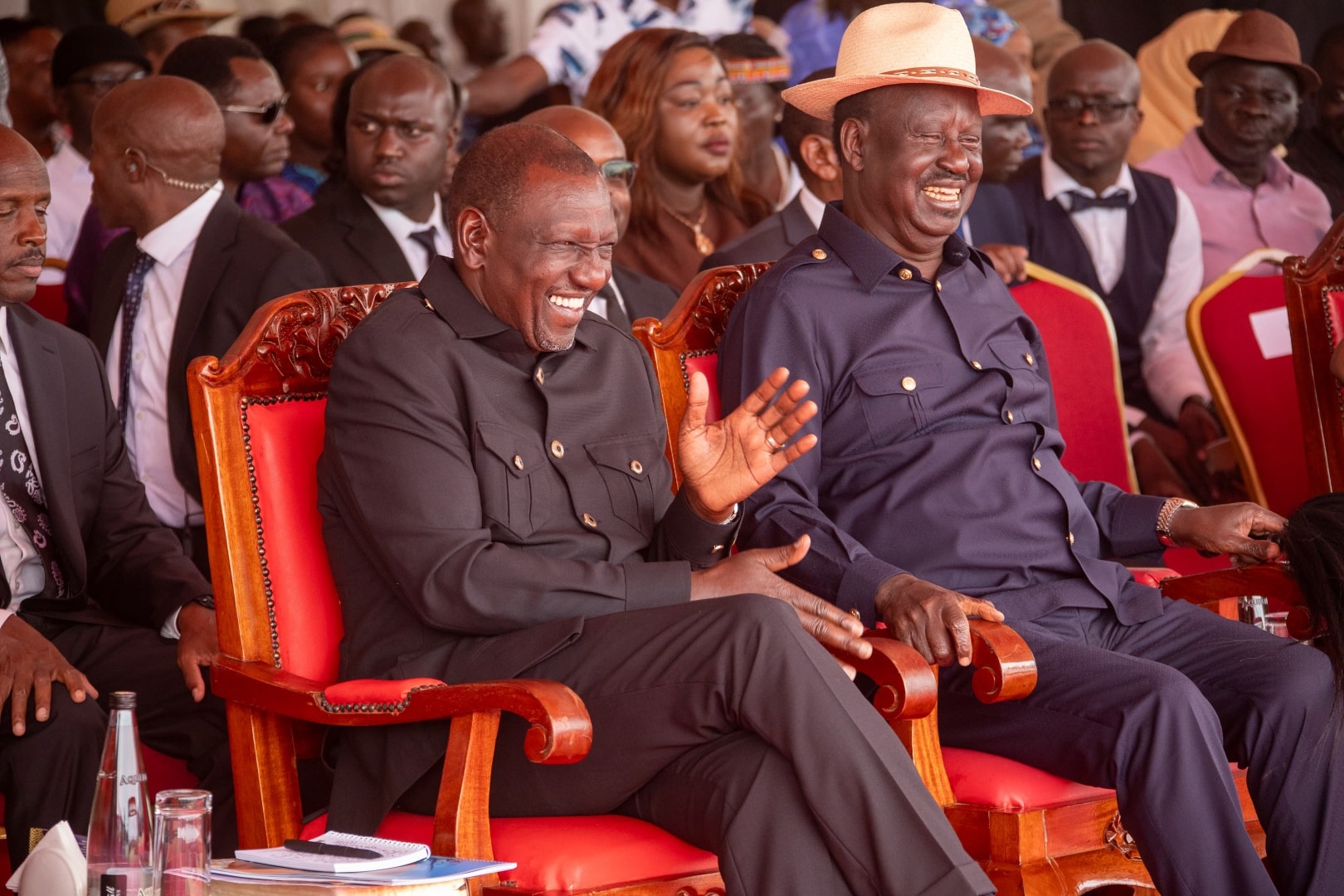
President William Ruto has invited Kenyans to have what he calls an important conversation: should citizens pay more taxes, or should the government borrow more money? It is a legitimate conversation. But the way the question is framed risks missing the central issue.
The President argues that Kenya’s taxes amount to roughly 14 percent of GDP, compared with about 45 percent in France and 25 percent in South Africa. He implies that, contrary to widespread complaints, Kenyans are taxed relatively lightly.
But taxation cannot intelligently be discussed by comparing percentages alone. The real question is not simply how much France collects. It is what France gives its citizens in return. If we are going to compare Kenya with France, then we must compare the entire social bargain.
What taxes actually buy
A French taxpayer lives in a country with extensive public healthcare and social insurance, highly developed road and rail networks, functioning urban public transport, unemployment protection, pensions, public education, substantial family support and relatively reliable municipal services.
Taxes purchase something visible. The citizen may complain about taxation, and French citizens certainly do, but there is a recognisable relationship between what the state collects and what society receives. That relationship is the missing part of Kenya’s taxation debate.
The Kenyan worker pays income tax before receiving a salary. The same worker pays VAT when purchasing goods and services, fuel taxes when travelling, excise duties on numerous products and multiple levies embedded in everyday economic activity.
Paying twice for the same services
Then comes the second round of payment. When public healthcare fails, the citizen purchases private medical insurance or pays hospital bills directly.
When public education proves inadequate, families stretch their incomes to pay school fees, tuition and associated expenses. Where public transport is deficient, citizens finance their own mobility. Where public security is insufficient, homes and businesses hire guards. Where public water systems fail, households buy water privately.
Also Read: Mr President, Kenyans Have a Choice, And God Is Not on the Ballot
In effect, many Kenyans pay twice: once through taxation for public services and again from their disposable income to obtain the services taxation privately was supposed to provide. That is why tax-to-GDP ratios, taken in isolation, tell us remarkably little about whether citizens are overtaxed.
Percentages hide the real burden
Another difficulty is comparing Kenya with wealthy European economies. The burden of taxation depends not merely on the percentage collected but also on the income from which that percentage is extracted.
Taking Sh1,000 from someone earning Sh10,000 is not economically equivalent to taking Sh10,000 from someone earning Sh100,000, even where statistical presentations can make burdens appear comparable.
Kenya has a vast informal economy, widespread underemployment, stubborn youth unemployment and millions of households operating close to subsistence. Disposable incomes matter.
A government therefore cannot determine whether taxation is excessive merely by asking what proportion of national GDP it collects. It must ask what remains in citizens’ pockets after they pay for housing, food, transport, electricity, healthcare, and education.
Trust, waste and a missing third option
There is also the question of trust. Citizens are more willing to surrender part of their income when they believe public money is managed prudently. Tax compliance is therefore not merely an enforcement problem. It is partly a governance problem.
Before asking Kenyans why they resist additional taxation, government should answer equally important questions. How efficiently is existing revenue being spent? How much disappears through corruption, inflated procurement, waste, and unnecessary expenditure?
Why should citizens accept higher taxation before the state demonstrates greater discipline with what it already collects? And why is the choice presented as though there are only two possibilities: tax more or borrow more?
A third option exists: govern better. Reduce waste. Eliminate unnecessary expenditure. Reform procurement. Stop leakages. Prioritize productive investment.
Grow the private sector. Expand employment. Broaden the tax base through prosperity rather than squeezing existing taxpayers ever harder.
Grow the tax base, do not squeeze it
That last distinction is particularly important. A sustainable government does not primarily increase revenue by extracting progressively more from the same struggling population. It grows the number of productive citizens and profitable businesses that can pay taxes.
Create two million additional productive jobs, and the government gains taxpayers. Help thousands of small enterprises become medium-sized businesses, and the government gains taxpayers. Lower the cost of credit and electricity, improve infrastructure and create predictable regulation, and businesses expand.
When businesses expand, employment grows. When employment grows, household consumption increases. Government revenue follows economic activity. That is fundamentally different from attempting to tax an economy into prosperity
A complete conversation, not a selective comparison
The President is correct about one thing: Kenyans should have a national conversation about taxation and borrowing.
But it must be complete. It must include expenditure, corruption, public-sector efficiency, debt management, economic growth, household disposable income and, above all, the quality of services citizens receive.
Government cannot compare itself with France on revenue collection and then suddenly become a developing country when citizens ask about service delivery.
Also Read: Beyond Removing One President: Why Kenya’s 2027 Election Must Deliver Constitutional Recovery
If France is the benchmark for taxation, let France also enter the conversation when we discuss healthcare. Let us compare public transport. Let us compare unemployment protection. Let us compare schools, roads, pensions, sanitation, municipal services and the general security that citizens receive from their state.
Taxation is a social contract
A social contract cannot be imported selectively. Taxation is ultimately an exchange of obligations. Citizens surrender part of their private resources because government undertakes to convert those resources into public value.
When that value becomes difficult to see, resistance to taxation should not automatically be interpreted as selfishness or ignorance. Sometimes it is citizens demanding accountability for their side of the bargain.
Kenyans are not inherently opposed to taxation. They understand that roads, hospitals, schools, security and national development must be financed. What they increasingly reject is taxation without corresponding public value.
So, Mr President, the challenge is not to persuade Kenyans that somebody somewhere pays more tax than they do. The challenge is to demonstrate what their taxes are buying here at home. If you want to invoke French taxation, then be prepared to discuss French-quality public services.
Because taxation is not a competition over which government can extract the largest share of its citizens’ income. It is a social contract. And before asking Kenyans to contribute more, the government must show that it can deliver more and account faithfully for what they have already contributed.
Follow our WhatsApp Channel and X Account for real-time news updates.