Friday, September 4, 2026
  • News
    • Latest News
    • Breaking News
    • Fact Check
    • Investigations
    • Explainers
  • Politics
    • Global Politics
    • Elections
    • Government & Policy
    • Diplomacy
    • Conflicts & Security
    • Political Analysis
  • Business
    • Global Economy
    • Markets
    • Technology
    • Startups
    • Energy
    • Finance
  • World News
    • Americas
    • Asia
    • Asia Pacific
    • Africa
    • Europe
    • Middle East
  • Africa
    • Central Africa
    • East Africa
    • West Africa
    • Southern Africa
  • Health
    • Global Health
    • Public Health
    • Health Policy
    • Medical Research
    • Diseases & Conditions
    • Mental Health
    • Nutrition
    • Climate & Health
    • Health Explainers
  • Sports
    • World Cup 2026
    • Athletics
    • Basketball
    • Boxing
    • Cricket
    • Football
    • Formula 1
    • Golf
    • Rugby
  • Weather
    • Climate Business
    • Climate Change
    • Climate Solutions
    • Living Green
  • Culture
    • Arts
    • Film & TV
    • Food and Recipes
    • Music
    • Lifestyle
    • Travel
  • Opinion
    • Editorials
    • Letters
  • Behind The Brand
REGISTER
LOGIN
No Result
View All Result
The Kenya Times
  • News
    • Latest News
    • Breaking News
    • Fact Check
    • Investigations
    • Explainers
  • Politics
    • Global Politics
    • Elections
    • Government & Policy
    • Diplomacy
    • Conflicts & Security
    • Political Analysis
  • Business
    • Global Economy
    • Markets
    • Technology
    • Startups
    • Energy
    • Finance
  • World News
    • Americas
    • Asia
    • Asia Pacific
    • Africa
    • Europe
    • Middle East
  • Africa
    • Central Africa
    • East Africa
    • West Africa
    • Southern Africa
  • Health
    • Global Health
    • Public Health
    • Health Policy
    • Medical Research
    • Diseases & Conditions
    • Mental Health
    • Nutrition
    • Climate & Health
    • Health Explainers
  • Sports
    • World Cup 2026
    • Athletics
    • Basketball
    • Boxing
    • Cricket
    • Football
    • Formula 1
    • Golf
    • Rugby
  • Weather
    • Climate Business
    • Climate Change
    • Climate Solutions
    • Living Green
  • Culture
    • Arts
    • Film & TV
    • Food and Recipes
    • Music
    • Lifestyle
    • Travel
  • Opinion
    • Editorials
    • Letters
  • Behind The Brand
  • News
    • Latest News
    • Breaking News
    • Fact Check
    • Investigations
    • Explainers
  • Politics
    • Global Politics
    • Elections
    • Government & Policy
    • Diplomacy
    • Conflicts & Security
    • Political Analysis
  • Business
    • Global Economy
    • Markets
    • Technology
    • Startups
    • Energy
    • Finance
  • World News
    • Americas
    • Asia
    • Asia Pacific
    • Africa
    • Europe
    • Middle East
  • Africa
    • Central Africa
    • East Africa
    • West Africa
    • Southern Africa
  • Health
    • Global Health
    • Public Health
    • Health Policy
    • Medical Research
    • Diseases & Conditions
    • Mental Health
    • Nutrition
    • Climate & Health
    • Health Explainers
  • Sports
    • World Cup 2026
    • Athletics
    • Basketball
    • Boxing
    • Cricket
    • Football
    • Formula 1
    • Golf
    • Rugby
  • Weather
    • Climate Business
    • Climate Change
    • Climate Solutions
    • Living Green
  • Culture
    • Arts
    • Film & TV
    • Food and Recipes
    • Music
    • Lifestyle
    • Travel
  • Opinion
    • Editorials
    • Letters
  • Behind The Brand
No Result
View All Result
The Kenya Times ~ Trending, Breaking News and Videos
No Result
View All Result
ADVERTISEMENT

OPINION | Why Ruto Succeeded Where Kibaki Failed: SHA, NHIF and the Hustler Pitch

The ConversationbyThe Conversation
September 4, 2026
Reading Time: 8 mins read
Tifa Report Reveals Why More Kenyans Back Ruto, Raila Deal

President William Ruto and ODM leader Raila Odinga at a past event. PHOTO/PCS.

FacebookTwitterLinkedInRedditWhatsApp
Advertisement

For decades, Kenyans without health insurance have had one option when they fall sick, or a hospital bill arrives. Reach out to friends and family to gather what they can for their healthcare.

By 2023, official figures showed only about a quarter of Kenyans had any health cover. And most of these were people working in formal sector jobs. For the remaining 75%, who had no cover, falling sick meant paying out of their own pockets at health facilities. The few exceptions include maternity care and basic services in local clinics.

The World Health Organization estimates that half of all people worldwide impoverished by out-of-pocket health expenditures live in Africa.

In 2023, shortly after taking office, President William Ruto’s government pushed through a major health financing law, the Social Health Insurance Act. This new law scrapped the National Hospital Insurance Fund, the state insurer since 1966. The insurer had collected members’ contributions and paid their hospital bills, yet only managed to cover about a quarter of Kenyans. The new law replaced it with a new body, the Social Health Authority.

Every Kenyan, formally employed or not, is now expected to register with the authority and contribute 2.75% of their income. The law was immediately challenged in court. Petitioners argued that it had been rushed through without adequate public participation; that the executive bypassed parliament; the burden of 2.75% contribution was too heavy; and that tying healthcare access to registration and contributions violated constitutional rights.

In July 2024, the High Court agreed that public participation had been inadequate and struck down parts of the law. But an appeal court put the ruling on hold, allowing implementation to begin in October 2024.

That a reform was needed is not in doubt. The failures of the old system had been widely documented. But what almost no one remembers is that Kenya tried to pass health financing reform similar to the 2023 law nearly 20 years earlier. Championed by then health minister Charity Ngilu, this was vetoed by then president Mwai Kibaki.

In each case, the goal was the same: to increase health insurance coverage, to pool contributions, and move Kenya towards universal health coverage. So why did a reform built on the same basic model fail in 2004, yet pass in 2023, in just six weeks?


Also Read: PS Oluga Sets Record Straight on Sharing Kenyans Personal Data with America After Ruto-Trump Deal


I set out to answer this in my PhD research. It struck me that most of the problems facing healthcare provision in Kenya hadn’t changed. We still had low health insurance coverage. Out-of-pocket expenditures remained high, as did the disease burden. And the national insurer was still dogged by corruption and inefficiency. So what had changed?

My paper concludes that three factors made the 2023 reform possible, where 2004 had failed: concentrating power in the presidency (which enabled the bypassing of institutions that might have opposed or slowed the reforms); co-opting opponents who had blocked the previous attempt; and framing the reform as a fight for the ordinary Kenyan.

This matters, because it changes how we think about reform. We often assume that big changes happen when the moment is finally right. But Kenya’s case suggests conditions for reform can be strategically built.
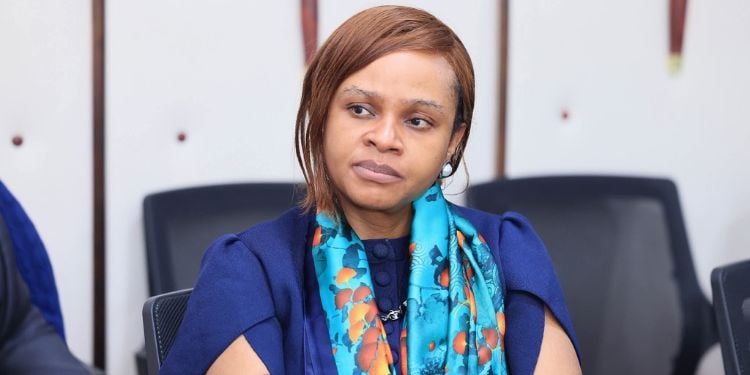
The Social Health Authority (Sha) Has Introduced A New Reimbursement Formula That Directly Links Payments To Public Health Facilities With The Number Of Prescribed Medicines They Dispense.
SHA CEO Dr. Mercy Mwangangi. PHOTO/SHA

What I found

For my research I interviewed 48 people intimately involved in the formulation or review of one or both reforms. These executive-level respondents included presidential advisers, insurers, ministry of health officials, external aid agencies, a former health minister, and members of civil society. I also drew on parliamentary records, media reports and policy documents.

I wanted to know why a reform was needed, how each reform was designed, who drove it, who supported or opposed it and why, and how any resistance was overcome. I corroborated their accounts with archival records – especially relevant for the 2004 attempt. I compared a “successful” and a “failed” reform, to reach a conclusion.

One important caveat. The study focuses on the design and how the law passed, not whether it’s working.

I found that while the challenges affecting the health system were nearly identical in both periods, what had changed substantially was the politics, in three distinct ways.

First is executive dominance and institutional bypass. In 2023, the reform process was run from the president’s own office, rather than the health ministry. This top level leadership shielded it from opponents, but also enabled what I call institutional bypass – going around the bodies that would normally shape and check such processes, like the health ministry, the national insurer, and the parliamentary processes of scrutiny and public participation.

Parliamentary scrutiny was shortened (from 14 to three days), and the reform driven through before opposition could organise. Rather than reforming the old insurer, the government scrapped it altogether. By stripping away every point at which the law could be slowed, amended or blocked, the president was able to speedily pass the reform in weeks, with minimal changes.

In 2004, by contrast, the reform was led by the health minister, without strong presidential backing. Without this support, she couldn’t push the bill past the treasury, private sector, employers, and insurers who opposed it. The bill was eventually vetoed by the president.

Second is elite realignment. The powerful players who had blocked the 2004 reform shifted to supporting or not actively opposing the 2023 reform. These included the formal employers’ lobby, private insurers, unions, treasury, and even some external donors. This appeared to be part of a deliberate strategy. Employers, for instance, didn’t have to match their employees’ contributions. This is the very cost they fought against in 2004. And private insurers were left as second payers, topping up the public cover rather than being displaced by it, as they had feared in 2004.

Third is the populist framing applied. In 2023, the reform was sold not as a technical fix, but as a moral cause. The president framed the old system as one where the “poor subsidised the rich” and dismissed opponents as “cartels” profiting from a broken system. The reform itself was presented in a populist way as a fight for the ordinary Kenyans – the so-called “hustlers”.

Framed that way, opposing the reform – even for sound reasons – became difficult. And there were credible grounds to oppose it. The 2.75% contribution was too heavy; the legislative process was rushed; and public participation had been inadequate. But in that moral frame, raising any of these looked like defending the rich or status quo. The framing helped justify speed and sidelining of institutions.

Why this matters

The most striking implication is that a reform doesn’t just pass because the timing is right, or because there are real problems. At any moment, there are countless problems competing for policymakers’ attention. But reform can be strategically designed to pass, by concentrating power, bypassing institutions, co-opting opponents, and framing it as the people’s cause.

This isn’t just a Kenyan story. Many countries are trying to build universal health coverage, and they keep hitting the same walls: tight budgets, competing priorities, powerful opponents, hesitant leaders. Kenya shows how to get around those “walls”.


Also Read: Ruto Announces New Deal to Slash Cancer Treatment Costs From KSh1 Million to Below KSh50,000


But this also raises important questions for democracies. The same tactics that pushed a much needed reform over the line also reduce scrutiny and public debate that give a law legitimacy. So whether this reform truly helps the ordinary Kenyan depends on whether the government keeps its financial promises once the political moment has passed.

And because it was rushed through, the reform is left vulnerable. Opposition leaders are already talking about undoing it, making it a contested issue heading into the 2027 elections.The Conversation

Zil Audi-Poquillon, PhD Candidate – Health Policy and Health Economics, London School of Economics and Political Science

This article is republished from The Conversation under a Creative Commons license. Read the original article.


President William Ruto Flagging Off Community Health Promoters At Uhuru Park
President William Ruto flagging off community health promoters at Uhuru Park on September 25, 2023. PHOTO/PCS.
Tags: NHIFSHAUniversal Health Coverage (UHC).
The Conversation

The Conversation

The Conversation is an independent news organization that publishes evidence-based articles written by experts to help readers understand diverse topics. We cover a wide range of areas including arts, culture, education, health, politics, science, and more¹. Their content is characterized by in-depth analysis, research, news, and ideas from leading academics and researchers. The Conversation aims to provide academic rigor with journalistic flair.

Related Posts

Gtc Office Tower Nairobi: Leasing Costs, Security Features And Businesses Inside The Landmark Building

How Nairobi’s Expansion is Tearing Families Apart, Book Finds

September 3, 2026
President William Ruto Has Vowed To Transform Kenya Into Singapore Through Transformative Leadership.

Ruto’s Singapore Dream: The Math That Never Added Up

September 2, 2026
Parliament Has Allocated Ksh175.5 Billion To Health, Including Ksh19.1 Billion For The Primary Healthcare Fund And Ksh4.0 Billion For Emergencies.

More Revenue for Health Will Not Be Enough Without Budget Credibility

August 31, 2026
A Collage Of Kenya'S Former Deputy President Rigathi Gachagua And Health Cs Aden Duale. Photo/Courtesy

When Political Insults Become Attacks on Entire Communities

August 31, 2026

Leave a Reply Cancel reply

Your email address will not be published. Required fields are marked *

ADVERTISEMENT

The Kenya Times Facebook

LATEST NEWS

  • OPINION | Why Ruto Succeeded Where Kibaki Failed: SHA, NHIF and the Hustler Pitch
  • Push for School Fee Waiver as Principals Warned Against Withholding KCSE Certificates
  • Milk Shortage Sparks Panic Buying Among Kenyans as Govt Unveils Steps to Avert Crisis
  • African Tech Founders Get New Path to Investors, Deals and Mentorship
  • Tata Chemicals Magadi: Owners of Over 100-Year-Old Company Ruto Ordered Out of Kenya
  • From Dusty Pitches to Champions League: Jereko Joins Nekesa in Kenyan Football History
  • Govt Extends HELB Application Deadline, Makes U-turn on New University Funding Model
  • Ruto Reveals Why He Kicked Multimillion-Shilling Company Out of Kenya
  • Jomo Kenyatta Boys High School Closed Again
  • How Nairobi’s Expansion is Tearing Families Apart, Book Finds
  • World Meteorological Organization Issues Major El Niño Warning as New Weather Threat Emerges
  • University Faces Protest Over Expansion to Satellite Campuses
  • Migori County Announces 118 Jobs in New Recruitment Drive: How to Apply
  • Sakaja Reveals One Nairobi Problem Residents Can Blame Him For
  • Kenya Among 5 Nations Set to Receive Japan’s New Military Gear
ADVERTISEMENT

Company

About Us

Our Authors

Our Experts

Social Media

Policies

Privacy Policy

House Rules

Standards and Policies

Terms and Conditions

Subscription

My Account

Contact Us

Contact Us

Join Our Team

Advertise With Us

© Copyright 2026 | The Kenya Times | All Rights Reserved

Welcome Back!

Sign In with Facebook
Sign In with Google
Sign In with Linked In
OR

Login to your account below

Forgotten Password? Sign Up

Create New Account!

Sign Up with Facebook
Sign Up with Google
Sign Up with Linked In
OR

Fill the forms below to register

All fields are required. Log In

Retrieve your password

Please enter your username or email address to reset your password.

Log In
Your Privacy and Cookies
We use cookies on our website to give you the most relevant experience by remembering your preferences and repeat visits. By clicking “Accept”, you consent to the use of ALL the cookies.
Do not sell my personal information.
Cookie settingsACCEPT
Privacy & Cookies Policy

Privacy Overview

This website uses cookies to improve your experience while you navigate through the website. Out of these cookies, the cookies that are categorized as necessary are stored on your browser as they are essential for the working of basic functionalities of the website. We also use third-party cookies that help us analyze and understand how you use this website. These cookies will be stored in your browser only with your consent. You also have the option to opt-out of these cookies. But opting out of some of these cookies may have an effect on your browsing experience.
Necessary
Always Enabled
Necessary cookies are absolutely essential for the website to function properly. This category only includes cookies that ensures basic functionalities and security features of the website. These cookies do not store any personal information.
Functional
Functional cookies help to perform certain functionalities like sharing the content of the website on social media platforms, collect feedbacks, and other third-party features.
Performance
Performance cookies are used to understand and analyze the key performance indexes of the website which helps in delivering a better user experience for the visitors.
Analytics
Analytical cookies are used to understand how visitors interact with the website. These cookies help provide information on metrics the number of visitors, bounce rate, traffic source, etc.
Advertisement
Advertisement cookies are used to provide visitors with relevant ads and marketing campaigns. These cookies track visitors across websites and collect information to provide customized ads.
Others
Other uncategorized cookies are those that are being analyzed and have not been classified into a category as yet.
SAVE & ACCEPT
LOGIN | REGISTER
  • Login
  • Sign Up
  • Cart
No Result
View All Result
  • News
    • Latest News
    • Breaking News
    • Investigations
    • Explainers
    • Fact Check
  • Politics
    • Global Politics
    • Conflicts & Security
    • Elections
    • Diplomacy
    • Government & Policy
    • Political Analysis
  • Business
    • Global Economy
    • Markets
    • Technology
    • Startups
    • Energy
    • Finance
  • World News
    • Americas
    • Asia
    • Asia Pacific
    • Africa
    • Europe
    • Middle East
  • Africa
    • East Africa
    • West Africa
    • Southern Africa
    • Central Africa
  • Health
    • Global Health
    • Public Health
    • Health Policy
    • Medical Research
    • Diseases & Conditions
    • Mental Health
    • Nutrition
    • Climate & Health
    • Health Explainers
  • Sports
    • World Cup 2026
    • Athletics
    • Basketball
    • Boxing
    • Cricket
    • Football
    • Formula 1
    • Golf
    • Rugby
  • Weather
    • Climate Business
    • Climate Change
    • Climate Solutions
    • Living Green
  • Culture
    • Arts
    • Film & TV
    • Food and Recipes
    • Lifestyle
    • Music
    • Travel
  • Opinion
    • Editorials
    • Letters
  • Behind The Brand
  • Contact Us

Not enough quota to unlock this post
Unlock left : 0
Are you sure want to cancel subscription?