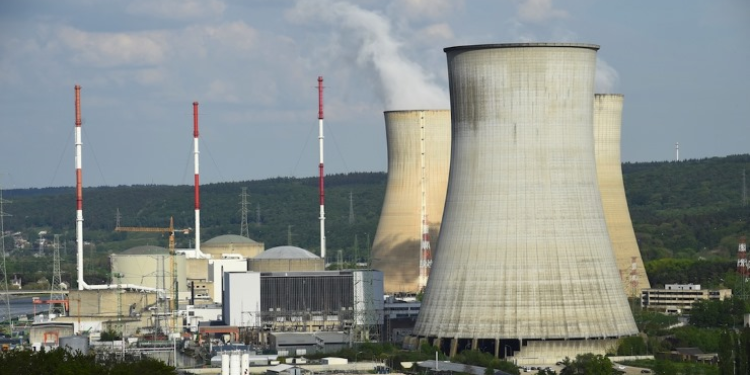
A nuclear power plant is not only an engineering project. It is also a high-value national security asset. As Kenya explores nuclear power, the country must demonstrate that it can protect nuclear facilities, materials and personnel from terrorism, theft, sabotage and other security threats.
On September 21, 2013, Kenya experienced one of the most serious terrorist attacks in its recent history when gunmen attacked the Westgate Shopping Mall in Nairobi. The attack exposed important questions about preparedness, intelligence sharing, emergency response and coordination between security agencies.
In April 2015, another devastating attack targeted Garissa University College.
These events are part of Kenya’s wider security history and provide important context for discussions about critical national infrastructure.
A nuclear power plant would be among the country’s most strategically important facilities. Its protection would therefore require security systems that go far beyond those used for ordinary infrastructure.
This is not an argument against nuclear power.
It is an argument for taking nuclear security as seriously as nuclear engineering.
What Does Nuclear Security Actually Mean?
Nuclear security is often confused with nuclear safety.
They are related, but they are not the same thing.
Nuclear safety focuses on preventing accidents and protecting people and the environment from unintended radiation exposure.
Nuclear security focuses on preventing deliberate acts, including theft, sabotage, unauthorised access and the misuse of nuclear or radioactive materials.
For Kenya, nuclear security would involve several interconnected challenges.
Problem One: Physical Protection
Preventing Unauthorised Access and Deliberate Attacks
A nuclear power plant must be protected against a range of potential threats, including unauthorised entry, sabotage and organised attacks.
International nuclear security guidance requires countries operating nuclear facilities to develop strong systems for physical protection.
These can include multiple layers of controlled access, surveillance systems, trained security personnel, protected areas, secure communication systems and rapid coordination with national security agencies.
The principle is simple: security should not depend on a single fence, guard or camera.
It should operate through multiple layers.
Also Read: Nuclear vs Solar vs Geothermal: Which Energy Path Is Best for Kenya?
Kenya already protects strategically important infrastructure, including airports, electricity installations, ports and major transport networks. However, nuclear infrastructure would require an even more specialised security architecture.
A nuclear facility would therefore need security planning specifically designed around the potential risks associated with nuclear and radioactive materials.
The challenge is not whether Kenya can develop such a system.
The challenge is ensuring that the system is properly funded, professionally staffed, regularly tested and continuously updated as security threats evolve.
Problem Two: The Insider Threat
Security Risks Can Come from Within
Not every security threat comes from outside a facility.
International nuclear security practice recognises the insider threat as one of the most important risks that operators and regulators must manage.
An insider could be an employee, contractor or other authorised individual who misuses legitimate access.
This does not mean that every employee should be viewed with suspicion. It means that access to sensitive facilities and materials must be carefully managed.
Modern nuclear security systems use several measures to reduce this risk.
These may include background checks, controlled access, separation of responsibilities, security clearances, continuous training and procedures that prevent a single individual from independently carrying out certain sensitive actions.
Security culture is also important.
Employees must understand that reporting unusual behaviour or potential security concerns is part of their professional responsibility.
For Kenya, building this culture would be as important as building the physical power plant.
A nuclear programme requires a workforce with high technical competence, but also strong professional ethics, accountability and respect for security procedures.
Problem Three: Protecting Nuclear and Radioactive Materials
Preventing Unauthorised Removal or Misuse
Another central responsibility is ensuring that nuclear and radioactive materials are properly accounted for and protected.
International safeguards and nuclear security systems track nuclear materials throughout their use.
This involves detailed accounting, inspections, verification procedures and physical protection measures.
Kenya’s relationship with the International Atomic Energy Agency is an important part of this framework.
International agreements and safeguards help provide additional oversight and verification of how nuclear materials are used.
However, international agreements alone are not enough.
A nuclear security system ultimately depends on the quality of the institutions responsible for implementing it.
Kenya would need well-trained specialists in material accounting, security, customs controls, intelligence, law enforcement and nuclear regulation.
It would also need strong reporting systems and mechanisms for identifying and responding to potential security breaches.
The principle is straightforward:
Technology can support security, but institutions and people make security systems work.
Kenya’s Nuclear Security Framework
International cooperation
Kenya participates in international nuclear security and safeguards arrangements.
Domestic regulation
The Kenya Nuclear Regulatory Authority has responsibility for regulating nuclear and radiation activities within its legal mandate.
International verification
The International Atomic Energy Agency provides safeguards, technical cooperation and international guidance.
National security environment
Kenya must consider terrorism, organised crime, cyber threats and other risks facing critical infrastructure.
The long-term challenge
Developing a mature nuclear security culture capable of operating continuously over the lifetime of a nuclear programme.
Problem Four: Emergency Preparedness
Preparing for Events That May Never Happen
A strong security system is designed to prevent incidents.
But responsible planning also requires preparation for situations in which prevention fails.
A country operating a nuclear power plant would need a detailed emergency preparedness and response system.
This would include clearly defined responsibilities for plant operators, regulators, emergency services, security agencies, health authorities and national government institutions.
Emergency plans would also need to address communication with nearby communities.
People living near a nuclear facility should understand what emergency arrangements exist and where they can obtain reliable information.
Also Read: Can Siaya Nuclear Plant Solve Kenya’s Growing Energy Crisis?
Plans must be tested through exercises and simulations.
A plan that exists only in a government office is not necessarily an operational plan.
Because Lake Victoria is shared by Kenya, Uganda and Tanzania, emergency planning would also need to consider regional coordination where a potential incident could have cross-border implications.
International communication and cooperation would therefore be an important part of Kenya’s preparedness framework.
Nuclear Security Is Also a Governance Question
The security of a nuclear power programme will not depend on fences and armed guards alone.
It will depend on governance.
Is the regulator sufficiently independent?
Are security professionals properly trained?
Are safety and security concerns reported without fear of retaliation?
Are institutions adequately funded?
Are emergency systems regularly tested?
Can agencies share information and coordinate effectively during a crisis?
These questions are just as important as the choice of reactor technology.
A modern reactor may have advanced safety and security features, but technology cannot replace competent institutions.
What Kenya Can Learn from Other Nuclear Countries
Kenya would not be the first country to operate nuclear facilities while facing complex security challenges.
South Africa, for example, has operated the Koeberg Nuclear Power Station for decades while managing its own social, economic and security challenges.
The broader lesson from countries with established nuclear programmes is that nuclear security is not achieved once and forgotten.
It is a continuous process.
Threats change.
Technology changes.
Security procedures must therefore be reviewed, tested and improved throughout the life of a nuclear facility.
The Bottom Line
Nuclear security is one of the most demanding responsibilities Kenya would assume if it develops a nuclear power programme.
The country would need to protect facilities from external threats.
It would need systems to manage insider risks.
It would need to ensure that nuclear and radioactive materials remain secure and properly accounted for.
And it would need credible emergency preparedness systems.
None of this means Kenya cannot operate a secure nuclear facility.
But security cannot be treated as a secondary component of the project.
It must be built into the programme from the beginning.
A nuclear power plant can be engineered using global technology.
A nuclear security culture, however, must be built at home.
That will require professional institutions, independent regulation, sustained investment, regional cooperation and a political commitment to treating security requirements as non-negotiable.
For Kenya, the question is not simply whether a nuclear power plant can be protected.
The real question is whether the country is prepared to build and maintain the institutions required to protect it for generations.
Follow our WhatsApp Channel and X Account for real-time news updates.