Saturday, September 5, 2026
  • News
    • Latest News
    • Breaking News
    • Fact Check
    • Investigations
    • Explainers
  • Politics
    • Global Politics
    • Elections
    • Government & Policy
    • Diplomacy
    • Conflicts & Security
    • Political Analysis
  • Business
    • Global Economy
    • Markets
    • Technology
    • Startups
    • Energy
    • Finance
  • World News
    • Americas
    • Asia
    • Asia Pacific
    • Africa
    • Europe
    • Middle East
  • Africa
    • Central Africa
    • East Africa
    • West Africa
    • Southern Africa
  • Health
    • Global Health
    • Public Health
    • Health Policy
    • Medical Research
    • Diseases & Conditions
    • Mental Health
    • Nutrition
    • Climate & Health
    • Health Explainers
  • Sports
    • World Cup 2026
    • Athletics
    • Basketball
    • Boxing
    • Cricket
    • Football
    • Formula 1
    • Golf
    • Rugby
  • Weather
    • Climate Business
    • Climate Change
    • Climate Solutions
    • Living Green
  • Culture
    • Arts
    • Film & TV
    • Food and Recipes
    • Music
    • Lifestyle
    • Travel
  • Opinion
    • Editorials
    • Letters
  • Behind The Brand
REGISTER
LOGIN
No Result
View All Result
The Kenya Times
  • News
    • Latest News
    • Breaking News
    • Fact Check
    • Investigations
    • Explainers
  • Politics
    • Global Politics
    • Elections
    • Government & Policy
    • Diplomacy
    • Conflicts & Security
    • Political Analysis
  • Business
    • Global Economy
    • Markets
    • Technology
    • Startups
    • Energy
    • Finance
  • World News
    • Americas
    • Asia
    • Asia Pacific
    • Africa
    • Europe
    • Middle East
  • Africa
    • Central Africa
    • East Africa
    • West Africa
    • Southern Africa
  • Health
    • Global Health
    • Public Health
    • Health Policy
    • Medical Research
    • Diseases & Conditions
    • Mental Health
    • Nutrition
    • Climate & Health
    • Health Explainers
  • Sports
    • World Cup 2026
    • Athletics
    • Basketball
    • Boxing
    • Cricket
    • Football
    • Formula 1
    • Golf
    • Rugby
  • Weather
    • Climate Business
    • Climate Change
    • Climate Solutions
    • Living Green
  • Culture
    • Arts
    • Film & TV
    • Food and Recipes
    • Music
    • Lifestyle
    • Travel
  • Opinion
    • Editorials
    • Letters
  • Behind The Brand
  • News
    • Latest News
    • Breaking News
    • Fact Check
    • Investigations
    • Explainers
  • Politics
    • Global Politics
    • Elections
    • Government & Policy
    • Diplomacy
    • Conflicts & Security
    • Political Analysis
  • Business
    • Global Economy
    • Markets
    • Technology
    • Startups
    • Energy
    • Finance
  • World News
    • Americas
    • Asia
    • Asia Pacific
    • Africa
    • Europe
    • Middle East
  • Africa
    • Central Africa
    • East Africa
    • West Africa
    • Southern Africa
  • Health
    • Global Health
    • Public Health
    • Health Policy
    • Medical Research
    • Diseases & Conditions
    • Mental Health
    • Nutrition
    • Climate & Health
    • Health Explainers
  • Sports
    • World Cup 2026
    • Athletics
    • Basketball
    • Boxing
    • Cricket
    • Football
    • Formula 1
    • Golf
    • Rugby
  • Weather
    • Climate Business
    • Climate Change
    • Climate Solutions
    • Living Green
  • Culture
    • Arts
    • Film & TV
    • Food and Recipes
    • Music
    • Lifestyle
    • Travel
  • Opinion
    • Editorials
    • Letters
  • Behind The Brand
No Result
View All Result
The Kenya Times ~ Trending, Breaking News and Videos
No Result
View All Result
ADVERTISEMENT

Before Ruto Removes Another Fence, He Should First Ask Why It Was Built

Prof. Gitile NaitulibyProf. Gitile Naituli
September 5, 2026
Reading Time: 6 mins read
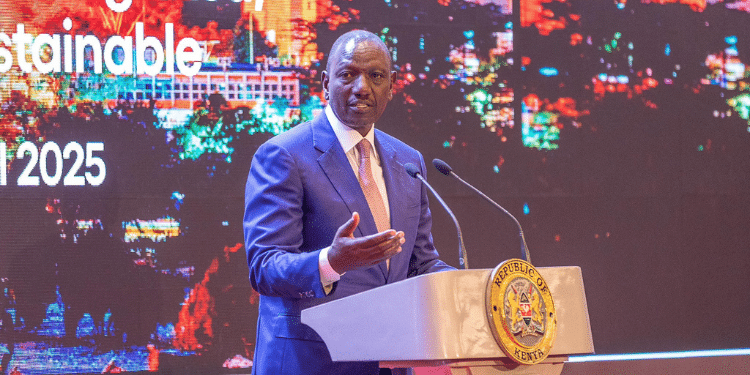
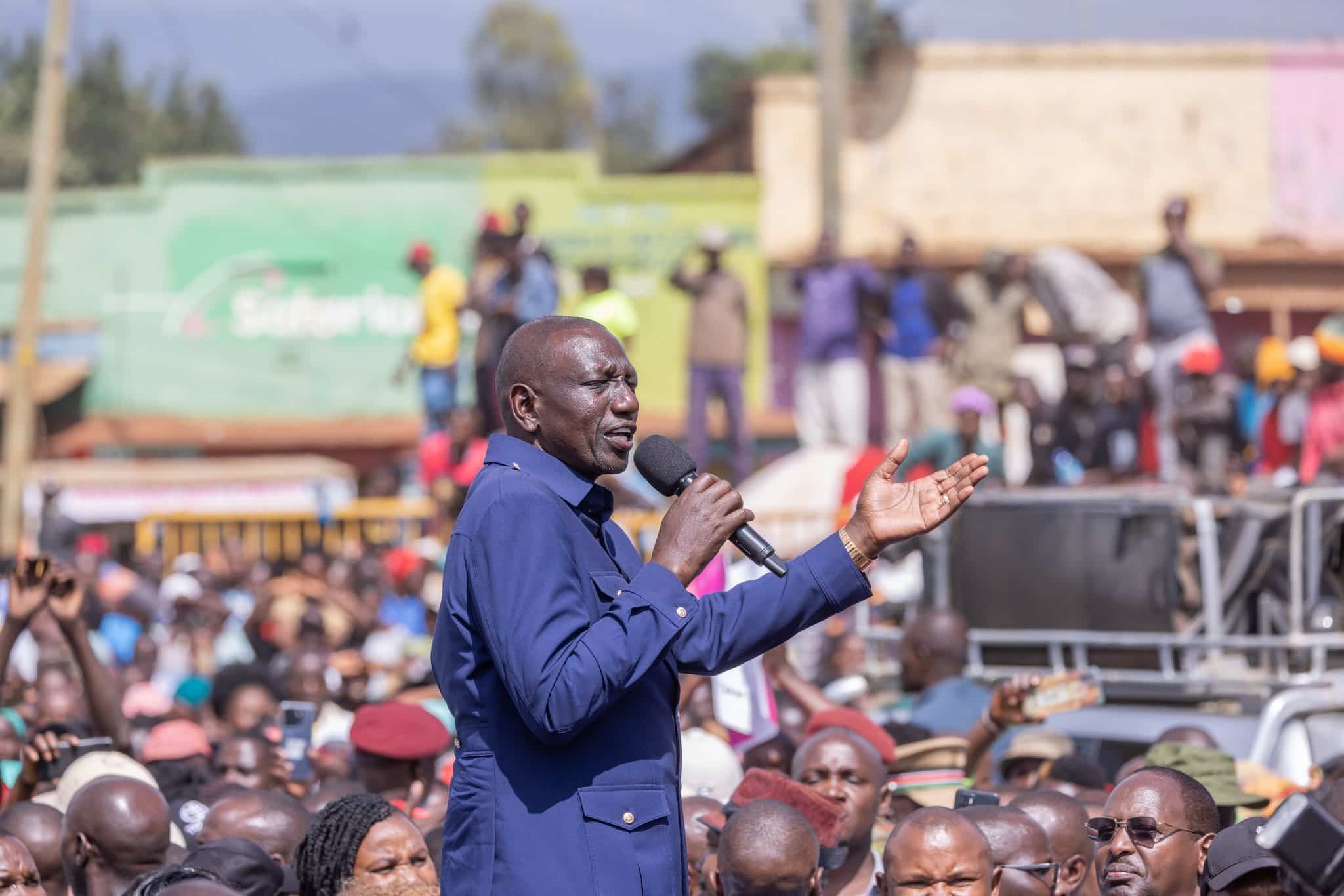
President William Ruto At A Previous Rally. Photo/Pcs.

President William Ruto at a previous rally. PHOTO/PCS.

FacebookTwitterLinkedInRedditWhatsApp
Advertisement

A powerful leadership principle speaks almost directly to the reforming instinct we have seen throughout President William Ruto’s administration. It comes from the English writer G.K. Chesterton and is known as Chesterton’s Fence.

Imagine finding a fence blocking a road. You look at it, see no obvious purpose and immediately conclude that it should be removed. Chesterton’s warning is simple: if you cannot explain why someone erected that fence in the first place, you don’t yet understand enough to remove it. First establish its purpose. Then decide its fate.

Governance has a closely related rule of thumb: never fix what is not broken. This isn’t an argument against reform. Governments must reform failing institutions, modernise outdated systems and respond to changing circumstances. But reform requires diagnosis. There is a profound difference between repairing something because you understand why it has failed and changing it simply because you inherited it.

Was Everything Really Broken?

That distinction increasingly defines the debate around the Ruto presidency. President Ruto came into office with an extraordinary appetite for redesign. Healthcare changed. University financing changed. Housing policy changed. Tax arrangements shifted repeatedly. Agricultural interventions were redesigned. Government agencies were reorganised. New funds, programmes, platforms and administrative structures emerged in rapid succession.

Some of these reforms may have perfectly legitimate objectives. But taken together, they invite a larger question: Was everything really broken?

ADVERTISEMENT

Consider healthcare. NHIF undoubtedly had serious weaknesses. Fraud, inadequate coverage, delayed payments and difficulties bringing informal workers into the insurance pool all demanded attention. But identifying problems within NHIF didn’t automatically justify dismantling the architecture and replacing it with the Social Health Authority.

The first question should have been: what was actually working? Millions of Kenyans understood NHIF. Employers had incorporated it into payroll systems. Hospitals had accumulated years of institutional experience dealing with it. Families understood, however imperfectly, what their membership meant. That accumulated institutional knowledge had value. Chesterton’s Fence would have required government to identify what worked, preserve it, repair what didn’t and replace only those elements that genuinely couldn’t be salvaged.

When Reform Creates a New Crisis

Higher education provides another illustration. Kenya’s university financing system was clearly under strain. Universities carried enormous debts, government financing was inadequate and legitimate questions existed about whether subsidies were equitable. Reform was therefore necessary. But education isn’t simply an accounting equation. Families need predictability. Students need to know what their education will cost. Universities require dependable revenue streams to plan courses, retain lecturers and maintain facilities.

A sophisticated funding formula that solves a Treasury problem while creating uncertainty for families may merely exchange one crisis for another. That is the deeper wisdom of Chesterton’s Fence: institutions contain accumulated experience that isn’t always visible to the person arriving with the toolbox.


Also Read: Uhuru Must Not Repeat the Succession Mistake of 2022


President Ruto’s governing instinct sometimes appears to favour comprehensive redesign over incremental improvement. The danger is turning the country into a permanent policy laboratory, with citizens effectively becoming the experimental subjects. Healthcare is being tested. University financing is being tested. Housing is being tested. Tax policy keeps changing. Agriculture experiences intervention after intervention. Eventually, citizens and institutions suffer reform fatigue.

ADVERTISEMENT

The Cobra Effect in Public Policy

Another important lesson: good governance must anticipate second-order consequences. Suppose government introduces a new tax expecting additional revenue. The first-order calculation is straightforward: Treasury collects more money. But what happens afterward? Businesses may increase prices. Consumers may buy less. Companies may postpone investment. Entrepreneurs may retreat into informality. Some businesses may close altogether. Jobs disappear and taxable economic activity contracts. Consequently, the government may collect less than anticipated.

Economists often explain unintended incentives through the famous Cobra Effect. A government reportedly tried to reduce dangerous cobras by paying citizens for dead snakes. People quickly realised that breeding cobras could become profitable. When authorities eventually terminated the reward scheme, breeders released snakes that were no longer commercially useful. A programme intended to reduce cobras ended up producing more cobras. People respond to incentives. Every policymaker should remain humble in the face of that reality.

The problem with excessive reform, therefore, isn’t simply the disruption it causes. It is the assumption that government possesses sufficient knowledge to anticipate how millions of citizens, businesses and institutions will respond. It doesn’t. Institutions generally develop over time. Rules accumulate because societies encounter problems and construct protections against their recurrence. Some eventually become obsolete. Others become inefficient. Some are captured by vested interests and deserve to be dismantled altogether. But first, understand the fence.

Why Some Friction Was Built on Purpose

This principle becomes even more important when dealing with constitutional and independent institutions. Kenya deliberately removed certain functions from direct political control because earlier generations experienced the dangers of concentrating too much authority in the Executive. Independent commissions can appear cumbersome. Procurement rules can frustrate impatient leaders. Parliamentary approval takes time. Public participation slows decision-making. Judicial review can interrupt government programmes.

But perhaps some of that inconvenience is intentional. Democracy contains friction by design. Checks and balances inconvenience those exercising power precisely because history taught us what can happen when power becomes convenient, concentrated and unconstrained. Before weakening an institution because it appears slow, a president should first ask why Kenyans deliberately constructed it that way.


Also Read: Singapore Didn’t Perform a Miracle, Mr. President — It Simply Refused to Make Peace with Corruption


President Ruto still has an opportunity to reconsider the philosophy behind his reforms. A presidential legacy doesn’t have to be measured by how many new institutions, acronyms, funds or programmes were created. Sometimes transformational leadership means taking existing institutions and making them work exceptionally well.

Repair before replacing. Improve before abolishing. Test before rolling out nationally. Consult before imposing. Above all, understand before changing.

Kenya certainly needs reform. We need functioning healthcare, affordable education, productive agriculture, sustainable public finances, efficient institutions and millions of meaningful jobs.

But reform must never become an addiction to novelty. A president isn’t elected to demonstrate how many systems he can redesign. He is elected to make citizens’ lives better. Sometimes that means constructing a new fence. Sometimes it means repairing the old one. Sometimes the greatest demonstration of presidential wisdom is discovering why the fence was built and having the humility to leave it standing.

Follow our WhatsApp Channel and X Account for real-time news updates.

The Government Has Released Cash Transfer Worth Ksh6,000 For Every Household To Support Vulnerable Families Countrywide.
A past Cabinet meeting chaired by President William Ruto on November 11, 2025. PHOTO/PCS
Tags: Hustler fundKenya Elections 2027William Ruto
Prof. Gitile Naituli

Prof. Gitile Naituli

Prof. Gitile Naituli teaches Constitutionalism and Governance at Multimedia University of Kenya and is a Fellow of the Kenya National Academy of Sciences. He can be reached at: [email protected].

Related Posts

Kenya Power Warns Wind And Solar Growth Could Increase Cost Of Electricity

Can Kenya Protect a Nuclear Power Plant from Terrorism, Theft and Sabotage?

September 4, 2026
Tifa Report Reveals Why More Kenyans Back Ruto, Raila Deal

OPINION | Why Ruto Succeeded Where Kibaki Failed: SHA, NHIF and the Hustler Pitch

September 4, 2026
Gtc Office Tower Nairobi: Leasing Costs, Security Features And Businesses Inside The Landmark Building

How Nairobi’s Expansion is Tearing Families Apart, Book Finds

September 3, 2026
President William Ruto Has Vowed To Transform Kenya Into Singapore Through Transformative Leadership.

Ruto’s Singapore Dream: The Math That Never Added Up

September 2, 2026

Leave a Reply Cancel reply

Your email address will not be published. Required fields are marked *

ADVERTISEMENT

The Kenya Times Facebook

LATEST NEWS

  • Before Ruto Removes Another Fence, He Should First Ask Why It Was Built
  • How Public Servants Are Getting Poorer – New Report
  • Kenyatta Family and Other Billionaires Behind Kenya’s Biggest Milk Brands
  • Story of Ex-Student Leader Baptized by Fire as She Eyes MP Seat Next Year
  • SRC Exposes How Parastatals Burden Kenyans with Huge Salaries and Allowances
  • Senior Schools Offering All Three CBC Career Pathways [FULL LIST]
  • Nairobi Expressway Sections Where Motorists Report Goon Attacks
  • HELB Clarifies Funding Rules for Students Who Missed First-Year Loan
  • CAF Champions League First Preliminary Round: Full Fixtures, Dates and Kick-Off Times
  • Full List of Top Recruits Awarded at Administration Police 59th Pass-Out Parade
  • Bangbet Surprises Mama Mbogas and Food Vendors with Stock in New Program
  • Ruto Finally Breaks Silence on ‘Ugly’ Police Uniforms
  • Can Kenya Protect a Nuclear Power Plant from Terrorism, Theft and Sabotage?
  • Nithi Bridge Reconstruction Gives Mt Kenya Residents New Hope
  • IEBC Slapped with Fresh Orders Over 2027 Election Tender
ADVERTISEMENT

Company

About Us

Our Authors

Our Experts

Social Media

Policies

Privacy Policy

House Rules

Standards and Policies

Terms and Conditions

Subscription

My Account

Contact Us

Contact Us

Join Our Team

Advertise With Us

© Copyright 2026 | The Kenya Times | All Rights Reserved

Welcome Back!

Sign In with Facebook
Sign In with Google
Sign In with Linked In
OR

Login to your account below

Forgotten Password? Sign Up

Create New Account!

Sign Up with Facebook
Sign Up with Google
Sign Up with Linked In
OR

Fill the forms below to register

All fields are required. Log In

Retrieve your password

Please enter your username or email address to reset your password.

Log In
Your Privacy and Cookies
We use cookies on our website to give you the most relevant experience by remembering your preferences and repeat visits. By clicking “Accept”, you consent to the use of ALL the cookies.
Do not sell my personal information.
Cookie settingsACCEPT
Privacy & Cookies Policy

Privacy Overview

This website uses cookies to improve your experience while you navigate through the website. Out of these cookies, the cookies that are categorized as necessary are stored on your browser as they are essential for the working of basic functionalities of the website. We also use third-party cookies that help us analyze and understand how you use this website. These cookies will be stored in your browser only with your consent. You also have the option to opt-out of these cookies. But opting out of some of these cookies may have an effect on your browsing experience.
Necessary
Always Enabled
Necessary cookies are absolutely essential for the website to function properly. This category only includes cookies that ensures basic functionalities and security features of the website. These cookies do not store any personal information.
Functional
Functional cookies help to perform certain functionalities like sharing the content of the website on social media platforms, collect feedbacks, and other third-party features.
Performance
Performance cookies are used to understand and analyze the key performance indexes of the website which helps in delivering a better user experience for the visitors.
Analytics
Analytical cookies are used to understand how visitors interact with the website. These cookies help provide information on metrics the number of visitors, bounce rate, traffic source, etc.
Advertisement
Advertisement cookies are used to provide visitors with relevant ads and marketing campaigns. These cookies track visitors across websites and collect information to provide customized ads.
Others
Other uncategorized cookies are those that are being analyzed and have not been classified into a category as yet.
SAVE & ACCEPT
LOGIN | REGISTER
  • Login
  • Sign Up
  • Cart
No Result
View All Result
  • News
    • Latest News
    • Breaking News
    • Investigations
    • Explainers
    • Fact Check
  • Politics
    • Global Politics
    • Conflicts & Security
    • Elections
    • Diplomacy
    • Government & Policy
    • Political Analysis
  • Business
    • Global Economy
    • Markets
    • Technology
    • Startups
    • Energy
    • Finance
  • World News
    • Americas
    • Asia
    • Asia Pacific
    • Africa
    • Europe
    • Middle East
  • Africa
    • East Africa
    • West Africa
    • Southern Africa
    • Central Africa
  • Health
    • Global Health
    • Public Health
    • Health Policy
    • Medical Research
    • Diseases & Conditions
    • Mental Health
    • Nutrition
    • Climate & Health
    • Health Explainers
  • Sports
    • World Cup 2026
    • Athletics
    • Basketball
    • Boxing
    • Cricket
    • Football
    • Formula 1
    • Golf
    • Rugby
  • Weather
    • Climate Business
    • Climate Change
    • Climate Solutions
    • Living Green
  • Culture
    • Arts
    • Film & TV
    • Food and Recipes
    • Lifestyle
    • Music
    • Travel
  • Opinion
    • Editorials
    • Letters
  • Behind The Brand
  • Contact Us

Not enough quota to unlock this post
Unlock left : 0
Are you sure want to cancel subscription?