Tuesday, June 2, 2026
  • News
    • Latest News
    • Breaking News
    • Fact Check
    • Investigations
    • Explainers
  • Politics
    • Global Politics
    • Elections
    • Government & Policy
    • Diplomacy
    • Conflicts & Security
    • Political Analysis
  • Business
    • Global Economy
    • Markets
    • Technology
    • Startups
    • Energy
    • Finance
  • World News
    • Americas
    • Asia
    • Asia Pacific
    • Africa
    • Europe
    • Middle East
  • Africa
    • Central Africa
    • East Africa
    • West Africa
    • Southern Africa
  • Health
    • Global Health
    • Public Health
    • Health Policy
    • Medical Research
    • Diseases & Conditions
    • Mental Health
    • Nutrition
    • Climate & Health
    • Health Explainers
  • Sports
    • Athletics
    • Basketball
    • Boxing
    • Cricket
    • Football
    • Formula 1
    • Golf
    • Rugby
  • Weather
    • Climate Business
    • Climate Change
    • Climate Solutions
    • Living Green
  • Culture
    • Arts
    • Film & TV
    • Food
    • Music
    • Lifestyle
    • Travel
  • Opinion
    • Editorials
    • Letters
  • Behind The Brand
REGISTER
LOGIN
No Result
View All Result
The Kenya Times
  • News
    • Latest News
    • Breaking News
    • Fact Check
    • Investigations
    • Explainers
  • Politics
    • Global Politics
    • Elections
    • Government & Policy
    • Diplomacy
    • Conflicts & Security
    • Political Analysis
  • Business
    • Global Economy
    • Markets
    • Technology
    • Startups
    • Energy
    • Finance
  • World News
    • Americas
    • Asia
    • Asia Pacific
    • Africa
    • Europe
    • Middle East
  • Africa
    • Central Africa
    • East Africa
    • West Africa
    • Southern Africa
  • Health
    • Global Health
    • Public Health
    • Health Policy
    • Medical Research
    • Diseases & Conditions
    • Mental Health
    • Nutrition
    • Climate & Health
    • Health Explainers
  • Sports
    • Athletics
    • Basketball
    • Boxing
    • Cricket
    • Football
    • Formula 1
    • Golf
    • Rugby
  • Weather
    • Climate Business
    • Climate Change
    • Climate Solutions
    • Living Green
  • Culture
    • Arts
    • Film & TV
    • Food
    • Music
    • Lifestyle
    • Travel
  • Opinion
    • Editorials
    • Letters
  • Behind The Brand
  • News
    • Latest News
    • Breaking News
    • Fact Check
    • Investigations
    • Explainers
  • Politics
    • Global Politics
    • Elections
    • Government & Policy
    • Diplomacy
    • Conflicts & Security
    • Political Analysis
  • Business
    • Global Economy
    • Markets
    • Technology
    • Startups
    • Energy
    • Finance
  • World News
    • Americas
    • Asia
    • Asia Pacific
    • Africa
    • Europe
    • Middle East
  • Africa
    • Central Africa
    • East Africa
    • West Africa
    • Southern Africa
  • Health
    • Global Health
    • Public Health
    • Health Policy
    • Medical Research
    • Diseases & Conditions
    • Mental Health
    • Nutrition
    • Climate & Health
    • Health Explainers
  • Sports
    • Athletics
    • Basketball
    • Boxing
    • Cricket
    • Football
    • Formula 1
    • Golf
    • Rugby
  • Weather
    • Climate Business
    • Climate Change
    • Climate Solutions
    • Living Green
  • Culture
    • Arts
    • Film & TV
    • Food
    • Music
    • Lifestyle
    • Travel
  • Opinion
    • Editorials
    • Letters
  • Behind The Brand
No Result
View All Result
The Kenya Times ~ Trending, Breaking News and Videos
No Result
View All Result
ADVERTISEMENT

Most East African refugees are Hosted Close to Borders – it’s a Deliberate War Strategy

Kara Ross CamarenabyKara Ross Camarena
May 15, 2023
Reading Time: 9 mins read
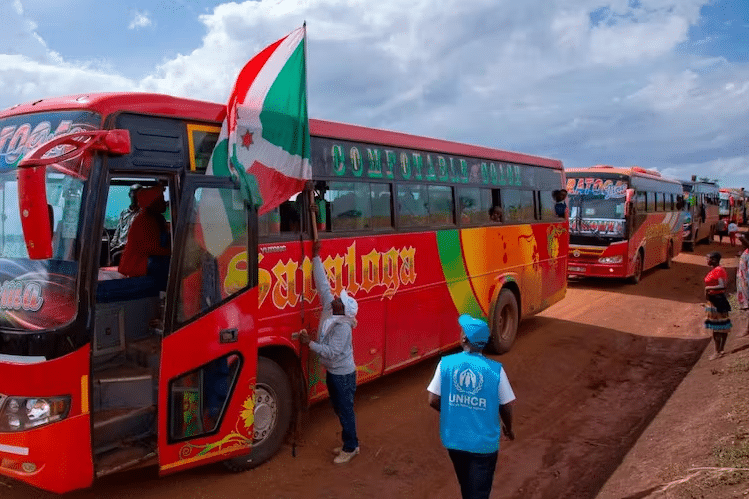
The Burundian Flag Flies At The Head Of A Convoy Of Buses Moving Refugees Back Home From Tanzania In 2019 | Tchandrou Nitanga/Afp Via Getty Images

The Burundian flag flies at the head of a convoy of buses moving refugees back home from Tanzania in 2019 | Tchandrou Nitanga/AFP via Getty Images

FacebookTwitterLinkedInRedditWhatsApp
Advertisement

There are close to 4 million people living in refugee camps across Africa. Of the more than 300 camps, nearly 70% are situated within 30km-50km of an international border. They include some of the largest camps in the continent, such as Kakuma in northern Kenya, Nyarugusu in western Tanzania and Bidibidi in north-western Uganda.

The closer the camp is to an international border, the easier it is for people on both sides of the border to interact.

What this means is that healthy refugees in Kakuma, for example, can walk across the Kenyan border and get to Uganda or South Sudan within a day or two. It also means that rebel groups operating in any of these countries can access the refugee camp. This easy access to refugees benefits rebel groups across the border. And asylum countries like Tanzania and Kenya may choose refugee policies that help rebel groups in this fashion.

Exploitation by armed groups is one of the many threats refugees in border camps face.

Often refugees are not allowed to leave camps to seek work, making them dependent on aid. Young refugees, particularly men, are vulnerable to armed rebel groups that recruit people to their causes. These groups also informally tax refugees by taking a share of the aid they receive or demanding contributions.

Researchers and aid groups have suggested that rebel groups take advantage of refugees because host countries cannot or will not stop them. This logic focuses on the lack of will or capacity of such host countries as Chad or the Central African Republic.

ADVERTISEMENT

But this ignores their strategy.

Even governments of poor countries choose where to allocate resources. For example, rather than being inept or incapable of protection, Chad’s approach to refugees has been consistent with a broader approach to its relations with Sudan.

I set out on my research project in east Africa to develop an analytic narrative of refugee policy selection in the region. Using in-depth case studies and formal theory, I expected to find that foreign policy informed refugee policy in some ways, including interactions with humanitarian aid and donor countries. I sought to investigate the extent to which these tempered the domestic drivers of refugee policy.


Also Read: Kenya to Intensify Vetting of Refugees


What I found is that countries’ policies for hosting refugees are more strategic than expected. Host countries choose their refugee policy to influence the war from which the refugees fled. When Tanzania and Kenya chose the location of camps and the restrictions on work and movement, influencing war informed their policies. Camp location and restrictions, along with maintaining dense refugee settlements, give rebel groups valuable access to refugee camps for exploitation.

My study demonstrates that east African host countries can follow a foreign policy logic for setting refugees up to be exploited. Domestic considerations can matter as well.

ADVERTISEMENT

My research can help aid organizations identify whether domestic or foreign policy interests drive border camps in east Africa and elsewhere. When domestic rather than foreign policy considerations drive border camp location, humanitarian agencies can negotiate alternatives that make camps less crowded, move refugees further from the border or provide options for integrating elsewhere.

Each of these make refugee camps safer for refugees but less valuable to a rebel group. However, aid agencies will be less successful in negotiating alternatives when foreign policy drives the border camps because the alternatives undermine the goal of helping the rebel group.

Proxy intervention aims

Tanzania’s refugee policy in the 1990s is a good example of how geopolitics can inform refugee policy. Tanzania hosted hundreds of thousands of Burundian refugees. They began arriving in 1993 because of political violence and then a civil war. Densely populated camps were set up for arriving Burundian refugees as close as 15km to the common border.

The location, dense population and movement restrictions ensured that aid groups could serve the refugees. But the refugees were also ideal targets for recruitment and taxation, unable to work and with aid that could be taken away as efficiently as it was distributed.

Tanzania need not have established crowded camps on the border but this favoured its goals. Tanzania’s aim was to create pressure to return Burundi to a government consistent with the 1993 constitution. Tanzania hoped that by Burundi holding multiparty elections and selecting a government backed by the majority of its citizens, Burundi would gain some stability.

At the same time, Tanzania sought to avoid a domestic backlash from the host population in the north-west who were growing weary of hosting refugees.


Also Read: The Tragedy that is Sudan


For Burundian rebel groups, the policy created a constant flow of resources and people from the camps to the front lines, which put the rebel groups in a better position to fight. Tanzania, which also hosted the peace accords, used a variety of tools of statecraft to end the war, and refugee policy was one of them. The better position to fight gave the rebel group more bargaining power. Since the rebel group also supported the 1993 constitution, a negotiated settlement where the rebel group had a pathway to elections would achieve this goal.

East Africa offers another example of the foreign policy logic. Following the fall of the Mengistu Haile Mariam regime in Ethiopia in 1990, refugees from southern Sudan left Ethiopia for Kenya. Kenya established camps for the Sudanese at Kakuma near the border with Sudan. This was in line with Kenya’s support for the Sudanese Peoples Liberation Army’s fight for autonomy. Like Tanzania, Kenya used multiple tools to sway the civil war outcome in their northern neighbor. Its combined efforts were instrumental in securing a pathway to independence for South Sudan.

Non-intervention as a policy goal

Tanzania and Kenya also offer a lesson in advancing foreign policy aims by not intervening.

At roughly the same time as Burundian refugees were being placed into crowded camps, Tanzania was also hosting between 70,000 and 300,000 Mozambicans. Many of them fled or could not return home because of civil war in Mozambique.

The Tanzanian and Mozambican governments have a long history of cooperation. Tanzania was also strongly opposed to the apartheid-backed rebel group, Mozambican National Resistance, or Renamo, which was battling the government.

Unlike refugees from Burundi, Mozambican arrivals were not housed in camps. Most Mozambicans were allowed to settle across the southern regions of Tanzania, where they integrated with their co-ethnics in rural villages. Their shared way of life made the experience more like the regular cross-border migration that has occurred for generations.


Also Read: Government to Resettle, Reintegrate Refugees


By dispersing refugees throughout the countryside, refusing aid and allowing Mozambicans to integrate, Tanzania’s strategy followed a logic of non-intervention. This ensured that the migrant population was not easily targeted by Renamo in keeping with its political backing of the Mozambique administration.

In Kenya’s case with Somalia, the tide turned from indifference to non-intervention within a span of six years.

After the United Nations pulled out of Somalia in 1995, Kenya shifted the policy for Somalis away from intervention while building a relationship with what would became the transitional government in Somalia. Kenya consolidated existing refugee camps and eliminated camps that were close to the border with Somalia and along the coast. Somali refugees were subsequently moved across the country to Kakuma in the north. Settlements in Nairobi were allowed to expand, which reinforced an informal pathway to make Dadaab – the remaining camp near the Somali border – less attractive for recruiting.

Conclusion

Most wars end in negotiated settlements. Rebel groups need to extract sufficient assurances to negotiate. If not, they are unwilling to take the risk of giving up the fight. Providing a rebel group with a stronger bargaining position could help along negotiations and bring about a peace agreement.

Giving a rebel group bargaining power by helping it fight a war can inform refugee policy. Alternatively, host countries might avoid camps specifically to prevent helping a rebel group.The Conversation

Kara Ross Camarena, Assistant Professor, Loyola University Chicago

This article is republished from The Conversation under a Creative Commons license. Read the original article.


Tags: BurundiEast AfricaEthiopiaForeign PolicyKakumaKenyaMozambiquePeace and SecurityRefugee CampsRefugeesRenamoSudanTanzania
Kara Ross Camarena

Kara Ross Camarena

Kara Ross Camarena is an Assistant Professor, who specializes in political economy of migration. Her research asks questions about how human mobility and conflict interact and considers implications for development and foreign aid. Professor Camarena’s work has been published in the American Journal of Political Science, PLOS One, and World Development. She is a faculty affiliate of the Pearson Institute for the Study and Resolution of Global Conflicts and she has done fieldwork in East Africa. Before joining Loyola University Chicago, Professor Camarena was a Postdoctoral Researcher at the Harris School of Public Policy, University of Chicago. She has partnered with government and non-government organizations to evaluate migrant and development programs. Before returning to the academy, she worked in the non-profit sector in the US and in development in Tanzania.

Related Posts

Is Kenya Losing Its Morals? Rising Deviant Behavior And Rampant Crime

Opinion | The Mother Who Hates Her Own Children: Kenya’s Moral Collapse

June 2, 2026
Treasury Invites Applications For Board Recruitment Across 39 State-Owned Enterprises

Opinion | How New Taxes on Bank Card Transactions Charges Will Raise the Costs for Ordinary Kenyans if Adopted by Parliament

June 1, 2026
Artificial Intelligence Esther Muoria Is A Seasoned Manager And Phd Holder Appointed By President William Ruto As The Tvet Principal Secretary.

Opinion | AI Mistakes That Could Destroy Kenya’s Future — Global Lessons Every Leader, Business and Citizen Must See Now

May 31, 2026
Health Cs Aden Duale Denies Claims Sha Will Shut Down. Ebola Storm Rages On

Opinion | Kenya Should Think Before Rejecting the Laikipia Ebola Facility

May 31, 2026
ADVERTISEMENT

The Kenya Times Facebook

LATEST ARTICLES

  • Ruto Explains Why He Allowed US to Have Ebola Quarantine at Laikipia Air Base
  • Opinion | The Mother Who Hates Her Own Children: Kenya’s Moral Collapse
  • Bolt Sets the Record Straight on Reports of Shutting Down in Kenya
  • Ex-Catholic Priest Arrested Over Calls to Overthrow Ruto
  • Nairobi Mentioned as Trump Cut Number of Embassies in Africa
  • Why Transgender Troops Can Now Serve in the U.S. Military
  • “I Couldn’t Care Less” Trump Responds After Iran Ends Talks With US
  • Jill Biden Reveals Regret Over Joe Biden’s 2024 Run in New Interview
  • Stars Abroad: Moses Shumah, Kenyan Striker Breaking Records in Zambia
  • Doctors Question Transparency of Trump’s Heart Test Results
  • Corazone Aquino: Kenyan Star Named After Philippines’ Former President
  • KMA Reveals How to Know Licensed Doctors After Deadly Kitale Surgery
  • Iran Ends All Negotiations With US, Vows to “Completely” Block the Strait of Hormuz
  • Wise vs Remitly vs Western Union: Best International Transfer in 2026
  • KDF Soldiers Take Charge as Protests Erupt in Nanyuki Over Ebola Quarantine Facility
ADVERTISEMENT

Company

About Us

Our Authors

Our Experts

Social Media

Policies

Privacy Policy

House Rules

Standards and Policies

Terms and Conditions

Subscription

My Account

Contact Us

Contact Us

Join Our Team

Advertise With Us

© Copyright 2026 | The Kenya Times | All Rights Reserved

Welcome Back!

Sign In with Facebook
Sign In with Google
Sign In with Linked In
OR

Login to your account below

Forgotten Password? Sign Up

Create New Account!

Sign Up with Facebook
Sign Up with Google
Sign Up with Linked In
OR

Fill the forms below to register

All fields are required. Log In

Retrieve your password

Please enter your username or email address to reset your password.

Log In
Your Privacy and Cookies
We use cookies on our website to give you the most relevant experience by remembering your preferences and repeat visits. By clicking “Accept”, you consent to the use of ALL the cookies.
Do not sell my personal information.
Cookie settingsACCEPT
Privacy & Cookies Policy

Privacy Overview

This website uses cookies to improve your experience while you navigate through the website. Out of these cookies, the cookies that are categorized as necessary are stored on your browser as they are essential for the working of basic functionalities of the website. We also use third-party cookies that help us analyze and understand how you use this website. These cookies will be stored in your browser only with your consent. You also have the option to opt-out of these cookies. But opting out of some of these cookies may have an effect on your browsing experience.
Necessary
Always Enabled
Necessary cookies are absolutely essential for the website to function properly. This category only includes cookies that ensures basic functionalities and security features of the website. These cookies do not store any personal information.
Functional
Functional cookies help to perform certain functionalities like sharing the content of the website on social media platforms, collect feedbacks, and other third-party features.
Performance
Performance cookies are used to understand and analyze the key performance indexes of the website which helps in delivering a better user experience for the visitors.
Analytics
Analytical cookies are used to understand how visitors interact with the website. These cookies help provide information on metrics the number of visitors, bounce rate, traffic source, etc.
Advertisement
Advertisement cookies are used to provide visitors with relevant ads and marketing campaigns. These cookies track visitors across websites and collect information to provide customized ads.
Others
Other uncategorized cookies are those that are being analyzed and have not been classified into a category as yet.
SAVE & ACCEPT
LOGIN | REGISTER
  • Login
  • Sign Up
  • Cart
No Result
View All Result
  • News
    • Latest News
    • Breaking News
    • Investigations
    • Explainers
    • Fact Check
  • Politics
    • Global Politics
    • Conflicts & Security
    • Elections
    • Diplomacy
    • Government & Policy
    • Political Analysis
  • Business
    • Global Economy
    • Markets
    • Technology
    • Startups
    • Energy
    • Finance
  • World News
    • Americas
    • Asia
    • Asia Pacific
    • Africa
    • Europe
    • Middle East
  • Africa
    • East Africa
    • West Africa
    • Southern Africa
    • Central Africa
  • Health
    • Global Health
    • Public Health
    • Health Policy
    • Medical Research
    • Diseases & Conditions
    • Mental Health
    • Nutrition
    • Climate & Health
    • Health Explainers
  • Sports
    • Athletics
    • Basketball
    • Boxing
    • Cricket
    • Football
    • Formula 1
    • Golf
    • Rugby
  • Weather
    • Climate Business
    • Climate Change
    • Climate Solutions
    • Living Green
  • Culture
    • Arts
    • Film & TV
    • Food
    • Lifestyle
    • Music
    • Travel
  • Opinion
    • Editorials
    • Letters
  • Behind The Brand
  • Contact Us

Not enough quota to unlock this post
Unlock left : 0
Are you sure want to cancel subscription?