The debate over the proposed Ebola quarantine facility at Laikipia Air Base has quickly become a test of how Kenya thinks under pressure. A sensitive public health matter emerges, government communicates poorly, suspicion grows, and soon the country settles into familiar camps. One side assumes that everything government touches must be dangerous. The other side treats criticism as ignorance, sabotage, or politics. Somewhere between those two reactions, the actual national interest risks being lost.
Details of the Proposed Ebola Facility in Kenya
The proposal, as reported, involves a temporary United States-backed quarantine and isolation facility at Laikipia Air Base. It would serve American citizens, aid workers and researchers exposed to the Bundibugyo strain of Ebola while operating around outbreak zones in the Democratic Republic of Congo and neighboring areas. The facility is said to have an initial capacity of about 50 beds and would be run by American public health personnel under strict protocols. The High Court has suspended implementation pending further hearings, which is exactly what should happen when citizens raise serious questions about safety, legality and public participation.
Kenyans have every right to be cautious. Ebola is deadly and frightening, and Kenya currently has no confirmed case. Medical workers, local leaders, residents of Laikipia, and public health professionals are not wrong to ask what agreement was signed, who approved it, what safeguards exist, how waste will be handled, and who is responsible if anything goes wrong. Those are not emotional questions. They are basic questions of public safety.
Government Communication Failure
On that point, the government handled the matter badly. An arrangement involving a high-risk infectious disease, a foreign government, a military base, and possible exposure management should never have reached the public through foreign media reports and social media speculation before proper official explanation. Communities around Laikipia deserved early engagement. Parliament deserved a clear briefing. Medical unions and public health experts should have been brought into the conversation before suspicion hardened into opposition. In a country already struggling with public trust, silence always becomes its own story.
Also Read: State House Releases Full Text of Kenya, U.S. Biological Agreement Amid Ebola Quarantine Storm
But poor communication does not automatically make a policy wrong. Kenya must be mature enough to hold two thoughts together. The government failed in disclosure, yet the proposal itself still deserves careful assessment before it is buried under fear, rumors or partisan anger.
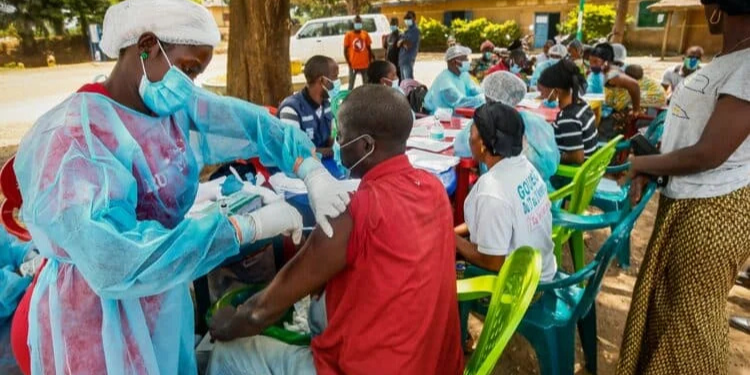
The first misconception is that Kenya is being turned into a dumping ground for Ebola patients flown in from the United States. That is not what the arrangement appears to be about. The facility is meant for people already working near the Ebola outbreak zone in the Democratic Republic of Congo and neighboring areas, especially American citizens, researchers and response workers who may be exposed while doing field work. In other words, the concern is not sick people being brought from America into Kenya, but exposed personnel in the region being monitored or isolated closer to the source of risk. The logic is that a nearby controlled facility may be safer and faster than waiting for a complicated evacuation across continents after exposure has already occurred.
Understanding the Scale and Management
That does not remove danger, but it changes the question. This is not the same as randomly importing a disease into Kenya for convenience. It is a regional containment arrangement whose risks, benefits and safeguards must be examined carefully. The second issue is scale. A limited facility inside a secure military installation is not the same as placing Ebola cases inside an ordinary town hospital. Military bases are controlled environments, and if properly managed, they allow tighter control over movement, access, transport, waste handling and emergency procedures. The fact that American personnel would reportedly run the facility may reduce immediate exposure of Kenyan health workers, although it should not be used to exclude Kenyan experts from oversight and institutional learning.
Potential Benefits for Kenya
The benefits being discussed are not imaginary either. The United States has pledged support for Kenya’s Ebola preparedness, including surveillance, screening, supplies, training, and broader health security systems. These investments matter because infectious diseases do not respect passports, borders or political moods. Kenya sits in a region where outbreaks in Congo, Uganda or South Sudan can quickly become a Kenyan concern through travel, trade, displacement and informal movement.
Preparedness is most useful before panic begins. The worst time to build capacity is when hospitals are already anxious, misinformation is spreading, and government is improvising in front of frightened citizens. If the Laikipia arrangement strengthens border screening, emergency response, infection prevention and disease surveillance, then Kenya should not dismiss those gains simply because the proposal arrived through poor communication.
There is also a longer strategic issue. Kenya already presents itself as a regional hub for diplomacy, humanitarian logistics and international cooperation. Global health security is now part of that role. A country that wants to be taken seriously as an anchor state in East Africa cannot participate only in safe, ceremonial partnerships. Sometimes regional leadership means hosting difficult arrangements, provided they are transparent, lawful and beneficial to the country.
The Need for Disciplined Debate
This is where the debate needs discipline. The correct question is not whether Kenyans should blindly trust Washington or Nairobi. They should not. The correct question is whether Kenya can negotiate a safe, transparent and useful arrangement that protects its citizens while strengthening national public health capacity.
Such an arrangement must meet strict conditions. The agreement should be made public unless specific security reasons justify limited redaction. Independent Kenyan public health experts should have oversight access. Laikipia residents should receive plain-language briefings. Waste disposal, transport routes, emergency evacuation procedures and liability arrangements must be clearly stated. Parliament should know what Kenya receives, what Kenya risks, and what legal obligations the country has accepted. If those conditions are absent, opposition is justified. If they are met, blanket rejection may become shortsighted.
Also Read: Laikipia Air Base Kenya: America’s Ebola Quarantine Hub for US Citizens – What to Know
The problem with reactionary politics is that it often mistakes suspicion for wisdom. Suspicion is useful when it forces disclosure and scrutiny. It becomes harmful when it blocks every opportunity before evidence is considered. Kenya needs caution, but caution should not mean fear of every difficult partnership. We cannot afford recklessness in biosecurity, but we also cannot build a serious health-security state by rejecting cooperation simply because it is politically uncomfortable.
Role of the Court Process
The court process should therefore be welcomed. It gives the country a chance to slow down, examine documents, force disclosure and protect constitutional rights. That is not an obstacle to public health. It is part of responsible governance.
What should not happen is for the debate to collapse into easy slogans. Calling the facility a colonial experiment may express genuine anger, but anger alone does not answer whether the risks can be contained. Defending the proposal as harmless cooperation is also lazy if the public has not seen the safeguards. Both reactions avoid the harder work of judgment. Kenya’s interest lies in a careful middle path. Demand transparency. Insist on biosafety. Protect communities. Use the partnership to build local capacity. Refuse secrecy. But do not confuse every international health arrangement with surrender.
Conclusion
The Laikipia proposal may still prove unwise after full scrutiny. It may also prove useful if properly redesigned and publicly governed. What would be unfortunate is for Kenya to lose a chance to strengthen its preparedness because outrage arrived before understanding.
Strategic nations do not panic first and think later. They ask hard questions, negotiate from a place of interest, protect their citizens, and still know when cooperation can serve them.
This article was written by George Nyongesa, a lecturer of philosophy and logic at the University of Nairobi and Chuka University.
Follow our WhatsApp Channel and X Account for real-time news updates.