
Wednesday, June 3, 2026
  • News
    • Latest News
    • Breaking News
    • Fact Check
    • Investigations
    • Explainers
  • Politics
    • Global Politics
    • Elections
    • Government & Policy
    • Diplomacy
    • Conflicts & Security
    • Political Analysis
  • Business
    • Global Economy
    • Markets
    • Technology
    • Startups
    • Energy
    • Finance
  • World News
    • Americas
    • Asia
    • Asia Pacific
    • Africa
    • Europe
    • Middle East
  • Africa
    • Central Africa
    • East Africa
    • West Africa
    • Southern Africa
  • Health
    • Global Health
    • Public Health
    • Health Policy
    • Medical Research
    • Diseases & Conditions
    • Mental Health
    • Nutrition
    • Climate & Health
    • Health Explainers
  • Sports
    • Athletics
    • Basketball
    • Boxing
    • Cricket
    • Football
    • Formula 1
    • Golf
    • Rugby
  • Weather
    • Climate Business
    • Climate Change
    • Climate Solutions
    • Living Green
  • Culture
    • Arts
    • Film & TV
    • Food
    • Music
    • Lifestyle
    • Travel
  • Opinion
    • Editorials
    • Letters
  • Behind The Brand
REGISTER
LOGIN
No Result
View All Result
The Kenya Times
  • News
    • Latest News
    • Breaking News
    • Fact Check
    • Investigations
    • Explainers
  • Politics
    • Global Politics
    • Elections
    • Government & Policy
    • Diplomacy
    • Conflicts & Security
    • Political Analysis
  • Business
    • Global Economy
    • Markets
    • Technology
    • Startups
    • Energy
    • Finance
  • World News
    • Americas
    • Asia
    • Asia Pacific
    • Africa
    • Europe
    • Middle East
  • Africa
    • Central Africa
    • East Africa
    • West Africa
    • Southern Africa
  • Health
    • Global Health
    • Public Health
    • Health Policy
    • Medical Research
    • Diseases & Conditions
    • Mental Health
    • Nutrition
    • Climate & Health
    • Health Explainers
  • Sports
    • Athletics
    • Basketball
    • Boxing
    • Cricket
    • Football
    • Formula 1
    • Golf
    • Rugby
  • Weather
    • Climate Business
    • Climate Change
    • Climate Solutions
    • Living Green
  • Culture
    • Arts
    • Film & TV
    • Food
    • Music
    • Lifestyle
    • Travel
  • Opinion
    • Editorials
    • Letters
  • Behind The Brand
  • News
    • Latest News
    • Breaking News
    • Fact Check
    • Investigations
    • Explainers
  • Politics
    • Global Politics
    • Elections
    • Government & Policy
    • Diplomacy
    • Conflicts & Security
    • Political Analysis
  • Business
    • Global Economy
    • Markets
    • Technology
    • Startups
    • Energy
    • Finance
  • World News
    • Americas
    • Asia
    • Asia Pacific
    • Africa
    • Europe
    • Middle East
  • Africa
    • Central Africa
    • East Africa
    • West Africa
    • Southern Africa
  • Health
    • Global Health
    • Public Health
    • Health Policy
    • Medical Research
    • Diseases & Conditions
    • Mental Health
    • Nutrition
    • Climate & Health
    • Health Explainers
  • Sports
    • Athletics
    • Basketball
    • Boxing
    • Cricket
    • Football
    • Formula 1
    • Golf
    • Rugby
  • Weather
    • Climate Business
    • Climate Change
    • Climate Solutions
    • Living Green
  • Culture
    • Arts
    • Film & TV
    • Food
    • Music
    • Lifestyle
    • Travel
  • Opinion
    • Editorials
    • Letters
  • Behind The Brand
No Result
View All Result
The Kenya Times ~ Trending, Breaking News and Videos
No Result
View All Result
ADVERTISEMENT

Moving the Maasai: Tanzania is repeating Kenya’s colonial past

Lotte HughesbyLotte Hughes
July 22, 2022
Reading Time: 7 mins read
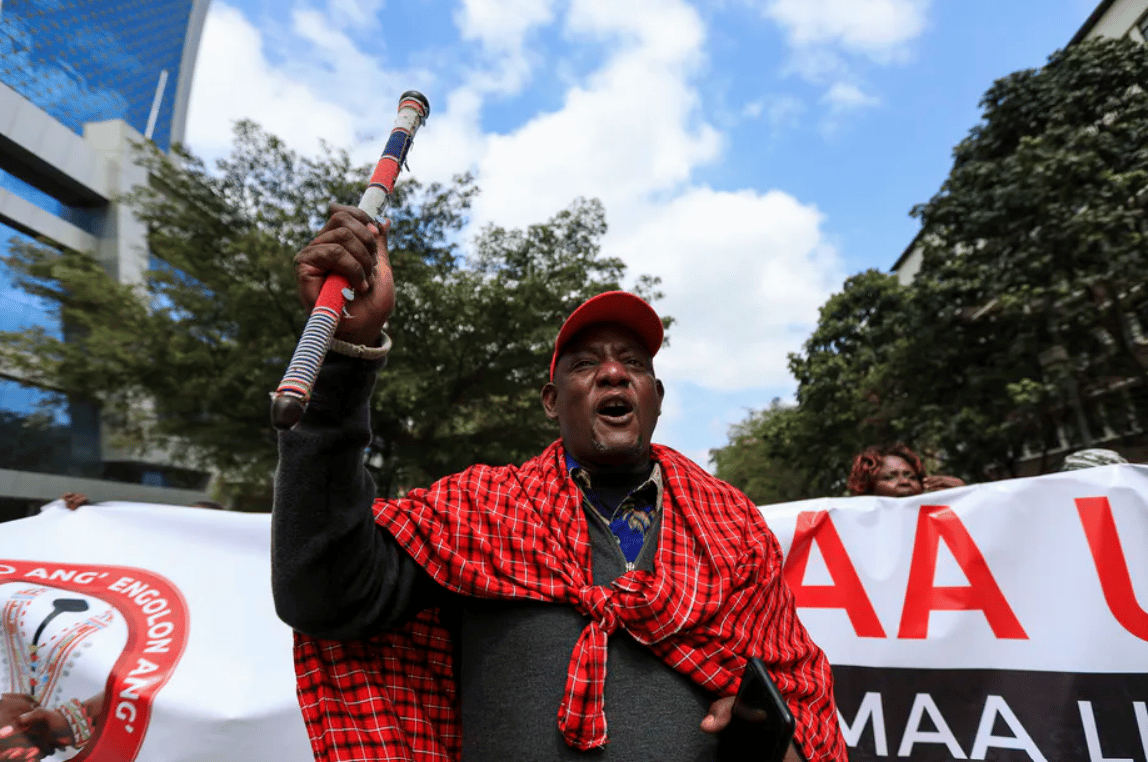
Protests In Nairobi As Maasai Activists Deliver A Petition To The Tanzania High Commission, In Kenya, 17 June 2022. Epa-Efe/Daniel Irungu

Protests in Nairobi as Maasai activists deliver a petition to the Tanzania High Commission, in Kenya, 17 June 2022. EPA-EFE/Daniel Irungu

FacebookTwitterLinkedInRedditWhatsApp
Advertisement

Images of distressed members of the Maasai community being forcibly moved from their homes, beaten, and harassed by police and the army in northern Tanzania in June set social media alight with concern. Activists have since voiced their anger over land and human rights, and they have good reason to do so.

The Maasai live in Kenya and Tanzania. Traditionally nomadic pastoralists, many have now settled and diversified their livelihoods.

But they have long been on a collision course with the government.

This has been the case with both colonial and post-colonial governments. And it’s largely because they live in areas wanted by the administration for other uses. One of these is wildlife conservation – for it is (wrongly) believed that people cannot co-exist with wildlife.

In northern Tanzania, the government is trying to evict thousands of Maasai from the Ngorongoro and Loliondo region to make way for tourists, wildlife, and big game hunting. These are lands in which people live alongside wildlife, and which border protected wildlife areas.

Catastrophic situation in #Tanzania, where thousands of Maasai have fled their homes following a brutal police crackdown.
31 people shot. 13 wounded. 1 dead.

Clearing the Maasai out to make way for trophy hunters, #conservation & #wildlife safaris, seemingly at any cost. pic.twitter.com/Mzi2BZ1Pzi

— Survival International (@Survival) June 13, 2022

ADVERTISEMENT

It’s a situation that’s all too familiar.

Just over 100 years ago, in what was then the Protectorate of British East Africa (later Kenya), similar scenes were unfolding, as described in my book, Moving the Maasai: A Colonial Misadventure. Two forced moves followed treaties, or “agreements”, signed in 1904 and 1911, between Maasai leaders and British administrators.

The Maasai were moved into reserves where they could be more easily taxed and controlled, and to make way for white settlement. Other ethnic groups, such as the Kikuyu, were also placed in reserves at a later date.

It is an opportune moment to remind people of this history because of the continuities and the implications for the community, who – being displaced from their ancestral lands – face an uncertain future.

Maasai and British East Africa

My book was based on Maasai oral testimony and information from archival sources. I found elders in their late 90s, some over 100, who were moved between 1912 and 1913 as children. Despite their age, they talked lucidly about these events and Maasai understanding of them, as if they had happened only yesterday.

ADVERTISEMENT

Eye-witness Thomas Ole Mootian remembered it clearly:

We were pushed by force, by a white man called Bilownee [British official E.D. Browne], accompanied by African soldiers. The askaris [soldiers] were holding guns, they were beating the people. When you stopped, they hit you with the butt of a gun. And if women made a joke or became lazy, they were caned. And when sheep or cows became weak, they were killed.

In 1895 Britain established a protectorate over the territory that became the Kenya colony in 1920. The areas seasonally used by Maasai (there was no private land ownership in those days) were coveted by European and South African settlers for their rich pastures, fertile soils and plentiful water sources. That is why first the Rift Valley, then Laikipia in the highlands, became targeted for white settlement.

Seven years after the first move, despite having promised the Maasai that they could keep the northern reserve on Laikipia “for so long as the Masai as a race shall exist” (in the words of the 1911 Masai Agreement with the British), they broke their pledge and moved them again, at gunpoint, into an extended southern reserve on the border with German East Africa.

The southern reserve was far inferior to Laikipia, in particular because stock and humans were killed by diseases to which they had no immunity. Today this area is known as Narok County, which includes the Maasai Mara National Reserve.

It is estimated that the Maasai lost up to 50% of their land, maybe as much as 70%.

Legal action

The forced moves were supposedly sanctioned by the treaties or “Masai Agreements” of 1904 and 1911. Maasai leaders put their thumbprints to both documents and may not have known what they were signing away.

Those leaders soon woke up to the reality of their loss. From information I found in archives, the Maasai began legal action. This was done with help from European sympathizers’, including Norman Leys, a Scottish medical doctor who worked for the administration in British East Africa.

Leys sent a series of explosive letters to British MPs that blew the whistle on what was going on. This raised a storm in parliament and temporarily stopped the move from Laikipia. But Leys was later sacked for his disloyalty.

Supported by British lawyers based in the protectorate, the Maasai took their case to the High Court of British East Africa in 1913 and challenged the legality of the 1911 Agreement. They lost on a technicality.

But it was a landmark case for its time – the first time, to my knowledge, that an indigenous people in Africa had taken such legal action against a colonial power.

Afterwards, the Maasai were heavily controlled in the reserve. They faced high taxation, forced schooling, quarantine restrictions and other livestock controls, while the warriors were forced to build roads. This led to riots, in which a number of warriors were killed.

Injustices

Kenyan Maasai were forced to accept their lives in the new reserves. For a community that traditionally survived by seasonally moving their herds from one place to another, they were restricted, forced to compete for resources with other Maasai groups, and had to adapt to their new environment. On the plus side, the creation of the Maasai Mara National Reserve (in the area to which they moved) has long been a milk cow. This is because it’s managed by the Maasai-dominated Narok County Council and revenues are shared with the community.

Nonetheless, some Maasai activists continue to seek compensation or the return of the land from both the British and Kenyan governments.

In evicting the Maasai from the Rift Valley and Laikipia, the British clearly perpetrated a great injustice that has repercussions to this day. It is disgraceful that, more than 100 years after the colonizers forcibly moved Kenyan Maasai to make way for settlers, independent Tanzania is doing something very similar.The Conversation

Lotte Hughes, Honorary Associate, The Open University

This article is republished from The Conversation under a Creative Commons license. Read the original article.


Tags: ColonialColonialismEvictionsHuntingKenyaMaasaiTanzaniaWildlife
Lotte Hughes

Lotte Hughes

Dr Lotte Hughes is an historian and a journalist, who largely works on Kenyan issues. Her research interests include culture; cultural rights; heritage; identity politics; memory and memorialisation; Mau Mau; indigenous peoples; land rights and FGM/C and Alternative Rites of Passage. She has led major research projects on Kenya, including the AHRC-funded ‘Managing Heritage, Building Peace’, and the ESRC-funded ‘Cultural Rights and Kenya’s New Constitution’ (2014-17). She was consultant to the project ‘“Seeing” Conflict at the Margins’, based at the University of Sussex (2017-20). Key publications include Moving the Maasai: A Colonial Misadventure (2006), and Environment and Empire (2007, co-author William Beinart)

Related Posts

Moe Has Vowed To Take Action Against Utumishi Girls School Principal Over School Fire That Killed 16 Learners.

Opinion | How Kenya Failed the Girls of Utumishi Academy

June 2, 2026
Is Kenya Losing Its Morals? Rising Deviant Behavior And Rampant Crime

Opinion | The Mother Who Hates Her Own Children: Kenya’s Moral Collapse

June 2, 2026
Treasury Invites Applications For Board Recruitment Across 39 State-Owned Enterprises

Opinion | How New Taxes on Bank Card Transactions Charges Will Raise the Costs for Ordinary Kenyans if Adopted by Parliament

June 1, 2026
The Kenya National Examinations Council (Knec) Has Announced The Dates For The 2026/2027 Business And Technical Examination.

Opinion | AI Mistakes That Could Destroy Kenya’s Future — Global Lessons Every Leader, Business and Citizen Must See Now

May 31, 2026
ADVERTISEMENT

The Kenya Times Facebook

LATEST ARTICLES

  • Did Harambee Stars Reject Hotel in South Africa Ahead of Lesotho Friendlies?
  • Botswana Tanker Blasted as U.S. Fires Hellfire Into Empty Ship Heading to Iran’s Kharg Island
  • Trump’s DOJ Scraps $1.776B Anti-weaponization Fund
  • CBS News Pays $2.5 Million to Inexperienced Producer to Lead 60 Minutes
  • Neto Agostinho Profile: Educational Background, Career, Political Journey and Net Worth
  • Trump Admin Says There Are Many Places to Send Americans After Kenya Blocks Ebola Facility
  • Jill Biden Reveals What “Could Have Killed” Biden While He Was in Office
  • Trump Admits: ‘No One Knows Where the Iran Conversations Lead’
  • Trump AG Todd Blanche Says Trump Would Have Gone to Prison if He Lost 2024 Election
  • Raila Odinga Junior Unveils His Late Father’s Restored Hummer
  • COFEK Turns Up Pressure on Commission in Bid to Remove Education PS Julius Bitok
  • UoN the Only Kenyan University Ranked Among the World’s Top 2,000 Universities
  • Details of US Travel Advisory to Its Citizens Amid Controversy Over Ebola
  • Marco Rubio Confesses Secret on Iran Talks as He Hints at Rare Breakthrough
  • From Seminary Expulsion to the Cabinet: The Story of Rt. Major General Kahinda Otafiire
ADVERTISEMENT

Company

About Us

Our Authors

Our Experts

Social Media

Policies

Privacy Policy

House Rules

Standards and Policies

Terms and Conditions

Subscription

My Account

Contact Us

Contact Us

Join Our Team

Advertise With Us

© Copyright 2026 | The Kenya Times | All Rights Reserved

Welcome Back!

Sign In with Facebook
Sign In with Google
Sign In with Linked In
OR

Login to your account below

Forgotten Password? Sign Up

Create New Account!

Sign Up with Facebook
Sign Up with Google
Sign Up with Linked In
OR

Fill the forms below to register

All fields are required. Log In

Retrieve your password

Please enter your username or email address to reset your password.

Log In
Your Privacy and Cookies
We use cookies on our website to give you the most relevant experience by remembering your preferences and repeat visits. By clicking “Accept”, you consent to the use of ALL the cookies.
Do not sell my personal information.
Cookie settingsACCEPT
Privacy & Cookies Policy

Privacy Overview

This website uses cookies to improve your experience while you navigate through the website. Out of these cookies, the cookies that are categorized as necessary are stored on your browser as they are essential for the working of basic functionalities of the website. We also use third-party cookies that help us analyze and understand how you use this website. These cookies will be stored in your browser only with your consent. You also have the option to opt-out of these cookies. But opting out of some of these cookies may have an effect on your browsing experience.
Necessary
Always Enabled
Necessary cookies are absolutely essential for the website to function properly. This category only includes cookies that ensures basic functionalities and security features of the website. These cookies do not store any personal information.
Functional
Functional cookies help to perform certain functionalities like sharing the content of the website on social media platforms, collect feedbacks, and other third-party features.
Performance
Performance cookies are used to understand and analyze the key performance indexes of the website which helps in delivering a better user experience for the visitors.
Analytics
Analytical cookies are used to understand how visitors interact with the website. These cookies help provide information on metrics the number of visitors, bounce rate, traffic source, etc.
Advertisement
Advertisement cookies are used to provide visitors with relevant ads and marketing campaigns. These cookies track visitors across websites and collect information to provide customized ads.
Others
Other uncategorized cookies are those that are being analyzed and have not been classified into a category as yet.
SAVE & ACCEPT
LOGIN | REGISTER
  • Login
  • Sign Up
  • Cart
No Result
View All Result
  • News
    • Latest News
    • Breaking News
    • Investigations
    • Explainers
    • Fact Check
  • Politics
    • Global Politics
    • Conflicts & Security
    • Elections
    • Diplomacy
    • Government & Policy
    • Political Analysis
  • Business
    • Global Economy
    • Markets
    • Technology
    • Startups
    • Energy
    • Finance
  • World News
    • Americas
    • Asia
    • Asia Pacific
    • Africa
    • Europe
    • Middle East
  • Africa
    • East Africa
    • West Africa
    • Southern Africa
    • Central Africa
  • Health
    • Global Health
    • Public Health
    • Health Policy
    • Medical Research
    • Diseases & Conditions
    • Mental Health
    • Nutrition
    • Climate & Health
    • Health Explainers
  • Sports
    • Athletics
    • Basketball
    • Boxing
    • Cricket
    • Football
    • Formula 1
    • Golf
    • Rugby
  • Weather
    • Climate Business
    • Climate Change
    • Climate Solutions
    • Living Green
  • Culture
    • Arts
    • Film & TV
    • Food
    • Lifestyle
    • Music
    • Travel
  • Opinion
    • Editorials
    • Letters
  • Behind The Brand
  • Contact Us

Not enough quota to unlock this post
Unlock left : 0
Are you sure want to cancel subscription?