Wednesday, October 14, 2026
  • News
    • Latest News
    • Breaking News
    • Fact Check
    • Investigations
    • Explainers
  • Politics
    • Global Politics
    • Elections
    • Government & Policy
    • Diplomacy
    • Conflicts & Security
    • Political Analysis
  • Business
    • Global Economy
    • Markets
    • Technology
    • Startups
    • Energy
    • Finance
  • World News
    • Americas
    • Asia
    • Asia Pacific
    • Africa
    • Europe
    • Middle East
  • Africa
    • Central Africa
    • East Africa
    • West Africa
    • Southern Africa
  • Health
    • Global Health
    • Public Health
    • Health Policy
    • Medical Research
    • Diseases & Conditions
    • Mental Health
    • Nutrition
    • Climate & Health
    • Health Explainers
  • Sports
    • World Cup 2026
    • Athletics
    • Basketball
    • Boxing
    • Cricket
    • Football
    • Formula 1
    • Golf
    • Rugby
  • Weather
    • Climate Business
    • Climate Change
    • Climate Solutions
    • Living Green
  • Culture
    • Arts
    • Film & TV
    • Food and Recipes
    • Music
    • Lifestyle
    • People
    • Travel
  • Opinion
    • Editorials
    • Letters
  • Behind The Brand
REGISTER
LOGIN
No Result
View All Result
The Kenya Times
  • News
    • Latest News
    • Breaking News
    • Fact Check
    • Investigations
    • Explainers
  • Politics
    • Global Politics
    • Elections
    • Government & Policy
    • Diplomacy
    • Conflicts & Security
    • Political Analysis
  • Business
    • Global Economy
    • Markets
    • Technology
    • Startups
    • Energy
    • Finance
  • World News
    • Americas
    • Asia
    • Asia Pacific
    • Africa
    • Europe
    • Middle East
  • Africa
    • Central Africa
    • East Africa
    • West Africa
    • Southern Africa
  • Health
    • Global Health
    • Public Health
    • Health Policy
    • Medical Research
    • Diseases & Conditions
    • Mental Health
    • Nutrition
    • Climate & Health
    • Health Explainers
  • Sports
    • World Cup 2026
    • Athletics
    • Basketball
    • Boxing
    • Cricket
    • Football
    • Formula 1
    • Golf
    • Rugby
  • Weather
    • Climate Business
    • Climate Change
    • Climate Solutions
    • Living Green
  • Culture
    • Arts
    • Film & TV
    • Food and Recipes
    • Music
    • Lifestyle
    • People
    • Travel
  • Opinion
    • Editorials
    • Letters
  • Behind The Brand
  • News
    • Latest News
    • Breaking News
    • Fact Check
    • Investigations
    • Explainers
  • Politics
    • Global Politics
    • Elections
    • Government & Policy
    • Diplomacy
    • Conflicts & Security
    • Political Analysis
  • Business
    • Global Economy
    • Markets
    • Technology
    • Startups
    • Energy
    • Finance
  • World News
    • Americas
    • Asia
    • Asia Pacific
    • Africa
    • Europe
    • Middle East
  • Africa
    • Central Africa
    • East Africa
    • West Africa
    • Southern Africa
  • Health
    • Global Health
    • Public Health
    • Health Policy
    • Medical Research
    • Diseases & Conditions
    • Mental Health
    • Nutrition
    • Climate & Health
    • Health Explainers
  • Sports
    • World Cup 2026
    • Athletics
    • Basketball
    • Boxing
    • Cricket
    • Football
    • Formula 1
    • Golf
    • Rugby
  • Weather
    • Climate Business
    • Climate Change
    • Climate Solutions
    • Living Green
  • Culture
    • Arts
    • Film & TV
    • Food and Recipes
    • Music
    • Lifestyle
    • People
    • Travel
  • Opinion
    • Editorials
    • Letters
  • Behind The Brand
No Result
View All Result
The Kenya Times ~ Trending, Breaking News and Videos
No Result
View All Result
ADVERTISEMENT

Museveni’s Dictatorship is Failing Ugandans: Here is What Needs to be Done

The ConversationbyThe Conversation
January 16, 2026
Reading Time: 11 mins read
Uganda'S President Yoweri Museveni'S Convoy During A Campaign Rally Ahead Of January 2026 Elections.

Uganda's President Yoweri Museveni's convoy during a campaign rally ahead of January 2026 elections. PHOTO/State House.

FacebookTwitterLinkedInRedditWhatsApp
Advertisement

When he was first sworn in as Uganda’s president in 1986, Yoweri Museveni declared that his victory represented a “fundamental change”. He promised that Ugandans would no longer die at the hands of fellow citizens. He also criticised African leaders who sought international prestige while their people lacked food, healthcare and dignity.

In his books Sowing the Mustard Seed (published in 1997) and What Is Africa’s Problem? (2000), Museveni condemned leaders who overstayed in power.

Now nearly four decades into his rule, Uganda’s promised democratic renewal has been replaced by increasingly autocratic governance. Once the liberator, Museveni has become the strongman, overseeing a deeply repressive system. Political opposition, civil society and ordinary citizens have faced growing human rights violations, violence and intimidation. This is particularly targeted at young people and political dissidents.

In the run-up to Uganda’s 2026 elections, political repression has intensified. Young people, under the leadership of opposition figure Robert Kyagulanyi (popularly known as Bobi Wine), are at the centre of a growing struggle for freedom and democracy. And they are increasingly the targets of state violence.

I teach and research political repression and human rights. My work emphasises the importance of strengthening ethical and democratic leadership and governance. This enables sustainable peace, justice, development and human security to take root.

I have also argued that young people around the world can help save democracy – if they are supported. This is particularly the case in Uganda, which has one of the youngest populations in the world.

This support should come from the African Union (AU) in the first instance. Its peace and security council should make it clear to Museveni that he has obligations to respect people’s rights and freedoms. There is also a need for a standby military force from the AU and/or the UN to protect Ugandans against bloodshed.

The international community can also play a role by ending its supply of weapons and ensuring the implementation of international laws. This includes a commitment to arrest and prosecute those who commit crimes against humanity.

It is also urgent that Bobi Wine be granted special protection during and after the elections. The opposition leader has warned that the regime has plans to assassinate him.

What’s ailing Uganda

Museveni’s Uganda is marked by five key characteristics.

Firstly, authoritarianism and institutional control. To entrench his power, Museveni has rigged votes in every political election.

Authoritarianism is reinforced by personal and family control of institutions, particularly the military, police, the judiciary, the legislature and the electoral commission. The president’s son Muhoozi Kainerugaba is Uganda’s chief of defence forces. Museveni’s wife Janet is the minister of education and a member of parliament. All institutions are headed and monopolised by people from the president’s ethnic group.


Also Read: Uganda Elections 2026: Voting, Counting and How Results Are Announced


Secondly, corruption. Uganda is estimated to lose more than Sh10 trillion (US$2.8 billion) to corruption annually. Senior officials have amassed wealth through corruption.

Museveni’s recent political messaging has centred on protecting the gains of those in power. The president has referred to a national resource like oil, estimated at 6.65 billion barrels, as his.

For their part, the UK and US governments have sanctioned Ugandan officials for corruption.

Third, poverty. As of June 2025, Uganda ranked 157th out of 193 countries on a UN global development index. This index measures standards of living. Children still study under trees and hospitals are dilapidated. According to the World Bank, nearly 60% of the population lives on less than US$3 a day.

Fourth, human rights abuses, with perpetrators going unpunished. Supporters of Bobi Wine have faced beatings, torture, arrests, disappearances, military trials and extrajudicial killings. In 2020, security forces killed dozens of opposition supporters. Bobi Wine himself has survived several assassination attempts. His campaigns are frequently blocked. He has been pepper-sprayed, tear-gassed and denied accommodation.

Lastly, digital repression. The government has suspended internet access, and blocked platforms to prevent citizens from sharing evidence of state violence. This digital clampdown is a central tool of political control.

Opposition remains defiant

Despite repression, Bobi Wine, aged 43, has vowed to proceed with his campaign to unseat Museveni, 81. The opposition leader presents his movement as a fight to restore democracy, constitutionalism and civilian rule.

His political programme focuses on ending corruption and youth employment, healing national divisions, and improving access to public services. His manifesto talks about creating jobs, strengthening education, and restoring respect for human rights and the rule of law.

The youth-led struggle for democracy in Uganda reflects a broader continental reality: young Africans are demanding accountable leadership that reflects national potential rather than elite survival.

Why Uganda’s future matters

Reversing authoritarianism is essential if Uganda’s going to deal with its myriad social and political ills.

The biggest immediate threat is a real risk of mass violence. The president’s son, who is also the military chief, has publicly threatened Bobi Wine. The opposition leader has warned of reports suggesting preparations for mass killings.

A reversal of the current state of affairs would contribute to peace and stability in Uganda, and across the Great Lakes region, one of Africa’s most conflict-affected zones. All six of Uganda’s neighbours (Burundi, South Sudan, Democratic Republic of Congo, Rwanda, Tanzania and Kenya) face instability of one form or another.


Also Read: LIVE BLOG: Museveni Takes an Early Lead


The region has experienced cycles of violence dating back to the 1980s. Museveni’s bush war (1980-1986) was followed by the 1994 Rwanda genocide. In 1996, Uganda and Rwanda invaded the DR Congo, triggering a wave of violence that persists to date. The violence is heightened by Museveni’s militarisation of the DRC and Kagame’s support for militias in the country, including the March 23 Movement (M23).

In addition, some neighbouring countries are experiencing increased internal political tension. For example Tanzania, long seen as relatively peaceful, has experienced lethal crackdowns against political opponents and protesters.

For its part, Kenya’s young people’s protests against government corruption and police brutality have been met with violence and abductions.

In Uganda itself, ethnic and regional tensions are rising. Museveni has said every soldier will have 120 bullets to silence protesters in the January 2026 election. Civilians have previously been kidnapped, tortured, disappeared and killed.

What’s needed

The youth-led struggle for democracy in Uganda reflects a broader continental reality: young Africans are demanding accountable leadership that reflects national potential rather than elite survival.

In Burkina Faso, the people rallied in support of President Ibrahim Traore’s emancipatory leadership. In Kenya, young people have not stopped demanding democratic rule and accountable leadership.

For the wider international community, supporting democratic transitions is not only a moral responsibility. It is also central to long-term peace, security, development and reducing forced migration.

History shows that early international action can prevent atrocities – and its absence can enable catastrophe.The Conversation

Evelyn Namakula Mayanja, Assistant Professor, Interdisciplinary Studies, Carleton University

This article is republished from The Conversation under a Creative Commons license. Read the original article.
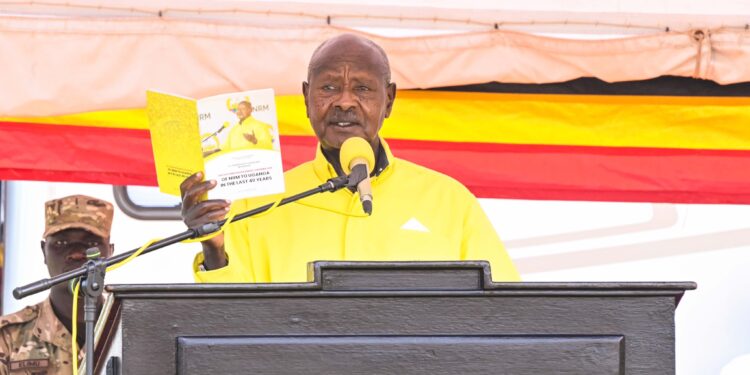
Uganda President Yoweri Museveni Addressing A Campaign Rally Ahead Of January 2026 Elections.
Uganda President Yoweri Museveni addressing a campaign rally ahead of January 2026 elections. PHOTO/State House.
Tags: Bobi WineKizza BesigyeMuseveniUgandaUganda Elections 2026
The Conversation

The Conversation

The Conversation is an independent news organization that publishes evidence-based articles written by experts to help readers understand diverse topics. We cover a wide range of areas including arts, culture, education, health, politics, science, and more¹. Their content is characterized by in-depth analysis, research, news, and ideas from leading academics and researchers. The Conversation aims to provide academic rigor with journalistic flair.

Related Posts

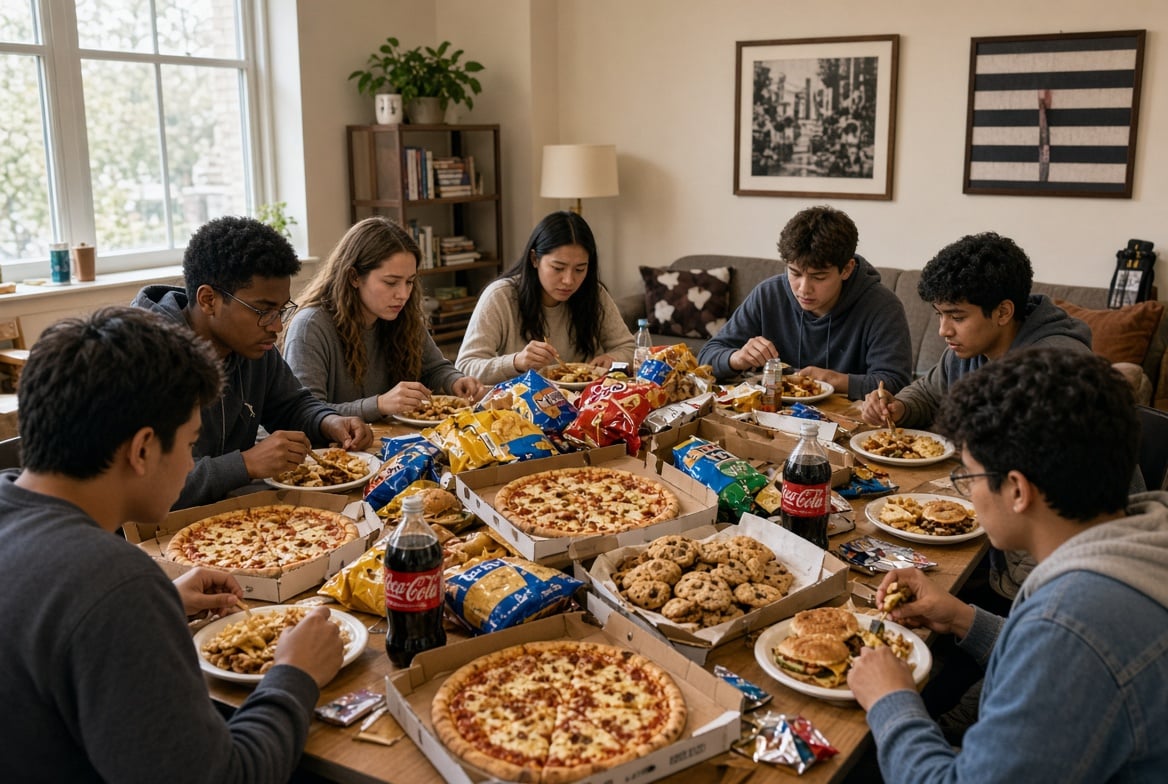
Binge-Eating Among College Students With Abundant Junk Food, A Common Setting Linked To Binge-Eating Risks.

How Globalization and Food Insecurity Fuel Disordered Eating Behavior in Young Adults

October 14, 2026
From Knowledge To Impact: A New Era Of Kenya–Uk Science Diplomacy

From Knowledge Sharing to Innovation: A New Chapter in Kenya–UK Science Diplomacy

October 10, 2026
Kenyan Teaching And Teachers Received Awards For Outstanding Contributions On October 5, At The Kasarani Indoor Arena During National World Teachers’ Day.

What Would a Truly Professional Teaching Profession Look Like in Kenya?

October 7, 2026
Beyond Borders: Why Science Diplomacy Must Drive The Next Era Of Development

Why Science Diplomacy Must Drive the Next Era of Development

October 5, 2026
ADVERTISEMENT

The Kenya Times Facebook

LATEST NEWS

  • Trans Nzoia Power Projects Target Nearly 11,000 Homes
  • Court Clears Path for Dangote’s Lamu Oil Refinery
  • EPRA Announces New Fuel Prices for October-November Cycle
  • Kenya Confirms Second Ebola Case
  • How to Import Milk Buffaloes from India to Kenya: Costs, Licenses and Process
  • KCSE 2026 Timetable: Date and Time Each Paper Will Be Examined
  • Bobby Ogolla: How Gor Mahia’s ‘Six Million Dollar Man’ Made His Name
  • Motorist Jumps Out of Car, Recovers iPhone 15 Pro Max After Police Chase
  • Fastest Routes to Get From JKIA to Nairobi CBD
  • UDA Secretary General Hassan Omar Summoned
  • Kenyan MP Wins Global Award
  • Profile of Esther Arunga, Former KTN Anchor Who Dropped Husband’s Surname After 16 Years
  • How Mamlaka Hill Chapel Grew From 80 Worshippers Under Bishop Ng’ang’a Before His Dismissal
  • Why SRC Asked 2 Senior Judges to Step Aside From High-Profile Car Allowance Case
  • India Issues Kenya Travel Advisory Over New Entry Requirement
ADVERTISEMENT

Company

About Us

Our Authors

Our Experts

Social Media

Policies

Privacy Policy

House Rules

Standards and Policies

Terms and Conditions

Subscription

My Account

Contact Us

Contact Us

Join Our Team

Advertise With Us

© Copyright 2026 | The Kenya Times | All Rights Reserved

Welcome Back!

Sign In with Facebook
Sign In with Google
Sign In with Linked In
OR

Login to your account below

Forgotten Password? Sign Up

Create New Account!

Sign Up with Facebook
Sign Up with Google
Sign Up with Linked In
OR

Fill the forms below to register

All fields are required. Log In

Retrieve your password

Please enter your username or email address to reset your password.

Log In
Your Privacy and Cookies
We use cookies on our website to give you the most relevant experience by remembering your preferences and repeat visits. By clicking “Accept”, you consent to the use of ALL the cookies.
Do not sell my personal information.
Cookie settingsACCEPT
Privacy & Cookies Policy

Privacy Overview

This website uses cookies to improve your experience while you navigate through the website. Out of these cookies, the cookies that are categorized as necessary are stored on your browser as they are essential for the working of basic functionalities of the website. We also use third-party cookies that help us analyze and understand how you use this website. These cookies will be stored in your browser only with your consent. You also have the option to opt-out of these cookies. But opting out of some of these cookies may have an effect on your browsing experience.
Necessary
Always Enabled
Necessary cookies are absolutely essential for the website to function properly. This category only includes cookies that ensures basic functionalities and security features of the website. These cookies do not store any personal information.
Functional
Functional cookies help to perform certain functionalities like sharing the content of the website on social media platforms, collect feedbacks, and other third-party features.
Performance
Performance cookies are used to understand and analyze the key performance indexes of the website which helps in delivering a better user experience for the visitors.
Analytics
Analytical cookies are used to understand how visitors interact with the website. These cookies help provide information on metrics the number of visitors, bounce rate, traffic source, etc.
Advertisement
Advertisement cookies are used to provide visitors with relevant ads and marketing campaigns. These cookies track visitors across websites and collect information to provide customized ads.
Others
Other uncategorized cookies are those that are being analyzed and have not been classified into a category as yet.
SAVE & ACCEPT
LOGIN | REGISTER
  • Login
  • Sign Up
  • Cart
No Result
View All Result
  • News
    • Latest News
    • Breaking News
    • Investigations
    • Explainers
    • Fact Check
  • Politics
    • Global Politics
    • Conflicts & Security
    • Elections
    • Diplomacy
    • Government & Policy
    • Political Analysis
  • Business
    • Global Economy
    • Markets
    • Technology
    • Startups
    • Energy
    • Finance
  • World News
    • Americas
    • Asia
    • Asia Pacific
    • Africa
    • Europe
    • Middle East
  • Africa
    • East Africa
    • West Africa
    • Southern Africa
    • Central Africa
  • Health
    • Global Health
    • Public Health
    • Health Policy
    • Medical Research
    • Diseases & Conditions
    • Mental Health
    • Nutrition
    • Climate & Health
    • Health Explainers
  • Sports
    • World Cup 2026
    • Athletics
    • Basketball
    • Boxing
    • Cricket
    • Football
    • Formula 1
    • Golf
    • Rugby
  • Weather
    • Climate Business
    • Climate Change
    • Climate Solutions
    • Living Green
  • Culture
    • Arts
    • Film & TV
    • Food and Recipes
    • Lifestyle
    • Music
    • People
    • Travel
  • Opinion
    • Editorials
    • Letters
  • Behind The Brand
  • Contact Us

Not enough quota to unlock this post
Unlock left : 0
Are you sure want to cancel subscription?