Wednesday, June 3, 2026
  • News
    • Latest News
    • Breaking News
    • Fact Check
    • Investigations
    • Explainers
  • Politics
    • Global Politics
    • Elections
    • Government & Policy
    • Diplomacy
    • Conflicts & Security
    • Political Analysis
  • Business
    • Global Economy
    • Markets
    • Technology
    • Startups
    • Energy
    • Finance
  • World News
    • Americas
    • Asia
    • Asia Pacific
    • Africa
    • Europe
    • Middle East
  • Africa
    • Central Africa
    • East Africa
    • West Africa
    • Southern Africa
  • Health
    • Global Health
    • Public Health
    • Health Policy
    • Medical Research
    • Diseases & Conditions
    • Mental Health
    • Nutrition
    • Climate & Health
    • Health Explainers
  • Sports
    • Athletics
    • Basketball
    • Boxing
    • Cricket
    • Football
    • Formula 1
    • Golf
    • Rugby
  • Weather
    • Climate Business
    • Climate Change
    • Climate Solutions
    • Living Green
  • Culture
    • Arts
    • Film & TV
    • Food
    • Music
    • Lifestyle
    • Travel
  • Opinion
    • Editorials
    • Letters
  • Behind The Brand
REGISTER
LOGIN
No Result
View All Result
The Kenya Times
  • News
    • Latest News
    • Breaking News
    • Fact Check
    • Investigations
    • Explainers
  • Politics
    • Global Politics
    • Elections
    • Government & Policy
    • Diplomacy
    • Conflicts & Security
    • Political Analysis
  • Business
    • Global Economy
    • Markets
    • Technology
    • Startups
    • Energy
    • Finance
  • World News
    • Americas
    • Asia
    • Asia Pacific
    • Africa
    • Europe
    • Middle East
  • Africa
    • Central Africa
    • East Africa
    • West Africa
    • Southern Africa
  • Health
    • Global Health
    • Public Health
    • Health Policy
    • Medical Research
    • Diseases & Conditions
    • Mental Health
    • Nutrition
    • Climate & Health
    • Health Explainers
  • Sports
    • Athletics
    • Basketball
    • Boxing
    • Cricket
    • Football
    • Formula 1
    • Golf
    • Rugby
  • Weather
    • Climate Business
    • Climate Change
    • Climate Solutions
    • Living Green
  • Culture
    • Arts
    • Film & TV
    • Food
    • Music
    • Lifestyle
    • Travel
  • Opinion
    • Editorials
    • Letters
  • Behind The Brand
  • News
    • Latest News
    • Breaking News
    • Fact Check
    • Investigations
    • Explainers
  • Politics
    • Global Politics
    • Elections
    • Government & Policy
    • Diplomacy
    • Conflicts & Security
    • Political Analysis
  • Business
    • Global Economy
    • Markets
    • Technology
    • Startups
    • Energy
    • Finance
  • World News
    • Americas
    • Asia
    • Asia Pacific
    • Africa
    • Europe
    • Middle East
  • Africa
    • Central Africa
    • East Africa
    • West Africa
    • Southern Africa
  • Health
    • Global Health
    • Public Health
    • Health Policy
    • Medical Research
    • Diseases & Conditions
    • Mental Health
    • Nutrition
    • Climate & Health
    • Health Explainers
  • Sports
    • Athletics
    • Basketball
    • Boxing
    • Cricket
    • Football
    • Formula 1
    • Golf
    • Rugby
  • Weather
    • Climate Business
    • Climate Change
    • Climate Solutions
    • Living Green
  • Culture
    • Arts
    • Film & TV
    • Food
    • Music
    • Lifestyle
    • Travel
  • Opinion
    • Editorials
    • Letters
  • Behind The Brand
No Result
View All Result
The Kenya Times ~ Trending, Breaking News and Videos
No Result
View All Result
ADVERTISEMENT

Mwai Kibaki’s Kenya education legacy: well-intentioned, with disastrous consequences

Ishmael MunenebyIshmael Munene
April 27, 2022
Reading Time: 8 mins read
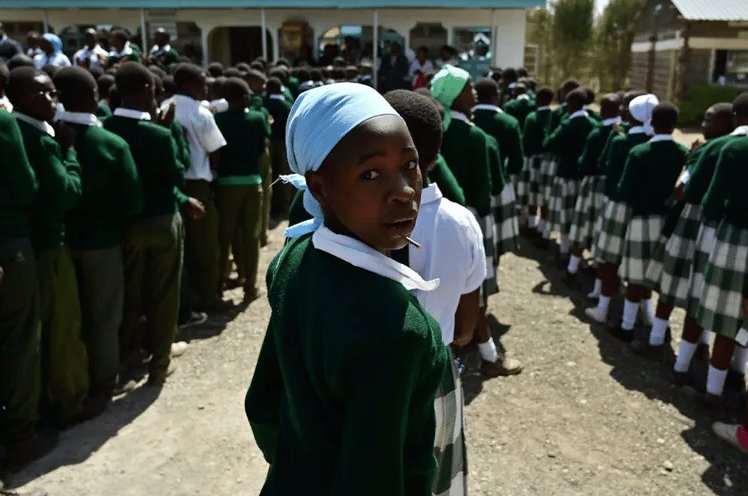
Kenya School Children | Afp

Kenya school children | AFP

FacebookTwitterLinkedInRedditWhatsApp
Advertisement

Kenya’s former president Mwai Kibaki, who died last week, was widely praised for his economic transformation of Kenya, first as finance minister from 1969 to 1982 and then as the third president of Kenya from 2002 to 2013.

But Kibaki also left an enduring legacy on Kenya’s education sector.

Kibaki left his mark on education in two areas: the widening of access to education and the embrace of a business-style model for universities.

When Kibaki came to office, there was an education access crisis in both basic and higher education.

Numerous charges introduced by schools (such as building funds and activity fees) had increased the cost of education for the poor. Primary school enrolment was around 86% but, in 2002, the transition rate, from primary to secondary school stood at just 46%.

The growing demand for university education, due to population growth, limited access to only those who had performed exceptionally well in secondary education. Furthermore, university governance and operations had been constrained by political interference by the political class.

ADVERTISEMENT

Kibaki’s goals were to expand access both in primary and university education, and to make universities more efficient and self-sustaining by reforming management and commercializing them.

These contributions, though positive, also had their drawbacks. 

Free primary education

When he took office as president in 2003, Kibaki launched the widely praised Free Primary Education programme. Under it, all fees in primary schools were abolished. This wasn’t the first time this had happened. Primary school fees were first abolished in 1978 but, due to declining state support, schools introduced a myriad of non-tuition fees. This defeated the goal of free primary education.

Kibaki’s government strategy allocated each public-school grants based on student enrolment. This allowed them to buy textbooks and meet other operational costs. This meant increasing the education budget from 12.4% of the national budget in 2004 to 17.4% in 2005.

The Free Primary Education programme enabled millions of poor children to enroll in school. It is estimated that primary school enrolment rose from 6 million in 2000 to 7.4 million in 2004.

ADVERTISEMENT

Free Primary Education was, and continues to be, a noble program that addresses equality in primary education access. Nevertheless, its implementation had disastrous consequences for equity and quality in education.

No extra classrooms were built, nor additional teachers hired. This resulted in overcrowded classrooms with overworked teachers. Indeed, the teacher-student ratio increased from one teacher to 40 students, to one teacher for 60 students. The deterioration of quality of public schools became evident and poor performance in national exams proved this.

Those that could afford it removed their children from well-performing public schools and enrolled them in expensive private academies. It is during Kibaki’s regime that the country saw the rise of high-cost private schools populated by scions of the middle and upper class. Indeed, enrolment in private academies almost tripled between 2005 to 2009 from 4.4% to 10.5%.

I also believe it nurtured an entrepreneurial education class whose interest in education was merely profit rather than the overall education of the child.

Equally troubling for Free Private Education programme was the weak financial oversight that resulted in massive theft of public funds. While some reports in 2009 indicated that Ksh.178 million (US$1.54 million) of the program’s funds were squandered by senior education officials and headteachers, other reports estimate that billions could have been stolen.

Upon his election in 2002, president Kibaki had declared corruption would cease to be a way of life in his government.

However, Kibaki’s vaunted anti-graft campaign found its waterloo in his pet education project. 

Commercialization of universities

Kibaki’s reform footprints in education are also still evident in the university sector. Kibaki’s presidential term saw the greatest expansion of public university education in the country. When he took office, Kenya had only six public universities. When he left in 2013 the number had grown to 22. Most of the 17 (77%) public universities were established in one year, between 2012-2013.

Student enrolment grew from 71,832 in 2003 to 195,428 in 2013. Kibaki valued access to quality higher education as the key drive to economic growth. He argued that Kenya’s university education should be benchmarked against global standards and market needs.

Kibaki’s ultimate aim for universities was that they raise their own revenue and be less dependent on government. Hitherto, public universities depended on state funding for development, maintenance and operations supplemented by a modest state-regulated student tuition fee.

To do this, he commercialized universities and set about infusing them with corporate-style governance structures.

He depoliticized the chancellorship by appointing corporate leaders and scholars as public university chancellors. This was a dramatic break from the past. His predecessor, Daniel Arap Moi, was the chancellor of all the public universities.

In this new leadership structure, Kibaki expected policies and decisions in the universities to be driven by financial and academic considerations rather than political calculations. This meant universities also had to plan for resources that would come from elsewhere, rather than the exchequer.

It is a policy that saw public universities launch a range of initiatives in a bid to commercialize their operations. Ventures included:

  • academic programmes that included parallel programs, that is, admission of additional self-sponsored students who paid higher tuition fees beyond the normal government-funded students
  • the creation of mortuaries: medical schools in universities started offering body mortuary services to the public at a fee
  • establishment of branch campuses to admit more fee-paying self-sponsored students beyond the immediate location of the main university

But Kibaki’s vision of vibrant well-resourced public universities raising additional revenues to supplement government grants failed to materialize.

Today, many public universities are on the brink of financial insolvency with debts to the tune of Ksh10 billion (US$87 million). Many are unable to meet basic operating expenses.

But these university reforms had unintended consequences. Their extensive commercialization of universities and expanded access resulted in a decline in quality of learning, a challenge that still haunts the universities today.

In 2016, the government had to reverse course and outlaw branch campuses and parallel programs to stem the tide of quality decline.

Significantly, Kibaki’s expansion of public universities was in response to demand by ethnic groups for a campus in their jurisdiction. Thus, while he espoused corporate-style management of universities, his expansion strategy was laced with ethnic politics of university ownership. He awarded charters for establishment of public universities in response to pressure from ethnic groups seeking universities in their locality. 

In pursuit of the impossible

The benefits of Kibaki’s education reforms were less obvious than many of the transformative economic blueprint which delivered considerable benefits to the country.

He wanted to achieve the impossible in education: pursue equity through expanded access while infusing excellence through neoliberalism. But the lack of a focused and clear strategy only magnified the unintended consequences.The Conversation

Ishmael Munene, Professor of Research, Foundations & Higher Education, Northern Arizona University

This article is republished from The Conversation under a Creative Commons license. Read the original article.

Tags: Daniel Arap MoiEducationFree EducationKenyaMwai KibakiPovertyUhuru Kenyatta
Ishmael Munene

Ishmael Munene

Ishmael I. Munene is a professor of educational research, higher education and foundations in the Department of Educational Leadership, College of Education at Northern Arizona University. He obtained his PhD in Higher Education Administration and Policy Studies at the State University of New York at Albany, in the Department of Education Administration and Policy Studies. He also holds an MEd in Comparative and International Education and a BEd in English and Literature from Kenyatta University in Kenya. Munene was born and bred in Nairobi. Nairobi is the largest city in East Africa, and is the main commercial hub of the region as well as the political and administrative seat of the Republic of Kenya. Prior to relocating to the United States, he taught classes in Educational Foundations in the Department of Educational Foundations, College of Education and External Studies (CEES) at the University of Nairobi. Munene’s research interests centre on African higher education, private higher education, higher education governance as well as foreign aid and Africa’s educational development. He has researched and published widely in these areas, in addition to giving numerous academic presentations. His doctoral work focused on Kenya’s higher education as it relates to issues of equity and merit in the admission of students.

Related Posts

Parliament Is Under Fire Over Corruption After President William Ruto'S Revelations.

In Discussing Aftermath of Utumishi School Fire, MPs Are Skirting the Real Issue

June 3, 2026
Experts Have Raised Concerns That The Finance Bill 2026 Is Likely To Increase The Cost Of Borrowing In Kenya And Budget Financing

Why Finance Bill 2026 Could Make Borrowing More Expensive – A Banking Economist’s Honest Breakdown

June 3, 2026
Moe Has Vowed To Take Action Against Utumishi Girls School Principal Over School Fire That Killed 16 Learners.

Opinion | How Kenya Failed the Girls of Utumishi Academy

June 2, 2026
Is Kenya Losing Its Morals? Rising Deviant Behavior And Rampant Crime

Opinion | The Mother Who Hates Her Own Children: Kenya’s Moral Collapse

June 2, 2026
ADVERTISEMENT

The Kenya Times Facebook

LATEST ARTICLES

  • Loreto Girls High School Closed Indefinitely
  • Court Rules on Case of Terror Suspects Who Escaped from Kamiti Prison
  • Who Is Shakira Wafula? Gen Z Activist Who Faced Police During 2024 Finance Bill Protests
  • EPRA Introduces New Fuel Pricing Formula: How It Works and What It Means for Consumers
  • FIFA World Cup 2026 Kenya Schedule: All Match Times in EAT, Fixtures & TV Channels
  • In Discussing Aftermath of Utumishi School Fire, MPs Are Skirting the Real Issue
  • Universities Fund Opens Scholarship Window for Continuing Students
  • Govt Explains NYOTA Delay, Sets June 30 Payment Date
  • Danstan Omari Breaks Down How the Utumishi Girls Case May Lead to Free Release
  • Kenyans Warned of Dangerous Cereals Being Sold in Markets
  • Why Finance Bill 2026 Could Make Borrowing More Expensive – A Banking Economist’s Honest Breakdown
  • Kenya Eyes American Policing Style as Murkomen Flies to New York to Borrow Lessons
  • GSU Officer’s Family Breaks Silence After Sudden Death Following Madaraka Day Parade
  • Shocking Revelations from Lenana School: Prefect Exposes How Students Sabotaged CCTV Before Forced Closure
  • UK Updates Travel Notice for Japan – What Visitors Need to Know
ADVERTISEMENT

Company

About Us

Our Authors

Our Experts

Social Media

Policies

Privacy Policy

House Rules

Standards and Policies

Terms and Conditions

Subscription

My Account

Contact Us

Contact Us

Join Our Team

Advertise With Us

© Copyright 2026 | The Kenya Times | All Rights Reserved

Welcome Back!

Sign In with Facebook
Sign In with Google
Sign In with Linked In
OR

Login to your account below

Forgotten Password? Sign Up

Create New Account!

Sign Up with Facebook
Sign Up with Google
Sign Up with Linked In
OR

Fill the forms below to register

All fields are required. Log In

Retrieve your password

Please enter your username or email address to reset your password.

Log In
Your Privacy and Cookies
We use cookies on our website to give you the most relevant experience by remembering your preferences and repeat visits. By clicking “Accept”, you consent to the use of ALL the cookies.
Do not sell my personal information.
Cookie settingsACCEPT
Privacy & Cookies Policy

Privacy Overview

This website uses cookies to improve your experience while you navigate through the website. Out of these cookies, the cookies that are categorized as necessary are stored on your browser as they are essential for the working of basic functionalities of the website. We also use third-party cookies that help us analyze and understand how you use this website. These cookies will be stored in your browser only with your consent. You also have the option to opt-out of these cookies. But opting out of some of these cookies may have an effect on your browsing experience.
Necessary
Always Enabled
Necessary cookies are absolutely essential for the website to function properly. This category only includes cookies that ensures basic functionalities and security features of the website. These cookies do not store any personal information.
Functional
Functional cookies help to perform certain functionalities like sharing the content of the website on social media platforms, collect feedbacks, and other third-party features.
Performance
Performance cookies are used to understand and analyze the key performance indexes of the website which helps in delivering a better user experience for the visitors.
Analytics
Analytical cookies are used to understand how visitors interact with the website. These cookies help provide information on metrics the number of visitors, bounce rate, traffic source, etc.
Advertisement
Advertisement cookies are used to provide visitors with relevant ads and marketing campaigns. These cookies track visitors across websites and collect information to provide customized ads.
Others
Other uncategorized cookies are those that are being analyzed and have not been classified into a category as yet.
SAVE & ACCEPT
LOGIN | REGISTER
  • Login
  • Sign Up
  • Cart
No Result
View All Result
  • News
    • Latest News
    • Breaking News
    • Investigations
    • Explainers
    • Fact Check
  • Politics
    • Global Politics
    • Conflicts & Security
    • Elections
    • Diplomacy
    • Government & Policy
    • Political Analysis
  • Business
    • Global Economy
    • Markets
    • Technology
    • Startups
    • Energy
    • Finance
  • World News
    • Americas
    • Asia
    • Asia Pacific
    • Africa
    • Europe
    • Middle East
  • Africa
    • East Africa
    • West Africa
    • Southern Africa
    • Central Africa
  • Health
    • Global Health
    • Public Health
    • Health Policy
    • Medical Research
    • Diseases & Conditions
    • Mental Health
    • Nutrition
    • Climate & Health
    • Health Explainers
  • Sports
    • Athletics
    • Basketball
    • Boxing
    • Cricket
    • Football
    • Formula 1
    • Golf
    • Rugby
  • Weather
    • Climate Business
    • Climate Change
    • Climate Solutions
    • Living Green
  • Culture
    • Arts
    • Film & TV
    • Food
    • Lifestyle
    • Music
    • Travel
  • Opinion
    • Editorials
    • Letters
  • Behind The Brand
  • Contact Us

Not enough quota to unlock this post
Unlock left : 0
Are you sure want to cancel subscription?