Tuesday, June 2, 2026
  • News
    • Latest News
    • Breaking News
    • Fact Check
    • Investigations
    • Explainers
  • Politics
    • Global Politics
    • Elections
    • Government & Policy
    • Diplomacy
    • Conflicts & Security
    • Political Analysis
  • Business
    • Global Economy
    • Markets
    • Technology
    • Startups
    • Energy
    • Finance
  • World News
    • Americas
    • Asia
    • Asia Pacific
    • Africa
    • Europe
    • Middle East
  • Africa
    • Central Africa
    • East Africa
    • West Africa
    • Southern Africa
  • Health
    • Global Health
    • Public Health
    • Health Policy
    • Medical Research
    • Diseases & Conditions
    • Mental Health
    • Nutrition
    • Climate & Health
    • Health Explainers
  • Sports
    • Athletics
    • Basketball
    • Boxing
    • Cricket
    • Football
    • Formula 1
    • Golf
    • Rugby
  • Weather
    • Climate Business
    • Climate Change
    • Climate Solutions
    • Living Green
  • Culture
    • Arts
    • Film & TV
    • Food
    • Music
    • Lifestyle
    • Travel
  • Opinion
    • Editorials
    • Letters
  • Behind The Brand
REGISTER
LOGIN
No Result
View All Result
The Kenya Times
  • News
    • Latest News
    • Breaking News
    • Fact Check
    • Investigations
    • Explainers
  • Politics
    • Global Politics
    • Elections
    • Government & Policy
    • Diplomacy
    • Conflicts & Security
    • Political Analysis
  • Business
    • Global Economy
    • Markets
    • Technology
    • Startups
    • Energy
    • Finance
  • World News
    • Americas
    • Asia
    • Asia Pacific
    • Africa
    • Europe
    • Middle East
  • Africa
    • Central Africa
    • East Africa
    • West Africa
    • Southern Africa
  • Health
    • Global Health
    • Public Health
    • Health Policy
    • Medical Research
    • Diseases & Conditions
    • Mental Health
    • Nutrition
    • Climate & Health
    • Health Explainers
  • Sports
    • Athletics
    • Basketball
    • Boxing
    • Cricket
    • Football
    • Formula 1
    • Golf
    • Rugby
  • Weather
    • Climate Business
    • Climate Change
    • Climate Solutions
    • Living Green
  • Culture
    • Arts
    • Film & TV
    • Food
    • Music
    • Lifestyle
    • Travel
  • Opinion
    • Editorials
    • Letters
  • Behind The Brand
  • News
    • Latest News
    • Breaking News
    • Fact Check
    • Investigations
    • Explainers
  • Politics
    • Global Politics
    • Elections
    • Government & Policy
    • Diplomacy
    • Conflicts & Security
    • Political Analysis
  • Business
    • Global Economy
    • Markets
    • Technology
    • Startups
    • Energy
    • Finance
  • World News
    • Americas
    • Asia
    • Asia Pacific
    • Africa
    • Europe
    • Middle East
  • Africa
    • Central Africa
    • East Africa
    • West Africa
    • Southern Africa
  • Health
    • Global Health
    • Public Health
    • Health Policy
    • Medical Research
    • Diseases & Conditions
    • Mental Health
    • Nutrition
    • Climate & Health
    • Health Explainers
  • Sports
    • Athletics
    • Basketball
    • Boxing
    • Cricket
    • Football
    • Formula 1
    • Golf
    • Rugby
  • Weather
    • Climate Business
    • Climate Change
    • Climate Solutions
    • Living Green
  • Culture
    • Arts
    • Film & TV
    • Food
    • Music
    • Lifestyle
    • Travel
  • Opinion
    • Editorials
    • Letters
  • Behind The Brand
No Result
View All Result
The Kenya Times ~ Trending, Breaking News and Videos
No Result
View All Result
ADVERTISEMENT

South Africa Needs a Fresh Start, Says New Book: But Does the Argument Hold Up?

The ConversationbyThe Conversation
April 4, 2025
Reading Time: 9 mins read
8-Year-Old Girl Survives Accident That Killed 45 In South Africa

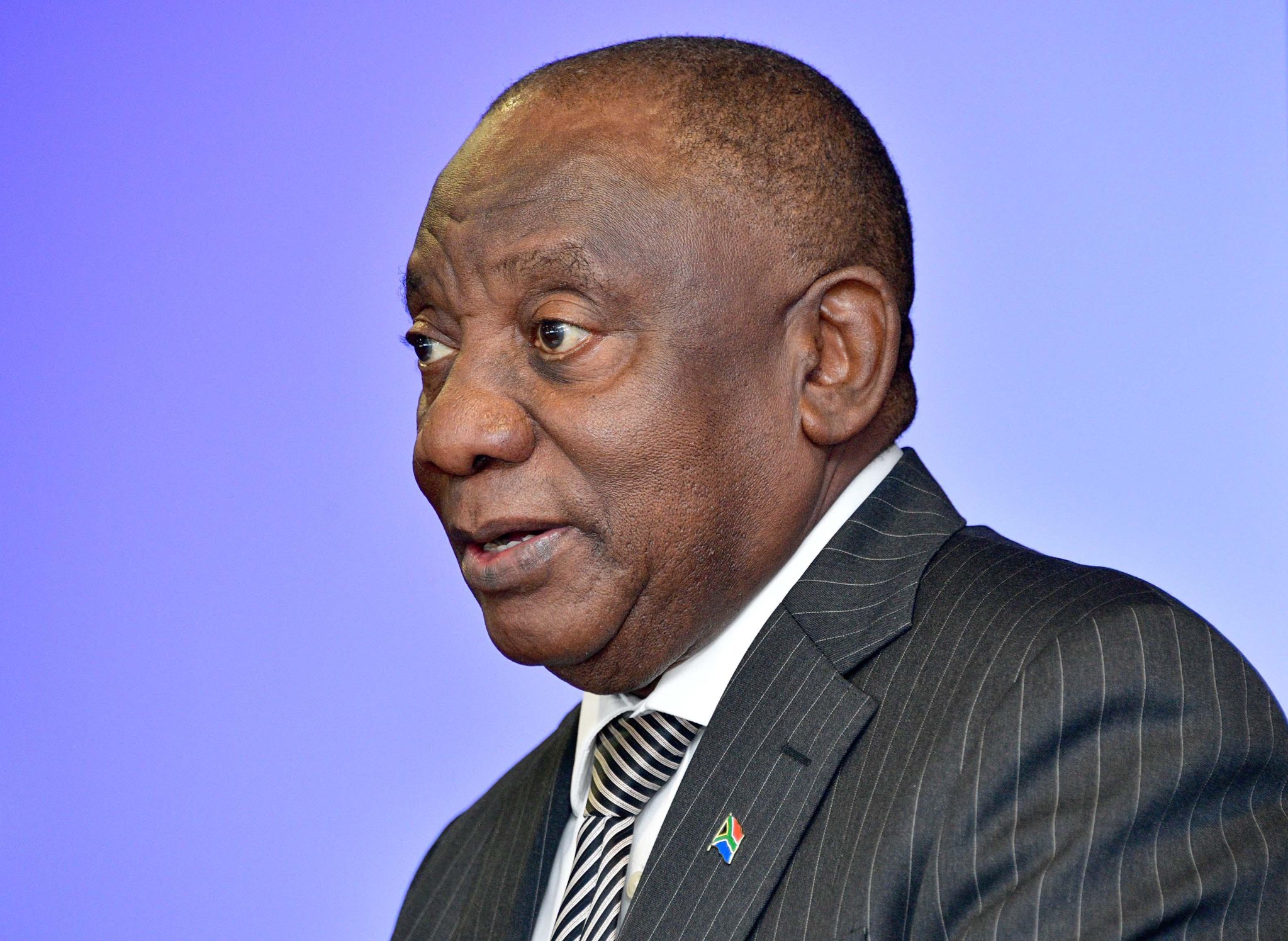
South Africa's President Cyril Ramaphosa. PHOTO/Presidency South Africa.

FacebookTwitterLinkedInRedditWhatsApp
Advertisement

Eddy Maloka, the South African historian, diplomat and academic, argues in his latest book the case for South Africa to forge a “second republic”. What is meant by this is left undefined, but emerges as the making of a new constitution, establishing new institutions.

Maloka’s argument is that South Africa’s transformation since 1994 – the overthrow of an unjust political, economic and social order – has benefited only a few.

Today the country is in crisis – “think load-shedding (power cuts), potholes, economic decline, rampant corruption, collapsing state institutions etc” (p.ii).

This is not unusual, he avers. It is customary for post-revolutionary countries to encounter a crisis. South Africa must now overcome its own and move to a higher stage of development. It can do this by

reconstituting itself into a second republic.

As a social scientist, I have enjoyed Maloka’s previous work, notably his valuable history of South Africa’s Communist Party.

But his latest offering, The Case For a Second Republic – South Africa’s Second Chance, disappoints as ill-thought out, unable to rise above liberation movement theology. It fails to pull together its many interesting ruminations into a coherent whole.

Nonetheless, it is worth exploring his central argument about the need for South Africa to have a new start. It is one which has substantial popular currency – rarely spelt out in detail, but often expressed on social media, radio chat shows and in speeches by politicians who should know better.

Justification for a second republic

The storyline usually goes something like this: the former liberation movement, the African National Congress (ANC), and the National Party, which had been running South Africa since 1948, negotiated a political settlement in 1994. This has been undermined by the economic compromises which were agreed behind the scenes by large-scale capital and the ANC.

The incoming ANC elite was bought off with goodies such as directorships proffered by large firms, so that capitalism could continue much as usual.

The result has been that, despite the transfer of political power, the structure of the economy has been little changed. Whites continue to enjoy the major portion of the country’s wealth. Although the black elite has been enriched, the black majority continues to carry the burden of massive unemployment, poverty and inequality. It follows that South Africa needs to revisit the political settlement made in 1994.

Because there are significant elements of truth in this analysis, it has gained considerable traction. Witness the call by former president Jacob Zuma’s uMkhonto we Sizwe party for the rewriting of the constitution. Zuma argues parliament should call the shots without being subject to the judgments of the constitutional court.

It’s a tempting call. However, it’s too simplistic. Yes, much of South Africa is broken, but there’s no easy way to fix it – and certainly not by an ill-informed transition to a second republic in the way Maloka suggests.

Out with the old, in with the new

The call for a second republic, declares Maloka, is a call for a strategic break with the 1994 dispensation. He cites the examples of African countries like Mali (where an attempt to re-found the state was made after a military coup in 2021) and Kenya, where after the political violence that followed the 2007 elections, there was an effort to revisit the constitutional foundations of the post-colonial state.

In both cases, new constitutions were drawn up and approved by electorates voting in referenda. In both cases, the re-foundation was principally about the state –

how it is constituted, its territorial governance, the powers of the executive, the separation of powers, and so forth.

But then Maloka admits that the re-foundation process is always going to be contested, and there is no guarantee that it will succeed.

Maloka views the liberation struggle as having been intended to establish a state based on “people’s power”, a vision endorsed by the ANC’s erstwhile Reconstruction and Development Plan. However, once it came into office, state power was appropriated by Leaders (capital “L”) acting only in their own interests. The people were disempowered, and now wait passively for government to deliver services to them.

There is therefore an urgent need for a post-1994 paradigm. This should:

  • re-mobilise people politically at a local level, so that they address local problems themselves
  • install a technocratic and meritocratic state led by performance-driven leaders
  • allow the direct election of representatives to provide for a parliament that holds the state to account.

Refounding the South African state

How to achieve all this?

Our approach should not be piecemeal … we should be decisive and overhaul the entire dispensation to align it with the times.

People’s power must be its central pillar. To do this, Maloka makes just three major recommendations.

First, he wants the machinery of government to be restructured. Provinces have not proved their worth. They should now be merged into the current system of local government, which could be incorporated into a new three tier state system (although we are not told how), with street committees as its third tier.

Second, the existing electoral system of proportional representation has made parliament and provincial legislatures accountable to party bosses, not the people. A reformed electoral system providing for public representatives and the president to be “directly elected” is necessary. (He dodges more precise discussion of electoral reform.)

Third, for these changes to be achieved, Maloka calls for the drawing up of a new constitution that should be validated through a national referendum. This should be achieved within two years.

No need for a second republic

What is so remarkable about Maloka’s book is that after delivering punchy critiques of the state of South Africa today, it fails to come up with a substantive case for a second republic, which is laid bare as an empty slogan.

If Maloka were to read paragraph 4 of chapter 3 of the existing constitution, he would find that there is already a carefully laid out provision for how bills to amend the constitution may be passed.

Why is it that this process cannot achieve the sort of changes that Maloka wants? If there is a need for wider social dialogue (there may well be), how is this to be achieved? He does not tell us.

However, there is a far more fundamental objection to his call for a second republic. That is that it would call into question the very foundation of the present constitution – its statement of the principles on which the democratic state is founded: human dignity and equality; non-racialism and non-sexism; supremacy of the constitution and the rule of law; and universal suffrage. The bill of rights affirms and protects all these values.

If Maloka wants to jettison these, he should tell us. As it is, his call for a second republic would put them up for grabs.The Conversation

Roger Southall, Professor of Sociology, University of the Witwatersrand

This article is republished from The Conversation under a Creative Commons license. Read the original article.

Follow our WhatsApp Channel and X Account for real-time news updates.
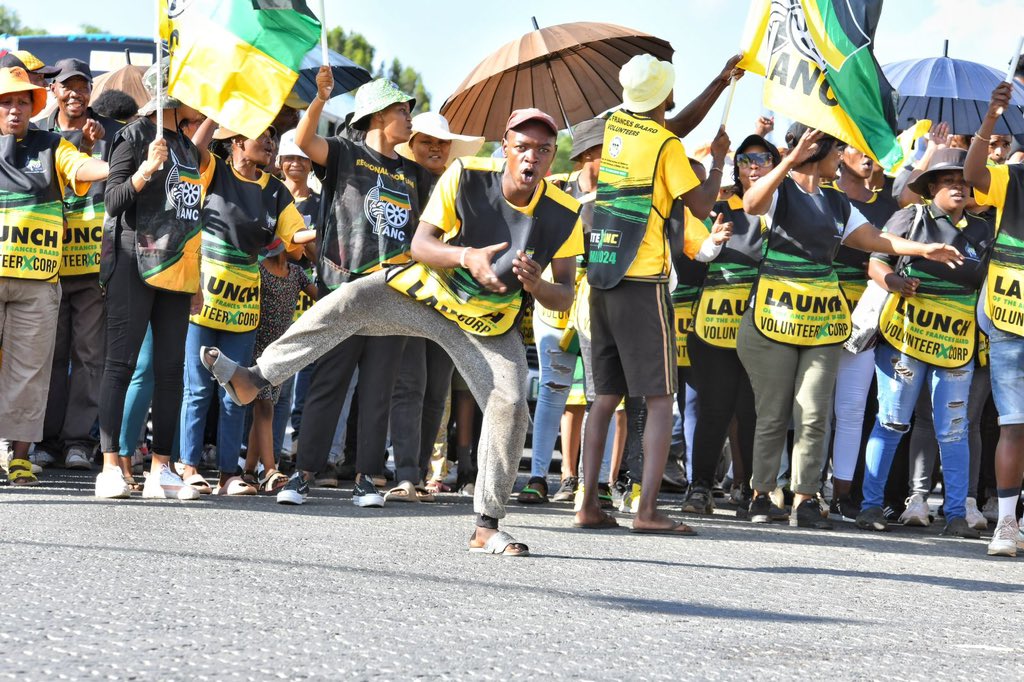
South Africans During An Anc Rally. Photo/Rsa Presidency.
South Africans during an ANC rally. PHOTO/RSA Presidency.
Tags: Cyril RamaphosaNelson MandelaSouth Africa
The Conversation

The Conversation

The Conversation is an independent news organization that publishes evidence-based articles written by experts to help readers understand diverse topics. We cover a wide range of areas including arts, culture, education, health, politics, science, and more¹. Their content is characterized by in-depth analysis, research, news, and ideas from leading academics and researchers. The Conversation aims to provide academic rigor with journalistic flair.

Related Posts

Moe Has Vowed To Take Action Against Utumishi Girls School Principal Over School Fire That Killed 16 Learners.

Opinion | How Kenya Failed the Girls of Utumishi Academy

June 2, 2026
Is Kenya Losing Its Morals? Rising Deviant Behavior And Rampant Crime

Opinion | The Mother Who Hates Her Own Children: Kenya’s Moral Collapse

June 2, 2026
Treasury Invites Applications For Board Recruitment Across 39 State-Owned Enterprises

Opinion | How New Taxes on Bank Card Transactions Charges Will Raise the Costs for Ordinary Kenyans if Adopted by Parliament

June 1, 2026
The Kenya National Examinations Council (Knec) Has Announced The Dates For The 2026/2027 Business And Technical Examination.

Opinion | AI Mistakes That Could Destroy Kenya’s Future — Global Lessons Every Leader, Business and Citizen Must See Now

May 31, 2026
ADVERTISEMENT

The Kenya Times Facebook

LATEST ARTICLES

  • KNEC Announces 2026/2027 TVET Examination Registration Dates
  • PS Oluga Clarifies Nationality of 37 People Quarantined After Returning from Congo
  • How to Send Money Internationally: Cheapest Methods in 2026
  • Where CCTV Cameras Should Not Be Installed Under Kenyan Law
  • Profile of Henry Wooster, Trump’s Nominee for U.S. Ambassador to Kenya
  • Mudavadi Asks Africa to Stop Depending on Aid
  • KeNHA Advances Plans for Mau Summit-Eldoret Road Upgrade After Securing Funding
  • Sasini PLC Appoints New Company Secretary
  • Pressure on Ruto to Allow Atheism in All Schools Countrywide
  • Here Are The 6 Things That Make Certain Sports a Lot More Popular
  • Emotional Utumishi Girls Survivor Recounts Horrific Night That Killed Classmates, Calls for Justice
  • Ruto Recalls How Leaders Warned Him Against Appointing Francis Ogolla
  • Trump Nominates Diplomat Henry Wooster as US Ambassador to Kenya
  • High Court Orders Govt to Disclose All Agreements and Approvals on Ebola Facility
  • Opinion | How Kenya Failed the Girls of Utumishi Academy
ADVERTISEMENT

Company

About Us

Our Authors

Our Experts

Social Media

Policies

Privacy Policy

House Rules

Standards and Policies

Terms and Conditions

Subscription

My Account

Contact Us

Contact Us

Join Our Team

Advertise With Us

© Copyright 2026 | The Kenya Times | All Rights Reserved

Welcome Back!

Sign In with Facebook
Sign In with Google
Sign In with Linked In
OR

Login to your account below

Forgotten Password? Sign Up

Create New Account!

Sign Up with Facebook
Sign Up with Google
Sign Up with Linked In
OR

Fill the forms below to register

All fields are required. Log In

Retrieve your password

Please enter your username or email address to reset your password.

Log In
Your Privacy and Cookies
We use cookies on our website to give you the most relevant experience by remembering your preferences and repeat visits. By clicking “Accept”, you consent to the use of ALL the cookies.
Do not sell my personal information.
Cookie settingsACCEPT
Privacy & Cookies Policy

Privacy Overview

This website uses cookies to improve your experience while you navigate through the website. Out of these cookies, the cookies that are categorized as necessary are stored on your browser as they are essential for the working of basic functionalities of the website. We also use third-party cookies that help us analyze and understand how you use this website. These cookies will be stored in your browser only with your consent. You also have the option to opt-out of these cookies. But opting out of some of these cookies may have an effect on your browsing experience.
Necessary
Always Enabled
Necessary cookies are absolutely essential for the website to function properly. This category only includes cookies that ensures basic functionalities and security features of the website. These cookies do not store any personal information.
Functional
Functional cookies help to perform certain functionalities like sharing the content of the website on social media platforms, collect feedbacks, and other third-party features.
Performance
Performance cookies are used to understand and analyze the key performance indexes of the website which helps in delivering a better user experience for the visitors.
Analytics
Analytical cookies are used to understand how visitors interact with the website. These cookies help provide information on metrics the number of visitors, bounce rate, traffic source, etc.
Advertisement
Advertisement cookies are used to provide visitors with relevant ads and marketing campaigns. These cookies track visitors across websites and collect information to provide customized ads.
Others
Other uncategorized cookies are those that are being analyzed and have not been classified into a category as yet.
SAVE & ACCEPT
LOGIN | REGISTER
  • Login
  • Sign Up
  • Cart
No Result
View All Result
  • News
    • Latest News
    • Breaking News
    • Investigations
    • Explainers
    • Fact Check
  • Politics
    • Global Politics
    • Conflicts & Security
    • Elections
    • Diplomacy
    • Government & Policy
    • Political Analysis
  • Business
    • Global Economy
    • Markets
    • Technology
    • Startups
    • Energy
    • Finance
  • World News
    • Americas
    • Asia
    • Asia Pacific
    • Africa
    • Europe
    • Middle East
  • Africa
    • East Africa
    • West Africa
    • Southern Africa
    • Central Africa
  • Health
    • Global Health
    • Public Health
    • Health Policy
    • Medical Research
    • Diseases & Conditions
    • Mental Health
    • Nutrition
    • Climate & Health
    • Health Explainers
  • Sports
    • Athletics
    • Basketball
    • Boxing
    • Cricket
    • Football
    • Formula 1
    • Golf
    • Rugby
  • Weather
    • Climate Business
    • Climate Change
    • Climate Solutions
    • Living Green
  • Culture
    • Arts
    • Film & TV
    • Food
    • Lifestyle
    • Music
    • Travel
  • Opinion
    • Editorials
    • Letters
  • Behind The Brand
  • Contact Us

Not enough quota to unlock this post
Unlock left : 0
Are you sure want to cancel subscription?