
Tuesday, June 2, 2026
  • News
    • Latest News
    • Breaking News
    • Fact Check
    • Investigations
    • Explainers
  • Politics
    • Global Politics
    • Elections
    • Government & Policy
    • Diplomacy
    • Conflicts & Security
    • Political Analysis
  • Business
    • Global Economy
    • Markets
    • Technology
    • Startups
    • Energy
    • Finance
  • World News
    • Americas
    • Asia
    • Asia Pacific
    • Africa
    • Europe
    • Middle East
  • Africa
    • Central Africa
    • East Africa
    • West Africa
    • Southern Africa
  • Health
    • Global Health
    • Public Health
    • Health Policy
    • Medical Research
    • Diseases & Conditions
    • Mental Health
    • Nutrition
    • Climate & Health
    • Health Explainers
  • Sports
    • Athletics
    • Basketball
    • Boxing
    • Cricket
    • Football
    • Formula 1
    • Golf
    • Rugby
  • Weather
    • Climate Business
    • Climate Change
    • Climate Solutions
    • Living Green
  • Culture
    • Arts
    • Film & TV
    • Food
    • Music
    • Lifestyle
    • Travel
  • Opinion
    • Editorials
    • Letters
  • Behind The Brand
REGISTER
LOGIN
No Result
View All Result
The Kenya Times
  • News
    • Latest News
    • Breaking News
    • Fact Check
    • Investigations
    • Explainers
  • Politics
    • Global Politics
    • Elections
    • Government & Policy
    • Diplomacy
    • Conflicts & Security
    • Political Analysis
  • Business
    • Global Economy
    • Markets
    • Technology
    • Startups
    • Energy
    • Finance
  • World News
    • Americas
    • Asia
    • Asia Pacific
    • Africa
    • Europe
    • Middle East
  • Africa
    • Central Africa
    • East Africa
    • West Africa
    • Southern Africa
  • Health
    • Global Health
    • Public Health
    • Health Policy
    • Medical Research
    • Diseases & Conditions
    • Mental Health
    • Nutrition
    • Climate & Health
    • Health Explainers
  • Sports
    • Athletics
    • Basketball
    • Boxing
    • Cricket
    • Football
    • Formula 1
    • Golf
    • Rugby
  • Weather
    • Climate Business
    • Climate Change
    • Climate Solutions
    • Living Green
  • Culture
    • Arts
    • Film & TV
    • Food
    • Music
    • Lifestyle
    • Travel
  • Opinion
    • Editorials
    • Letters
  • Behind The Brand
  • News
    • Latest News
    • Breaking News
    • Fact Check
    • Investigations
    • Explainers
  • Politics
    • Global Politics
    • Elections
    • Government & Policy
    • Diplomacy
    • Conflicts & Security
    • Political Analysis
  • Business
    • Global Economy
    • Markets
    • Technology
    • Startups
    • Energy
    • Finance
  • World News
    • Americas
    • Asia
    • Asia Pacific
    • Africa
    • Europe
    • Middle East
  • Africa
    • Central Africa
    • East Africa
    • West Africa
    • Southern Africa
  • Health
    • Global Health
    • Public Health
    • Health Policy
    • Medical Research
    • Diseases & Conditions
    • Mental Health
    • Nutrition
    • Climate & Health
    • Health Explainers
  • Sports
    • Athletics
    • Basketball
    • Boxing
    • Cricket
    • Football
    • Formula 1
    • Golf
    • Rugby
  • Weather
    • Climate Business
    • Climate Change
    • Climate Solutions
    • Living Green
  • Culture
    • Arts
    • Film & TV
    • Food
    • Music
    • Lifestyle
    • Travel
  • Opinion
    • Editorials
    • Letters
  • Behind The Brand
No Result
View All Result
The Kenya Times ~ Trending, Breaking News and Videos
No Result
View All Result
ADVERTISEMENT

Sudan’s Conflict has its Roots in Three Decades of Elites Fighting over Oil and Energy

Harry VerhoevenbyHarry Verhoeven
April 29, 2023
Reading Time: 7 mins read
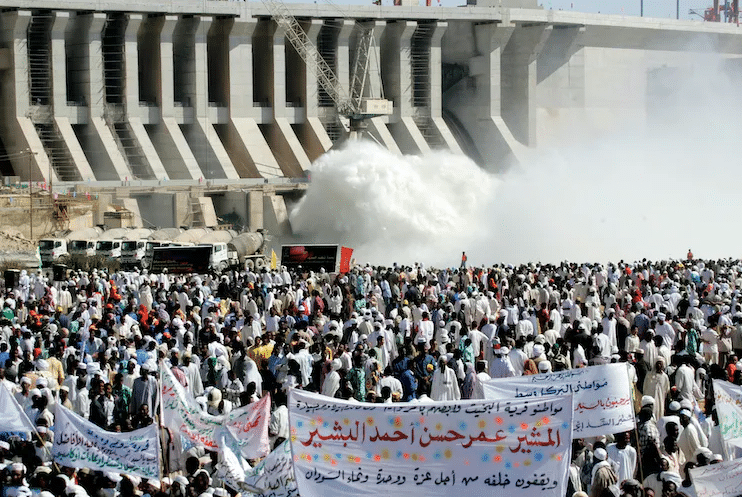
The Opening Of A Hydro-Electric Dam On The Nile River At Merowe, North Of Khartoum, In 2009 |  Ashraf Shazly/Afp Via Gettyimages

The opening of a hydro-electric dam on the Nile River at Merowe, north of Khartoum, in 2009 | Ashraf Shazly/Afp via GettyImages

FacebookTwitterLinkedInRedditWhatsApp
Advertisement

Sudan stands on the brink of yet another civil war sparked by the deadly confrontation between the Sudan Armed Forces of General Abdelfatah El-Burhan and the Rapid Support Forces of Mohamed Hamdan Dagalo (“Hemedti”).

Much of the international news coverage has focused on the clashing ambitions of the two generals. Specifically, that differences over the integration of the paramilitary Rapid Support Forces into the regular army triggered the current conflict on April 15, 2023.

I am a professor teaching at Columbia University and my research focuses on the political economy of the Horn of Africa. A forthcoming paper of mine in the Journal of Modern African Studies details the strategic calculus of the Sudan Armed Forces in managing revolution and democratization efforts, today as well as in past transitions. Drawing on this expertise, it is important to underline that three decades of contentious energy politics among rival elites forms a crucial background to today’s conflict.

The current conflict comes after a decade-long recession which has drastically lowered the living standards of Sudanese citizens as the state teetered on the brink of insolvency.

How energy has shaped Sudan’s violent political economy

Long gone are the heady days when Sudan emerged as one of Africa’s top oil producers. Close to 500,000 barrels were pumped every day by 2008. Average daily production in the last year has hovered around 70,000 barrels.

ADVERTISEMENT

In the late 1990s, amid a devastating civil war, President Omar Al-Bashir’s military-Islamist regime announced that energy would help birth a new economy. It had already paved the way for this reality, ethnically cleansing the areas where oil would be extracted.


Also Read: Lies! Kenyan Students Say the Govt; Did Not Help Them Escape Sudan


The regime struck partnerships with Chinese, Indian and Malaysian national oil companies. Growing Asian demand was met with Sudanese crude.

Petrodollars poured in. The regime in power between 1989 and 2019 oversaw a boom. This enabled it to weather internal political crises, increase the budgets of its security agencies and to spend lavishly on infrastructure. Billions of dollars were channeled to the construction and expansion of several hydro-electric dams on the Nile and its tributaries.

These investments are intended to enable the irrigation of hundreds of thousands of hectares. Food crops and animal fodder were to be grown for Middle Eastern importers. Electricity consumption in urban centers was transformed; production in Sudan was boosted by thousands of megawatts.

The regime spent more than US$10 billion on its dam programme. That’s a phenomenal sum and testament to its belief that the dams would become the centerpiece of Sudan’s modernized political economy.

ADVERTISEMENT

South Sudan secedes

Then, in 2011, South Sudan seceded – along with three-quarters of Sudan’s oil reserves. This exposed the illusions on which these dreams of hydro-agricultural transformation rested. The regime lost

half of its fiscal revenues, and about two-thirds of its international payment capacity.

The economy shrank by 10%. Sudan was also plagued by power cuts as the dams proved very costly and produced much less than promised. Lavish fuel subsidies were maintained but as evidence shows, these disproportionately benefited select constituencies in Khartoum and failed to protect the poor.

As the regime sank ever deeper into economic crisis, its security agencies concentrated on accumulating the means they deemed essential to survive, and to compete with each other. Both the Sudan Armed Forces and Rapid Support Forces deepened their involvement in Sudan’s political economy. They took control of key commercial activities. These included meat processing, information and communication technology and gold smuggling.

Soaring fuel, food and fertilizer prices

This economic crisis fueled a popular uprising which led to the overthrow of Al-Bashir. After the 2018-2019 revolution, the international community oversaw a power-sharing arrangement. This brought together Sudan Armed Forces, Rapid Support Forces and a civilian cabinet. Reforms were tabled to reduce spending on fuel imports and address the desperate economic situation.


Also Read: 3,000 Kenyans Stuck in Sudan Amid Escalating Violence


However, the proposals for economic reform competed for government and international attention with calls to fast-track the “de-Islamiszaion” of Sudan, and to purge collaborators of the ousted regime from civil service ranks.

Inflationary pressures worsened as food and energy prices rose. It also strengthened a growing regional black market in which fuel, wheat, sesame and much else was illicitly traded across borders. At the same time, divisions grew in Sudan’s political establishment and among protesters in its streets.

The government’s efforts to push back against growing control of economic activities by the Sudan Armed Forces and Rapid Support Forces ultimately contributed to the October 2021 coup against Prime Minister Abdallah Hamdok.

Overlapping crises

The coup only deepened the crisis. So too did global supply shocks, such as those caused by the COVID-19 pandemic and the Russia-Ukraine conflict, which sent the prices of fuel, food and fertilizer skyrocketing globally, including in Sudan. Fertilizer prices increased by more than 400%. The state’s retreat from subsidizing essential inputs for agricultural production, such as diesel and fertilizer, led farmers to drastically reduce their planting, further exacerbating the food production and affordability crunch.

Amid these overlapping energy, food and political crises, Sudan’s Armed Forces and Rapid Support Forces have been violently competing for control of the political economy’s remaining lucrative niches, such as key import-export channels. Both believe the survival of their respective institutions is essential to preventing the country from descending into total disintegration.

In view of such contradictions and complexity, there are no easy solutions to Sudan’s multiple crises. The political, economic and humanitarian situation is likely to worsen further.

A version of this article was first published by the Center on Global Energy Policy.The Conversation

Harry Verhoeven, Senior Research Scholar at the Center on Global Energy Policy, Columbia University

This article is republished from The Conversation under a Creative Commons license. Read the original article.


Tags: Abdel Fattah al-BurhanElite pactHemedtiOmar al-BashirPeace and SecurityPolitical economyRapid Support Forces (RSF)Resource curseThe Nile river
Harry Verhoeven

Harry Verhoeven

Dr. Harry Verhoeven teaches at the School of International and Public Affairs of Columbia University. He is a Senior Research Scholar at the Center on Global Energy Policy and Senior Adviser at the European Institute of Peace. He is the author of two monographs: Water, Civilisation and Power in Sudan. The Political Economy of Military-Islamist State Building (Cambridge University Press) and Why Comrades Go To War. Liberation Politics and the Outbreak of Africa's Deadliest Conflict (with Philip Roessler, Oxford University Press/Hurst). He is the editor of two books: Environmental Politics in the Middle East. Local Struggles, Global Connections (Oxford University Press/Hurst) and Beyond Liberal Order: States, Societies and Markets in the Global Indian Ocean (Oxford University Press/Hurst, with Anatol Lieven). He has also edited the following special issues: Marx and Lenin in Africa and Asia: Socialism(s) and Socialist Legacies (for Third World Quarterly) and Water Security in Africa in the Age of Global Climate Change (for Daedalus: Journal of the American Academy of Arts & Sciences).

Related Posts

Moe Has Vowed To Take Action Against Utumishi Girls School Principal Over School Fire That Killed 16 Learners.

Opinion | How Kenya Failed the Girls of Utumishi Academy

June 2, 2026
Is Kenya Losing Its Morals? Rising Deviant Behavior And Rampant Crime

Opinion | The Mother Who Hates Her Own Children: Kenya’s Moral Collapse

June 2, 2026
Treasury Invites Applications For Board Recruitment Across 39 State-Owned Enterprises

Opinion | How New Taxes on Bank Card Transactions Charges Will Raise the Costs for Ordinary Kenyans if Adopted by Parliament

June 1, 2026
The Kenya National Examinations Council (Knec) Has Announced The Dates For The 2026/2027 Business And Technical Examination.

Opinion | AI Mistakes That Could Destroy Kenya’s Future — Global Lessons Every Leader, Business and Citizen Must See Now

May 31, 2026
ADVERTISEMENT

The Kenya Times Facebook

LATEST ARTICLES

  • Raila Odinga Junior Unveils His Late Father’s Restored Hummer
  • COFEK Turns Up Pressure on Commission in Bid to Remove Education PS Julius Bitok
  • UoN the Only Kenyan University Ranked Among the World’s Top 2,000 Universities
  • Details of US Travel Advisory to Its Citizens Amid Controversy Over Ebola
  • Marco Rubio Confesses Secret on Iran Talks as He Hints at Rare Breakthrough
  • From Seminary Expulsion to the Cabinet: The Story of Rt. Major General Kahinda Otafiire
  • High Court Rejects Bia Tosha Bid to Halt KSh297 Billion EABL Stake Sale to Asahi Group
  • Who Is Bill Pulte? Meet the 38-Year-Old Trump Pick Replacing Tulsi Gabbard as Acting DNI
  • Florentius Koech: Neurosurgeon and Founder of Tophill Brain and Spine Hospital
  • In Iran War’s Shadow, Israel’s Renewed Lebanon Campaign Risks Repeating Failed Lessons and Occupations of the Past
  • Meet the Ismaili Family Behind Nairobi’s 4-Star Best Western Plus Meridian Hotel
  • Kenya on Alert as Experts Issue Warning on Severe Weather Conditions Ahead
  • KNEC Announces 2026/2027 TVET Examination Registration Dates
  • PS Oluga Clarifies Nationality of 37 People Quarantined After Returning from Congo
  • How to Send Money Internationally: Cheapest Methods in 2026
ADVERTISEMENT

Company

About Us

Our Authors

Our Experts

Social Media

Policies

Privacy Policy

House Rules

Standards and Policies

Terms and Conditions

Subscription

My Account

Contact Us

Contact Us

Join Our Team

Advertise With Us

© Copyright 2026 | The Kenya Times | All Rights Reserved

Welcome Back!

Sign In with Facebook
Sign In with Google
Sign In with Linked In
OR

Login to your account below

Forgotten Password? Sign Up

Create New Account!

Sign Up with Facebook
Sign Up with Google
Sign Up with Linked In
OR

Fill the forms below to register

All fields are required. Log In

Retrieve your password

Please enter your username or email address to reset your password.

Log In
Your Privacy and Cookies
We use cookies on our website to give you the most relevant experience by remembering your preferences and repeat visits. By clicking “Accept”, you consent to the use of ALL the cookies.
Do not sell my personal information.
Cookie settingsACCEPT
Privacy & Cookies Policy

Privacy Overview

This website uses cookies to improve your experience while you navigate through the website. Out of these cookies, the cookies that are categorized as necessary are stored on your browser as they are essential for the working of basic functionalities of the website. We also use third-party cookies that help us analyze and understand how you use this website. These cookies will be stored in your browser only with your consent. You also have the option to opt-out of these cookies. But opting out of some of these cookies may have an effect on your browsing experience.
Necessary
Always Enabled
Necessary cookies are absolutely essential for the website to function properly. This category only includes cookies that ensures basic functionalities and security features of the website. These cookies do not store any personal information.
Functional
Functional cookies help to perform certain functionalities like sharing the content of the website on social media platforms, collect feedbacks, and other third-party features.
Performance
Performance cookies are used to understand and analyze the key performance indexes of the website which helps in delivering a better user experience for the visitors.
Analytics
Analytical cookies are used to understand how visitors interact with the website. These cookies help provide information on metrics the number of visitors, bounce rate, traffic source, etc.
Advertisement
Advertisement cookies are used to provide visitors with relevant ads and marketing campaigns. These cookies track visitors across websites and collect information to provide customized ads.
Others
Other uncategorized cookies are those that are being analyzed and have not been classified into a category as yet.
SAVE & ACCEPT
LOGIN | REGISTER
  • Login
  • Sign Up
  • Cart
No Result
View All Result
  • News
    • Latest News
    • Breaking News
    • Investigations
    • Explainers
    • Fact Check
  • Politics
    • Global Politics
    • Conflicts & Security
    • Elections
    • Diplomacy
    • Government & Policy
    • Political Analysis
  • Business
    • Global Economy
    • Markets
    • Technology
    • Startups
    • Energy
    • Finance
  • World News
    • Americas
    • Asia
    • Asia Pacific
    • Africa
    • Europe
    • Middle East
  • Africa
    • East Africa
    • West Africa
    • Southern Africa
    • Central Africa
  • Health
    • Global Health
    • Public Health
    • Health Policy
    • Medical Research
    • Diseases & Conditions
    • Mental Health
    • Nutrition
    • Climate & Health
    • Health Explainers
  • Sports
    • Athletics
    • Basketball
    • Boxing
    • Cricket
    • Football
    • Formula 1
    • Golf
    • Rugby
  • Weather
    • Climate Business
    • Climate Change
    • Climate Solutions
    • Living Green
  • Culture
    • Arts
    • Film & TV
    • Food
    • Lifestyle
    • Music
    • Travel
  • Opinion
    • Editorials
    • Letters
  • Behind The Brand
  • Contact Us

Not enough quota to unlock this post
Unlock left : 0
Are you sure want to cancel subscription?