Thursday, November 12, 2026
  • News
    • Latest News
    • Breaking News
    • Fact Check
    • Investigations
    • Explainers
  • Politics
    • Global Politics
    • Elections
    • Government & Policy
    • Diplomacy
    • Conflicts & Security
    • Political Analysis
  • Business
    • Global Economy
    • Markets
    • Technology
    • Startups
    • Energy
    • Finance
  • World News
    • Americas
    • Asia
    • Asia Pacific
    • Africa
    • Europe
    • Middle East
  • Africa
    • Central Africa
    • East Africa
    • West Africa
    • Southern Africa
  • Health
    • Global Health
    • Public Health
    • Health Policy
    • Medical Research
    • Diseases & Conditions
    • Mental Health
    • Nutrition
    • Climate & Health
    • Health Explainers
  • Sports
    • World Cup 2026
    • Athletics
    • Basketball
    • Boxing
    • Cricket
    • Football
    • Formula 1
    • Golf
    • Rugby
  • Weather
    • Climate Business
    • Climate Change
    • Climate Solutions
    • Living Green
  • Culture
    • Arts
    • Film & TV
    • Food and Recipes
    • Music
    • Lifestyle
    • People
    • Travel
  • Opinion
    • Editorials
    • Letters
  • Behind The Brand
REGISTER
LOGIN
No Result
View All Result
The Kenya Times
  • News
    • Latest News
    • Breaking News
    • Fact Check
    • Investigations
    • Explainers
  • Politics
    • Global Politics
    • Elections
    • Government & Policy
    • Diplomacy
    • Conflicts & Security
    • Political Analysis
  • Business
    • Global Economy
    • Markets
    • Technology
    • Startups
    • Energy
    • Finance
  • World News
    • Americas
    • Asia
    • Asia Pacific
    • Africa
    • Europe
    • Middle East
  • Africa
    • Central Africa
    • East Africa
    • West Africa
    • Southern Africa
  • Health
    • Global Health
    • Public Health
    • Health Policy
    • Medical Research
    • Diseases & Conditions
    • Mental Health
    • Nutrition
    • Climate & Health
    • Health Explainers
  • Sports
    • World Cup 2026
    • Athletics
    • Basketball
    • Boxing
    • Cricket
    • Football
    • Formula 1
    • Golf
    • Rugby
  • Weather
    • Climate Business
    • Climate Change
    • Climate Solutions
    • Living Green
  • Culture
    • Arts
    • Film & TV
    • Food and Recipes
    • Music
    • Lifestyle
    • People
    • Travel
  • Opinion
    • Editorials
    • Letters
  • Behind The Brand
No Result
View All Result
The Kenya Times ~ Trending, Breaking News and Videos
No Result
View All Result
ADVERTISEMENT

The art of bribery: a closeup look at how traffic officers operate on Kenya’s roads

Gedion OnyangobyGedion Onyango
June 29, 2022
Reading Time: 7 mins read
General Service Unit Officers, Part Of Kenya’s Police Service, Stop A Commercial Vehicle At A Checkpoint. Tony Karumba | Afp Via Getty Images

General Service Unit officers, part of Kenya’s police service, stop a commercial vehicle at a checkpoint. Tony Karumba | AFP via Getty Images

FacebookTwitterLinkedInRedditWhatsApp
Advertisement

A first-time driver on Kenyan roads is likely to think that commercial and passenger service vehicles are highly regulated. Drivers are frequently stopped by police officers, who are ubiquitous along Kenya’s highways.

Is this evidence that the police are keeping road users safe?

Not necessarily. As my research on police corruption at traffic checkpoints and roadblocks in Kenya shows, other factors are at play. One of them is securing bribes.

A number of reports on police corruption in Kenya have been drawn up. However, first-hand data on corrupt transactions at police checkpoints and roadblocks are not easy to come by.

I examined the techniques, rationales and legal gaps that allow for corrupt practices and policing misconduct on Kenyan roads.

My research describes how corruption’s logic, practices and coded languages are developed, how actors are recruited and regulated, the inventing and concealing of evidence, establishment of players or networks, and the forming of norms and normalizing of corrupt practices.

ADVERTISEMENT

I call this process the art of bribery.

My findings into how government institutions work can provide insights into implementing policies that address corruption.

Partners in crime

In Kenya’s traffic stops, bribery is a means to cope and fit within the elaborate network in the police hierarchy. It is an outcome of indoctrination by older timers. There are set rules of the game, some of which are not clearly defined or are loosely regulated.

Motorists pay bribes to circumvent traffic regulations, while the police maximize illicit incomes for personal and institutional gains. Dissidence is rare and may come at a great cost, especially within the police service. But even if dissent occurs in the form of whistleblowing, no significant punishment is meted out on the culprits.

Even though this state of affairs paints a grim image of the police, motorists are equal partners in this corruption racket, especially when they fail to comply with traffic regulations on issues like vehicle loads or speed limits.

ADVERTISEMENT

Kenya’s unstructured public transport sector and confusing traffic regulations exacerbate bribery at checkpoints, creating a corruption complex that draws in the police and motorists.

My research was based on an ethnographic study involving police officers and operatives of passenger service vehicles (called matatus) on selected busy routes: Nairobi-Nakuru, Nakuru-Kisumu and Kisumu-Migori. A documentary analysis of secondary data, like Afrobarometer survey findings and statutory and media reports, complemented the primary data.

When asked how bribes are distributed or divided among the police, one police respondent stated: “Hiyo inaenda mbali na hukuliwa na watu wengi, hata wakubwa.” Translated, this means that collected bribes move along the hierarchy to high-ranking beneficiaries at police headquarters.

This suggests that police corruption in Kenya flows within personal and corporate networks that uniquely bring together lower cadre and major players in the police service. These networks are loosely latched onto a well-established and institutionalized culture of corruption.

In interviews, one officer painted a hopeless picture regarding the application of oversight mechanisms in Kenya’s capital, Nairobi, when he mentioned that they sometimes ‘eat’ (share bribes) with some Ethics and Anti-Corruption Commission officials.

Additionally, seasoned players indoctrinate newcomers. As in most conventional corruption situations, unequal power relations and coercion are the primary drivers.

There are also police officers, mainly base commanders, on retainer payments. Here, owners of vehicle fleets pay bribes in exchange for ‘protection’ or to maintain good relations. The bribery network also involves court officials and magistrates. This turns court corridors into corruption negotiation spaces.

The rules of the game

The rules are clear: don’t involve oversight institutions or lawyers when dealing with the police. Police officers are averse to matatu owners and operatives who think they’re connected and know the law.

The same applies to acts of dissent within the service. The police officers I interviewed mentioned professional witch-hunts and victimization as outcomes of whistleblowing.

For motorists, the legal landscape is too time-consuming and costly to affect their agency against police corruption. Matatu owners reported that their vehicles were targeted, or their drivers frustrated after a court process, resulting in a difficult, if not impossible, environment to run a business.

Police recruits are advised or socialized on ‘how things are done here’. In this way, institutional structures and culture reinforce corrupt practices.

When a motorist stopped at a roadblock, a lot could happen. The police officer may decide to impound the vehicle and confine it to a station. This is a route many motorists detest because it shifts the grounds of negotiation in favor of the police.

This is because, first, the police are in custody of the vehicle. Second, it involves a bigger fish, such as a base commander, and the issue could end up in court. Third, one’s offences may change or take on a different dimension by the time the case gets to court.

Considering the punitive nature of Kenya’s traffic legislation, many motorists make the choice to bribe at the roadblock.

Essentially, bribery incomes have become a source of livelihood for many police officers. As one police respondent in my research stated:

Ukiangalia vile tunaishi (If you consider how we live), we live in shacks around here. There is no water sometimes and the rooms are suffocating … to make it worse, the salary is not adequate given the Kenya of today. What do you expect me to do?

The way forward

My research found that corrupt exchanges are regulated by the taken-for-granted rules of the game. These legitimize police misconduct, curtail detection, and define the scales of bribery.

Likewise, there are socialization and rationalization processes among motorists and police officers that lead to non-responsiveness in reporting police misconduct. Furthermore, stricter traffic laws and costly penalties could perpetuate rather than reduce police corruption.

Tackling police corruption, therefore, lies in addressing the broader deficits that hamper the rule of law in Kenya. Corruption is a function of a lack of adequate legislation, and poor quality of police service personnel and public leadership.

The professionalization of the police should begin by recruiting and attracting highly qualified and educated individuals.

This will change the current narrative that portrays the police service as a den of academic underperformers only known for dispensing brute force on the citizenry as in colonial days.

Raising the academic competency of the service will steer it toward becoming an intelligent organization and transform its image. It will also be able to address current political neglect in the forms of under-remuneration and poor living conditions for police officers.

Finally, professionalizing the force will create an enabling environment for the ongoing police reforms, which seek to improve the institution’s effectiveness.

The government must ensure intensive training of the police on the rule of law and citizen rights, conduct public awareness campaigns, and create a less costly and burdensome justice system. This calls for effective collaboration and coordination among state agencies, including oversight agencies and the judiciary.The Conversation

Gedion Onyango, Senior Lecturer, University of Nairobi

This article is republished from The Conversation under a Creative Commons license. Read the original article.


Tags: BriberyCorruptionKenyaPolicePublic TransportTrafficWhistleblowerWhistleblowing
Gedion Onyango

Gedion Onyango

Gedion Onyango is a lecturer of Public Policy and Administration at the Department of Political Science and Public Administration, University of Nairobi, Kenya. He is also a researcher at Afrobarometer, East African Region. He has a PhD in Public Administration from the University of the Western Cape, South Africa. He is the editor of two books: Routledge Handbook of Public Policy in Africa (2022) and Governing Kenya: Public Policy in Theory and Practice. London: Palgrave MacMillan (2021), co-edited with Prof. Goran Hyden. His articles appear in some of the leading journals in politics and public administration.

Related Posts

Friday The 13Th Doomsday Is Finally Here: How Scientists Picked The Date In 1960—And What We Learned

Friday the 13th Doomsday Is Finally Here: How Scientists Calculated the Date in 1960

November 12, 2026
How Pakistan'S Cdf General Asim Munir Uses Military Diplomacy To Protect National Security And Economic Interests

How Pakistan’s CDF General Asim Munir Is Navigating the Middle East’s Delicate Geopolitical Balancing Act

November 10, 2026
There Was One Question In President William Ruto’s Address To The Nation That Deserves Serious Reflection. Looking At The Astonishing Transformation Of Countries Such As Singapore And Vietnam, The President Wondered Why Kenya,

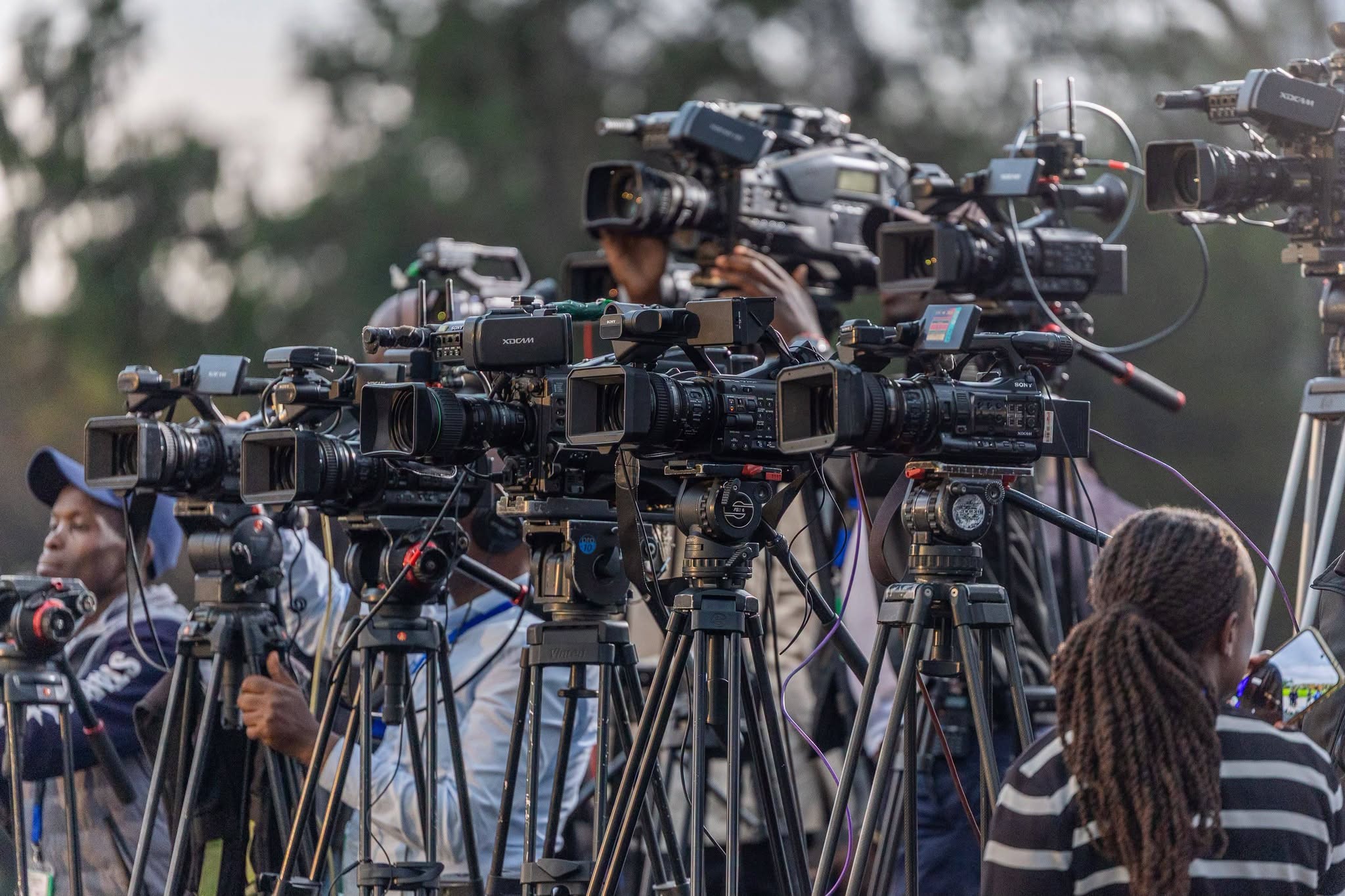
Ending Impunity for Crimes against Journalists: Beyond Condemnations and Empty Statements

November 10, 2026
Livestock A Strategic Engine For Kenyas Food Security Jobs And Industrial Transformation

Driving Kenya’s Food Security Jobs and Industrial Transformation Through Livestock

November 3, 2026
ADVERTISEMENT

The Kenya Times Facebook

LATEST NEWS

  • Kenya Power Speaks After Customers Storm Offices Over Huge Electricity Bills
  • KDF Announces Countrywide Recruitment
  • Philip Murgor Steps Down as Lawyer for Regina Re’s Family
  • Catholic Church Bans Ruto, Gachagua, Kalonzo Among Others From Addressing Congregants
  • Ruto Reveals How Kenya Lost Ksh6.5B in Nairobi-Mau Summit Road Deal
  • McDonald Mariga Wealth Profile: Inside His Millions, Luxury Cars, Businesses and Mansions
  • Missing Nairobi Lawyer Found Alive
  • Ruto Issues Fresh Directive to All School Heads Over Grade One to Three Pupils
  • Ruto Announces New Funding Model for Primary and Junior Schools
  • Willy Paul Hints at Quitting Music After 16 Years in the Industry
  • Relief for Teachers as Ruto Announces Mass Teacher Promotions
  • The Unexpected Career Journey of Ephantus Kimotho: How an Accountant Became a Two-Time Govt PS
  • Fresh Twist in Utumishi Girls Dormitory Fire Case as Court Sets New Deadlines
  • Uganda’s Ruling Party Takes Stand on Muhoozi Succeeding Museveni
  • Ruto, Sifuna Tie in 2027 Presidential Poll
ADVERTISEMENT

Company

About Us

Our Authors

Our Experts

Social Media

Policies

Privacy Policy

House Rules

Standards and Policies

Terms and Conditions

Subscription

My Account

Contact Us

Contact Us

Join Our Team

Advertise With Us

© Copyright 2026 | The Kenya Times | All Rights Reserved

Welcome Back!

Sign In with Facebook
Sign In with Google
Sign In with Linked In
OR

Login to your account below

Forgotten Password? Sign Up

Create New Account!

Sign Up with Facebook
Sign Up with Google
Sign Up with Linked In
OR

Fill the forms below to register

All fields are required. Log In

Retrieve your password

Please enter your username or email address to reset your password.

Log In
Your Privacy and Cookies
We use cookies on our website to give you the most relevant experience by remembering your preferences and repeat visits. By clicking “Accept”, you consent to the use of ALL the cookies.
Do not sell my personal information.
Cookie settingsACCEPT
Privacy & Cookies Policy

Privacy Overview

This website uses cookies to improve your experience while you navigate through the website. Out of these cookies, the cookies that are categorized as necessary are stored on your browser as they are essential for the working of basic functionalities of the website. We also use third-party cookies that help us analyze and understand how you use this website. These cookies will be stored in your browser only with your consent. You also have the option to opt-out of these cookies. But opting out of some of these cookies may have an effect on your browsing experience.
Necessary
Always Enabled
Necessary cookies are absolutely essential for the website to function properly. This category only includes cookies that ensures basic functionalities and security features of the website. These cookies do not store any personal information.
Functional
Functional cookies help to perform certain functionalities like sharing the content of the website on social media platforms, collect feedbacks, and other third-party features.
Performance
Performance cookies are used to understand and analyze the key performance indexes of the website which helps in delivering a better user experience for the visitors.
Analytics
Analytical cookies are used to understand how visitors interact with the website. These cookies help provide information on metrics the number of visitors, bounce rate, traffic source, etc.
Advertisement
Advertisement cookies are used to provide visitors with relevant ads and marketing campaigns. These cookies track visitors across websites and collect information to provide customized ads.
Others
Other uncategorized cookies are those that are being analyzed and have not been classified into a category as yet.
SAVE & ACCEPT
LOGIN | REGISTER
  • Login
  • Sign Up
  • Cart
No Result
View All Result
  • News
    • Latest News
    • Breaking News
    • Investigations
    • Explainers
    • Fact Check
  • Politics
    • Global Politics
    • Conflicts & Security
    • Elections
    • Diplomacy
    • Government & Policy
    • Political Analysis
  • Business
    • Global Economy
    • Markets
    • Technology
    • Startups
    • Energy
    • Finance
  • World News
    • Americas
    • Asia
    • Asia Pacific
    • Africa
    • Europe
    • Middle East
  • Africa
    • East Africa
    • West Africa
    • Southern Africa
    • Central Africa
  • Health
    • Global Health
    • Public Health
    • Health Policy
    • Medical Research
    • Diseases & Conditions
    • Mental Health
    • Nutrition
    • Climate & Health
    • Health Explainers
  • Sports
    • World Cup 2026
    • Athletics
    • Basketball
    • Boxing
    • Cricket
    • Football
    • Formula 1
    • Golf
    • Rugby
  • Weather
    • Climate Business
    • Climate Change
    • Climate Solutions
    • Living Green
  • Culture
    • Arts
    • Film & TV
    • Food and Recipes
    • Lifestyle
    • Music
    • People
    • Travel
  • Opinion
    • Editorials
    • Letters
  • Behind The Brand
  • Contact Us

Not enough quota to unlock this post
Unlock left : 0
Are you sure want to cancel subscription?