
Tuesday, June 2, 2026
  • News
    • Latest News
    • Breaking News
    • Fact Check
    • Investigations
    • Explainers
  • Politics
    • Global Politics
    • Elections
    • Government & Policy
    • Diplomacy
    • Conflicts & Security
    • Political Analysis
  • Business
    • Global Economy
    • Markets
    • Technology
    • Startups
    • Energy
    • Finance
  • World News
    • Americas
    • Asia
    • Asia Pacific
    • Africa
    • Europe
    • Middle East
  • Africa
    • Central Africa
    • East Africa
    • West Africa
    • Southern Africa
  • Health
    • Global Health
    • Public Health
    • Health Policy
    • Medical Research
    • Diseases & Conditions
    • Mental Health
    • Nutrition
    • Climate & Health
    • Health Explainers
  • Sports
    • Athletics
    • Basketball
    • Boxing
    • Cricket
    • Football
    • Formula 1
    • Golf
    • Rugby
  • Weather
    • Climate Business
    • Climate Change
    • Climate Solutions
    • Living Green
  • Culture
    • Arts
    • Film & TV
    • Food
    • Music
    • Lifestyle
    • Travel
  • Opinion
    • Editorials
    • Letters
  • Behind The Brand
REGISTER
LOGIN
No Result
View All Result
The Kenya Times
  • News
    • Latest News
    • Breaking News
    • Fact Check
    • Investigations
    • Explainers
  • Politics
    • Global Politics
    • Elections
    • Government & Policy
    • Diplomacy
    • Conflicts & Security
    • Political Analysis
  • Business
    • Global Economy
    • Markets
    • Technology
    • Startups
    • Energy
    • Finance
  • World News
    • Americas
    • Asia
    • Asia Pacific
    • Africa
    • Europe
    • Middle East
  • Africa
    • Central Africa
    • East Africa
    • West Africa
    • Southern Africa
  • Health
    • Global Health
    • Public Health
    • Health Policy
    • Medical Research
    • Diseases & Conditions
    • Mental Health
    • Nutrition
    • Climate & Health
    • Health Explainers
  • Sports
    • Athletics
    • Basketball
    • Boxing
    • Cricket
    • Football
    • Formula 1
    • Golf
    • Rugby
  • Weather
    • Climate Business
    • Climate Change
    • Climate Solutions
    • Living Green
  • Culture
    • Arts
    • Film & TV
    • Food
    • Music
    • Lifestyle
    • Travel
  • Opinion
    • Editorials
    • Letters
  • Behind The Brand
  • News
    • Latest News
    • Breaking News
    • Fact Check
    • Investigations
    • Explainers
  • Politics
    • Global Politics
    • Elections
    • Government & Policy
    • Diplomacy
    • Conflicts & Security
    • Political Analysis
  • Business
    • Global Economy
    • Markets
    • Technology
    • Startups
    • Energy
    • Finance
  • World News
    • Americas
    • Asia
    • Asia Pacific
    • Africa
    • Europe
    • Middle East
  • Africa
    • Central Africa
    • East Africa
    • West Africa
    • Southern Africa
  • Health
    • Global Health
    • Public Health
    • Health Policy
    • Medical Research
    • Diseases & Conditions
    • Mental Health
    • Nutrition
    • Climate & Health
    • Health Explainers
  • Sports
    • Athletics
    • Basketball
    • Boxing
    • Cricket
    • Football
    • Formula 1
    • Golf
    • Rugby
  • Weather
    • Climate Business
    • Climate Change
    • Climate Solutions
    • Living Green
  • Culture
    • Arts
    • Film & TV
    • Food
    • Music
    • Lifestyle
    • Travel
  • Opinion
    • Editorials
    • Letters
  • Behind The Brand
No Result
View All Result
The Kenya Times ~ Trending, Breaking News and Videos
No Result
View All Result
ADVERTISEMENT

Tinubu inherits Nigeria’s High Debt – an Economist Analysis, What this Means for the Country’s Future

Stephen OnyeiwubyStephen Onyeiwu
May 29, 2023
Reading Time: 10 mins read
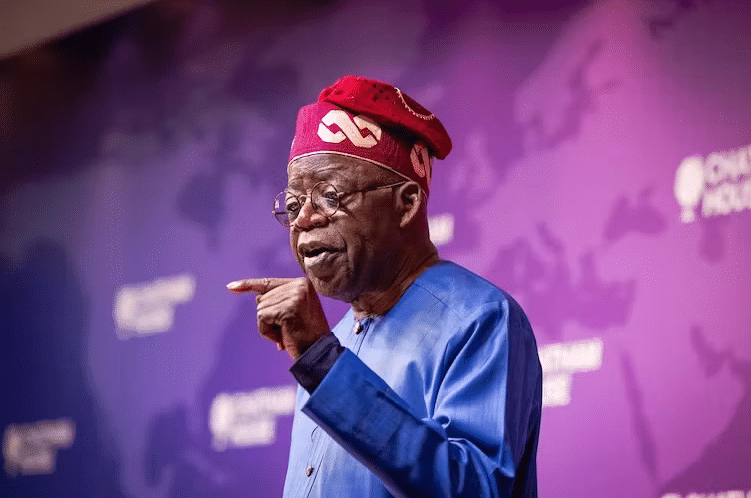
Bola Ahmed Tinubu Speaking At A Chatham House Event, London, In December 2022. Asiwaju Bola Ahmed Tinubu Facebook Page

Bola Ahmed Tinubu speaking at a Chatham House event, London, in December 2022. Asiwaju Bola Ahmed Tinubu Facebook page

FacebookTwitterLinkedInRedditWhatsApp
Advertisement

As the 16th president of Nigeria, Bola Ahmed Tinubu inherits an economy that is grappling with inflation, chronic unemployment, extreme poverty, crumbling infrastructure and insecurity. Nigeria’s debt profile stands out among these problems like a sore thumb. The country’s external debt stock – what it owes non-residents – was US$41.69 billion in 2022.

Multilateral lenders accounted for almost half of this figure. Eurobonds accounted for about 38% of Nigeria’s external debt. Exim Bank of China accounted for US$4.3 billion, or 86% of the $5 billion in bilateral debt.

The country’s public debt stock – what the government owes in total – was about US$100 billion in 2022.

External debts present a bigger burden because they are denominated and serviced in foreign currencies. Changes in exchange rates, such as currency depreciation in a debtor country, can raise interest payments and negatively affect a country’s budget. And interest rates may rise.

As an economist, I argue that, while the country’s debt profile should be a concern, it need not hamper Tinubu’s ability to revitalize the Nigerian economy, and to reduce unemployment and poverty rates.

The most salient question is whether the current debt levels are sustainable. 

ADVERTISEMENT

Debt sustainability

Although economists use various indicators to determine a country’s debt sustainability, two of those measures are widely used. One of the indicators is gross debt as a percentage of gross domestic product (also known as the debt-GDP ratio). In Nigeria it was 38% in 2022. The average for sub Saharan African countries was 56%.

A World Bank study shows that debt begins to hurt an economy, especially economic growth, when the debt-GDP ratio exceeds 77%. Given this threshold, the debt-carrying capacity of the Nigerian economy is still strong.

Moderate and prudent additions to the country’s debt stock would not push it over the precipice of debt unsustainability, at least in the next few years. This does not mean that the country should go on a borrowing spree to finance frivolous and vanity projects. It simply means that the current debt level does not prevent economic growth, employment generation and poverty reduction.


Also Read: Bola Tinubu, Nigeria President-Elect, dismisses Reports of ill health, claims to have Travelled abroad


Although the US is different from Nigeria, it has demonstrated that debt need not constrain economic vitality. The US debt-GDP ratio is about 120%, but it has been able to reduce unemployment to 3.4%, while holding inflation at 4.9%.

ADVERTISEMENT

Another indicator of debt sustainability is the debt service ratio. This is the proportion of export earnings that is used to service a debt – that is, to pay back the principal and the interest. A healthy ratio is below 18%.

Nigeria had a debt-service ratio of 16.2% in 2021, compared to 3.2% in 2015. The 2021 number shows that Nigeria is getting closer to the point where servicing its debt would become a problem.

But the Nigerian situation is not as dire as many African countries’, with an average debt-service ratio of 19% in 2021.

Revenue and spending

To ease Nigeria’s growing debt burden, the Tinubu administration must address the country’s declining revenue. Nigeria has the fourth lowest revenue-GDP ratio in the world.

Government revenue as a percentage of GDP has declined from 13.5% in 2010-2014 to just 6.9% in 2020. The averages for sub-Saharan Africa and the world in 2015-2020 were 20.1% and 24.2%, respectively.

Nigeria’s reliance on oil as a major source of revenue implies that revenue will continue to fall, given uncertainties in the global oil market and rampant theft of oil in the country. The World Bank’s forecast of sluggish economic growth (below 3%) in the next three years would also worsen the country’s capacity to generate revenue.

Meanwhile, government expenditure has been growing (except during the COVID era) faster than expected. The deficits will have to be covered by borrowings. More borrowing means that an increasing proportion of revenues generated will be devoted to debt service.

Because of dwindling revenue, Nigeria’s debt-revenue ratio was 80.6% in 2022, which is far higher than the 22.5% recommended for developing countries by the World Bank.

The ratio is expected to exceed 100% by the end of this year. High debt-revenue ratios create a perpetual cycle of debt. Since revenues are used to service debt, the country must borrow to finance government expenditures. As the debt grows bigger, more revenue is devoted to debt servicing, which in turn increases the debt-revenue ratio.


Also Read: Kidnapping in Nigeria: Criminalizing Ransom Payment isn’t Working; Families Need Support


While Nigeria’s debt-revenue ratio is very high, the ratio of external debt service to revenue is moderate at 20% and below that of many other African countries. This means that, for every 100 naira in revenue, 20 naira is used to service external debt, leaving 80 naira for government expenditure and domestic debt service.

Although Nigeria’s debt-GDP ratio is sustainable and below the levels specified by the IMF, it is worrisome that the external debt-GDP ratio has been rising during the past decade. It was just 9.3% in 2010, five years after Nigeria reached a historic agreement with the Paris Club of creditor nations for debt relief worth $18 billion and a $30 billion reduction in the country’s debt stock.

The debt-GDP ratio is now 38% and is expected to reach 43 percent in the next five years. . Given dwindling government revenues, slow economic growth and rising expenditure needs, there are concerns that the government will continue to rely on borrowings to finance economic development.

Digging out of debt

The Tinubu administration should be careful not to worsen the country’s debt profile.

The incoming government should manage Nigeria’s debt very prudently, and avoid going back to the era of the early 2000s when the country’s debt-GDP ratio exceeded 50 percent.

It should reduce the high cost of governance cost, eliminate wasteful spending and rein in corruption.

Perennial borrowing to solve economic problems can plunge the borrower into unsustainable and destructive indebtedness.

Given low revenue and the many projects needed to promote economic growth, employment generation and poverty reduction, the Tinubu administration will have to continue with the policy of deficit spending, financed mainly by domestic and external borrowing.

The question will not be whether to borrow, but how much.

Drastically reducing the cost of governance will be difficult if political patronage continues.

A long-term solution to Nigeria’s debt problem is to explore new sources of revenue. To change the current narrative about how risky Nigeria is, the Tinubu administration should introduce policies that improve Nigeria’s economic fundamentals.

Conclusion

A country’s debt stock does not matter as much as the quality of its economic policies. Economic policies could result in budget surpluses that can be used to repay debt.

A starting point is to invest in physical capital and infrastructure (especially roads and electricity); provide access to capital for micro, small and medium-sized enterprises; and support agricultural development.

There is also an urgent need to diversify the economy, make it less reliant on oil and broaden the country’s very narrow revenue base.

One strategy is to resuscitate the moribund factories in Nigeria and promote agro-processing industries, so that the economy would generate more revenue from non-oil sources to finance government spending and projects.The Conversation

Stephen Onyeiwu, Professor of Economics & Business, Allegheny College

This article is republished from The Conversation under a Creative Commons license. Read the original article.


Tags: Bola Ahmed TinubuDebtEconomyGDPInflationInsecurityMacroeconomicsNigeriaPovertyPresident Muhammadu BuhariUnemployment
Stephen Onyeiwu

Stephen Onyeiwu

Born and raised in southwestern Nigeria, I was educated at the University of Connecticut, USA; University of Sussex, UK; Obafemi Awolowo University, Nigeria; and University of Port Harcourt, Nigeria. I have taught at Wesleyan University, Trinity College, Rensselaer Polytechnic Institute, State University of New York at Albany, Union College, and Slippery Rock University, all of which are in the United States. Prior to moving to the United States, I was a lecturer in Economics at the University of Port Harcourt Harcourt. I have been a visiting professor at the O.P. Jindal Global University, Sonepat, Indian and led a group of student interns to the Swami Vivekananda Institute of Indian Studies (SVIIS), Mysore, India. I recently served as a Fulbright Visiting Professor of Economics at Covenant University, Ota, Nigeria. The courses I teach include Business Economics, International Business, Economics of Innovation & Technological Change, Microeconomics, and Development Economics. My research interests are: Development Economics, the Technological Strategies of Firms, Small Business Development, Industrial Organization, International Political Economy, and Global Economic Issues.

Related Posts

Moe Has Vowed To Take Action Against Utumishi Girls School Principal Over School Fire That Killed 16 Learners.

Opinion | How Kenya Failed the Girls of Utumishi Academy

June 2, 2026
Is Kenya Losing Its Morals? Rising Deviant Behavior And Rampant Crime

Opinion | The Mother Who Hates Her Own Children: Kenya’s Moral Collapse

June 2, 2026
Treasury Invites Applications For Board Recruitment Across 39 State-Owned Enterprises

Opinion | How New Taxes on Bank Card Transactions Charges Will Raise the Costs for Ordinary Kenyans if Adopted by Parliament

June 1, 2026
Artificial Intelligence Esther Muoria Is A Seasoned Manager And Phd Holder Appointed By President William Ruto As The Tvet Principal Secretary.

Opinion | AI Mistakes That Could Destroy Kenya’s Future — Global Lessons Every Leader, Business and Citizen Must See Now

May 31, 2026
ADVERTISEMENT

The Kenya Times Facebook

LATEST ARTICLES

  • Trump Nominates Diplomat Henry Wooster as US Ambassador to Kenya
  • High Court Orders Govt to Disclose All Agreements and Approvals on Ebola Facility
  • Opinion | How Kenya Failed the Girls of Utumishi Academy
  • Lenana School Suspends Learning After Student Unrest
  • Maurice Ogeta Finally Reveals Raila’s Last Moments and How He Died 
  • Ruto Explains Why He Allowed US to Have Ebola Quarantine at Laikipia Air Base
  • Opinion | The Mother Who Hates Her Own Children: Kenya’s Moral Collapse
  • Bolt Sets the Record Straight on Reports of Shutting Down in Kenya
  • Ex-Catholic Priest Arrested Over Calls to Overthrow Ruto
  • Nairobi Mentioned as Trump Cut Number of Embassies in Africa
  • Why Transgender Troops Can Now Serve in the U.S. Military
  • “I Couldn’t Care Less” Trump Responds After Iran Ends Talks With US
  • Jill Biden Reveals Regret Over Joe Biden’s 2024 Run in New Interview
  • Stars Abroad: Moses Shumah, Kenyan Striker Breaking Records in Zambia
  • Doctors Question Transparency of Trump’s Heart Test Results
ADVERTISEMENT

Company

About Us

Our Authors

Our Experts

Social Media

Policies

Privacy Policy

House Rules

Standards and Policies

Terms and Conditions

Subscription

My Account

Contact Us

Contact Us

Join Our Team

Advertise With Us

© Copyright 2026 | The Kenya Times | All Rights Reserved

Welcome Back!

Sign In with Facebook
Sign In with Google
Sign In with Linked In
OR

Login to your account below

Forgotten Password? Sign Up

Create New Account!

Sign Up with Facebook
Sign Up with Google
Sign Up with Linked In
OR

Fill the forms below to register

All fields are required. Log In

Retrieve your password

Please enter your username or email address to reset your password.

Log In
Your Privacy and Cookies
We use cookies on our website to give you the most relevant experience by remembering your preferences and repeat visits. By clicking “Accept”, you consent to the use of ALL the cookies.
Do not sell my personal information.
Cookie settingsACCEPT
Privacy & Cookies Policy

Privacy Overview

This website uses cookies to improve your experience while you navigate through the website. Out of these cookies, the cookies that are categorized as necessary are stored on your browser as they are essential for the working of basic functionalities of the website. We also use third-party cookies that help us analyze and understand how you use this website. These cookies will be stored in your browser only with your consent. You also have the option to opt-out of these cookies. But opting out of some of these cookies may have an effect on your browsing experience.
Necessary
Always Enabled
Necessary cookies are absolutely essential for the website to function properly. This category only includes cookies that ensures basic functionalities and security features of the website. These cookies do not store any personal information.
Functional
Functional cookies help to perform certain functionalities like sharing the content of the website on social media platforms, collect feedbacks, and other third-party features.
Performance
Performance cookies are used to understand and analyze the key performance indexes of the website which helps in delivering a better user experience for the visitors.
Analytics
Analytical cookies are used to understand how visitors interact with the website. These cookies help provide information on metrics the number of visitors, bounce rate, traffic source, etc.
Advertisement
Advertisement cookies are used to provide visitors with relevant ads and marketing campaigns. These cookies track visitors across websites and collect information to provide customized ads.
Others
Other uncategorized cookies are those that are being analyzed and have not been classified into a category as yet.
SAVE & ACCEPT
LOGIN | REGISTER
  • Login
  • Sign Up
  • Cart
No Result
View All Result
  • News
    • Latest News
    • Breaking News
    • Investigations
    • Explainers
    • Fact Check
  • Politics
    • Global Politics
    • Conflicts & Security
    • Elections
    • Diplomacy
    • Government & Policy
    • Political Analysis
  • Business
    • Global Economy
    • Markets
    • Technology
    • Startups
    • Energy
    • Finance
  • World News
    • Americas
    • Asia
    • Asia Pacific
    • Africa
    • Europe
    • Middle East
  • Africa
    • East Africa
    • West Africa
    • Southern Africa
    • Central Africa
  • Health
    • Global Health
    • Public Health
    • Health Policy
    • Medical Research
    • Diseases & Conditions
    • Mental Health
    • Nutrition
    • Climate & Health
    • Health Explainers
  • Sports
    • Athletics
    • Basketball
    • Boxing
    • Cricket
    • Football
    • Formula 1
    • Golf
    • Rugby
  • Weather
    • Climate Business
    • Climate Change
    • Climate Solutions
    • Living Green
  • Culture
    • Arts
    • Film & TV
    • Food
    • Lifestyle
    • Music
    • Travel
  • Opinion
    • Editorials
    • Letters
  • Behind The Brand
  • Contact Us

Not enough quota to unlock this post
Unlock left : 0
Are you sure want to cancel subscription?