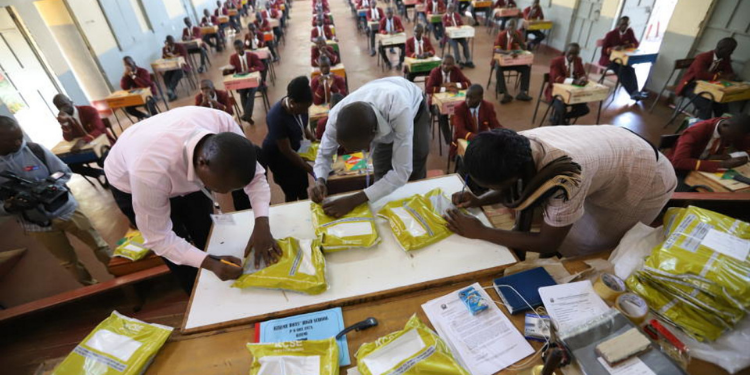

The 2025 KCSE results were released on Friday, January 9th, 2026. Out of 993,226 candidates, only 270,715- about 27%- attained a C+ or higher, the minimum requirement for admission to a Kenyan university. The announcement was accompanied by mixed reactions: celebration for those who “passed” and gloom for those who “failed”. As the initial countrywide emotions settle, attention is now shifting to what comes next: placement into universities, colleges, and TVET institutions. Accompanying this shift is the conversation around career choices, which should be more aptly labelled “career selection”. This is because we have a constrained process in which grades, rather than interests or strengths, determine what options are available.
Students who do not meet the cut-off for their preferred courses are forced to choose the available alternatives that fit their results, not their aspirations.
What then does “choice” mean when the education system provides opportunities rationed by examination performance? And how is the world of work in the Kenyan context designed to complement the career choices offered by the education system? If choice cannot be made and the world of work is inflexible, then there is a need to re-examine the structure of the education system and how best to empower students to navigate this reality.
Curriculum reforms in Kenya
Kenya has made major curriculum reforms over the years: from 7-6-3 to 8-4-4 and now to Competency-Based Education (CBE). The aim of these reforms over the years has been to produce citizens who can positively contribute to the development of themselves and the nation.
Also Read: Marketable Courses for Students with a D+ in Kenya
CBE has elevated this vision with the its mantra of nurturing every learner’s potential through developing competencies rather than focusing on test scores. But the curriculum alone cannot do this work. Students need structured support to understand themselves, the labour market, and the pathways that connect the two. That is where career guidance should play a central role.
According to the National Policy Framework for Career Guidance in Kenya (2023), career guidance, applicable to all public and private institutions, including schools, should expose students to the world of work. This empowers them to make more informed career choices.
So how and where should career guidance begin? At the macrolevel, Kenya already has the National Policy Framework for Career Guidance, in addition to the Kenya Universities and Colleges Central Placement Services (KUCCPS) career guidance programs. These initiatives can be more effective if they are well integrated into the school-tertiary pipeline.
While KUCCPS allows for schools to reach out to request career guidance support, these opportunities are not strongly integrated into the everyday running of schools because they are episodic and optional. It would be more empowering to have capacity-building programs on career guidance to empower the teachers within schools. This makes the initiative sustainable and therefore more effective rather than sporadic and elective.
On the same breath, KUCCPS can also rope in the higher education institutions, connecting them directly with schools. Bringing the university/college/TVET to the doorstep of the high school demystifies tertiary institutions and allows for closer interactions, opening up a world of opportunities for students at a closer range. It allows the students to explore real options and make more realistic inquiries regarding career trajectories. The school-tertiary-KUCCPS nexus fosters a diverse community of career guidance stakeholders, thereby effectively closing the basic education-tertiary loop.
School-tertiary-KUCCPS nexus
Thus, three reforms are critical. Firstly, there is a need to institutionalize career guidance with fidelity into our education system. Integrating it into the curriculum allows students to get used to discussing careers early in their learning. Under CBE, this should start as early as Junior School, helping learners identify their interests, abilities, and emerging aspirations long before high-stakes exams narrow their options.
Also Read: KUCCPS Opens KMTC Application Portal for 2026 Intake: How to Apply
Secondly, schools need dedicated career guidance teachers. When career guidance is treated as an additional responsibility, it is the first thing to be cut when there are teacher shortages or increased teaching loads. This makes the office of Career Guidance ineffective, leaving students without the much-needed guidance, especially at the moments they need it the most.
Thirdly, career guidance offices must be properly resourced. Funding should be set aside to build capacity for career guidance teachers, expose them to diverse work settings, and support school-based and external career fairs. Given that the industry benefits from well-prepared students, it would be prudent for the industry to provide support for career guidance programs in schools. These resources can be financial or work experience opportunities for high school students.
When career guidance is weak, students are poorly informed and so unable to make appropriate university/college/TVET choices.
Strong career guidance allows students to properly align their talents with real opportunities and plan their futures more effectively. Having such a system in place can then allow us to confidently say: “My career, my choice!”
Follow our WhatsApp Channel and join our WhatsApp Group for real-time news updates.