Friday, July 10, 2026
  • News
    • Latest News
    • Breaking News
    • Fact Check
    • Investigations
    • Explainers
  • Politics
    • Global Politics
    • Elections
    • Government & Policy
    • Diplomacy
    • Conflicts & Security
    • Political Analysis
  • Business
    • Global Economy
    • Markets
    • Technology
    • Startups
    • Energy
    • Finance
  • World News
    • Americas
    • Asia
    • Asia Pacific
    • Africa
    • Europe
    • Middle East
  • Africa
    • Central Africa
    • East Africa
    • West Africa
    • Southern Africa
  • Health
    • Global Health
    • Public Health
    • Health Policy
    • Medical Research
    • Diseases & Conditions
    • Mental Health
    • Nutrition
    • Climate & Health
    • Health Explainers
  • Sports
    • World Cup 2026
    • Athletics
    • Basketball
    • Boxing
    • Cricket
    • Football
    • Formula 1
    • Golf
    • Rugby
  • Weather
    • Climate Business
    • Climate Change
    • Climate Solutions
    • Living Green
  • Culture
    • Arts
    • Film & TV
    • Food
    • Music
    • Lifestyle
    • Travel
  • Opinion
    • Editorials
    • Letters
  • Behind The Brand
REGISTER
LOGIN
No Result
View All Result
The Kenya Times
  • News
    • Latest News
    • Breaking News
    • Fact Check
    • Investigations
    • Explainers
  • Politics
    • Global Politics
    • Elections
    • Government & Policy
    • Diplomacy
    • Conflicts & Security
    • Political Analysis
  • Business
    • Global Economy
    • Markets
    • Technology
    • Startups
    • Energy
    • Finance
  • World News
    • Americas
    • Asia
    • Asia Pacific
    • Africa
    • Europe
    • Middle East
  • Africa
    • Central Africa
    • East Africa
    • West Africa
    • Southern Africa
  • Health
    • Global Health
    • Public Health
    • Health Policy
    • Medical Research
    • Diseases & Conditions
    • Mental Health
    • Nutrition
    • Climate & Health
    • Health Explainers
  • Sports
    • World Cup 2026
    • Athletics
    • Basketball
    • Boxing
    • Cricket
    • Football
    • Formula 1
    • Golf
    • Rugby
  • Weather
    • Climate Business
    • Climate Change
    • Climate Solutions
    • Living Green
  • Culture
    • Arts
    • Film & TV
    • Food
    • Music
    • Lifestyle
    • Travel
  • Opinion
    • Editorials
    • Letters
  • Behind The Brand
  • News
    • Latest News
    • Breaking News
    • Fact Check
    • Investigations
    • Explainers
  • Politics
    • Global Politics
    • Elections
    • Government & Policy
    • Diplomacy
    • Conflicts & Security
    • Political Analysis
  • Business
    • Global Economy
    • Markets
    • Technology
    • Startups
    • Energy
    • Finance
  • World News
    • Americas
    • Asia
    • Asia Pacific
    • Africa
    • Europe
    • Middle East
  • Africa
    • Central Africa
    • East Africa
    • West Africa
    • Southern Africa
  • Health
    • Global Health
    • Public Health
    • Health Policy
    • Medical Research
    • Diseases & Conditions
    • Mental Health
    • Nutrition
    • Climate & Health
    • Health Explainers
  • Sports
    • World Cup 2026
    • Athletics
    • Basketball
    • Boxing
    • Cricket
    • Football
    • Formula 1
    • Golf
    • Rugby
  • Weather
    • Climate Business
    • Climate Change
    • Climate Solutions
    • Living Green
  • Culture
    • Arts
    • Film & TV
    • Food
    • Music
    • Lifestyle
    • Travel
  • Opinion
    • Editorials
    • Letters
  • Behind The Brand
No Result
View All Result
The Kenya Times ~ Trending, Breaking News and Videos
No Result
View All Result
ADVERTISEMENT

Why IMF Visits Countries and What to Look Out for

The ConversationbyThe Conversation
September 24, 2025
Reading Time: 8 mins read
When The Imf Comes To Town: Why They Visit And What To Watch Out For

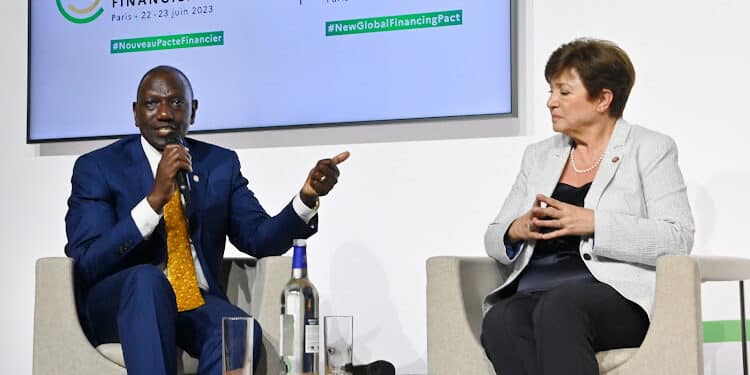
President William Ruto meets IMF Managing Director Kristalina Georgieva. PHOTO/PCS.

FacebookTwitterLinkedInRedditWhatsApp
Advertisement

In most rich countries, the news that a mission from the International Monetary Fund (IMF) is coming to visit is met with indifference. But, in most African countries, the news can cause great consternation.

Why the difference?

History has a lot to do with it. The citizens of many African countries have suffered through their governments, under IMF pressure, cutting subsidies and social spending, firing public sector workers and increasing taxes. For example, a 2021 Oxfam study, found that the IMF encouraged 33 African countries to adopt austerity policies in the wake of the COVID pandemic.

On the other hand, with a few exceptions, such as Greece, citizens of rich countries have not experienced the IMF having any direct impact on their lives.

Another important reason is lack of knowledge. Usually, when the IMF comes to town, the public gets little information about the purpose of the IMF’s visit – or its likely outcomes. In other cases, people are concerned that they have limited ability to influence the outcome of the visit or its impact on their lives.

This article seeks to remove some of the mystery surrounding IMF visits to a country. It explains the two basic reasons for the IMF sending its staff on “missions” to a country. And what can be expected in each case?

The IMF’s remit

According to its Articles of Agreement, the IMF’s purposes include promoting monetary cooperation among its 190 member states so that they can more sustainably manage their macroeconomic situations and their international financial relations. This should help them promote and maintain high levels of employment and real income and develop their productive resources.


Also Read: IMF Staff to Fly to Nairobi for New Loan Talks


The IMF also provides financing to countries that do not have sufficient foreign exchange to meet all their needs and obligations so they do not have to resort to measures that are destructive of “national or international prosperity”.

To fulfil these responsibilities, the IMF sends its staff on two basic types of missions to member countries.

Surveillance missions

The first are surveillance missions. Article IV says that the IMF should exercise “firm surveillance” over the efforts of its member states to try and direct their economic and financial policies towards the objective of fostering orderly economic growth with reasonable price stability.

Thus, the IMF regularly – usually annually – sends a staff team to assess the state of each country’s macro economy, the risks it faces and its capacity to continue evolving in a sustainable way. This team usually meets with officials in each country’s ministry of finance and central bank. In addition, they can ask to meet other government officials. For example, during COVID, the IMF might have been interested in meeting with health department officials.

The IMF staff will also normally meet with members of parliament and with representatives of business and labour. They may also meet with representatives of civil society.

There are four important points to note about these missions.

First, while the IMF provides some guidance to its staff, it does not require them to follow any particular procedures for informing interested parties that it is visiting the country. The result is that it’s difficult for anybody interested in the visit to learn how they might engage with the mission or provide it with information.

Second, in principle, there is no limit on what issues the IMF can focus on during its mission. Consequently, IMF staff can raise any issue and request whatever information they think is relevant to assessing the state of the country’s macroeconomic situation. This has led to a gradual expansion in the range of issues the IMF may raise in these missions. They now range from fiscal policy, inflation and unemployment rates, and balance of payments deficits to issues about how the country is dealing with climate change, gender discrimination, public health and wealth inequality.


Also Read: IMF Audit Team in Kenya for 2 Weeks to Investigate Corruption


Third, the outcome of the mission is a report prepared by the staff that is discussed by the IMF’s Board of Executive Directors. The report is usually made public after the discussion, together with a press release.

The IMF also uses the information in preparing its reports on the global economy.

Fourth, the IMF can make recommendations to the government on actions that it should take to deal with any challenges that have been identified.

These recommendations are purely advisory. In principle, the country is free to ignore them. This may be the case if the country is confident that it will not need IMF financing in the future. This is the reason that the citizens of rich countries do not usually care that an IMF mission is visiting their countries. However, this is a luxury that a country cannot afford if it thinks it may need IMF financial support. Or that its access to international financial markets may be influenced by the IMF’s view. This, of course, is the case for most African countries.

Financing missions

The second type of mission is initiated by requests for IMF financing.

Their purpose is to assess the country’s need for financial support. And to negotiate the terms on which it will be provided.

The IMF effectively acts as a lender of last resort. Consequently, governments are reluctant to ask for IMF financing unless they cannot get enough foreign exchange from other sources.

The IMF provides the financing on an unsecured basis. It tries to ensure that it will be repaid by making the financing subject to policy conditions, known as conditionalities. The premise of these conditionalities is that the country is essentially living beyond its means and must reduce its expenditures to the level of its income, including the funds contributed by the IMF. In short, the IMF is demanding that the country makes sacrifices.

This means, inevitably, that the terms of IMF financing are controversial. First, the scale of the sacrifices necessary to restore a country to macroeconomic health are not easily determined. They depend on perceptions of the causes of the country’s crisis, assumptions about future economic developments and the capacity of the government to implement policy changes and the public to accept and absorb these changes. Reasonable people can, of course, have different views on these issues.

Second, the scope, terms and number of conditionalities the IMF chooses to attach to its financing can be very broad, or quite specific. For example, it can merely state the size of budget cuts that the country must make or the amount of additional revenues it must raise and then leave it up to the country to decide how to meet these conditions. Alternatively, it can specify which budget items should be cut, which taxes should be increased, and which structural reforms must be implemented in order to get IMF financing.

This effectively means that the conditionalities are matters for negotiation between the government and the IMF and that they depend on the balance of bargaining power between them. This means that the IMF is effectively a player in the domestic economic policy-making process of countries that need its financing.

However, the IMF is not subject to the same legal requirements regarding participation or transparency as other players in this process. It is also less accountable to those who will be affected by its policy choices than the government itself.The Conversation

Danny Bradlow, SARCHI Professor of International Development Law and African Economic Relations, University of Pretoria

This article is republished from The Conversation under a Creative Commons license. Read the original article.

Tags: IMFWilliam RutoWorld Bank
The Conversation

The Conversation

The Conversation is an independent news organization that publishes evidence-based articles written by experts to help readers understand diverse topics. We cover a wide range of areas including arts, culture, education, health, politics, science, and more¹. Their content is characterized by in-depth analysis, research, news, and ideas from leading academics and researchers. The Conversation aims to provide academic rigor with journalistic flair.

Related Posts

Expert Explains Why Kenya Must Choose Peace: Stop Political Violence And Goonism Before 2027 Elections

When Violence Becomes Politics, Kenya Must Choose Peace

July 9, 2026
President William Ruto At A Previous Rally. Photo/Pcs.

Opinion | The Political Cost of Unfinished Grief in Ruto’s Re-election Calculus

July 8, 2026
Kenyans To Pay More For Uber And Bolt In Govt'S Move To Set New Minimum Fares

Kenya Is Becoming a Compliance State Instead of a Developmental State

July 6, 2026
A Photo Collage Of Cbk Governor Kamau Thugge And Kenya Bankers Association Ceo Raimond Molenje. Photo/Kba/Cbk.

Why Your Money in the Bank May Not Be Safe – The Power of Strong Bank Boards

July 3, 2026
ADVERTISEMENT

The Kenya Times Facebook

LATEST NEWS

  • Ilhan Omar’s Updated Financial Disclosure Cuts Reported Assets by Nearly $30 Million
  • Americans Contribute Nearly $125 Million to Trump Accounts in First Five Days
  • Who Qualifies for Phoenix’s New $700 Assistance After SNAP Benefits End?
  • It would be difficult to beat Ruto in 2027 – Ken Mijungu
  • Americans Can Earn Up to $275,000 at Buc-ee’s Without a College Degree, Viral Sign Reveals
  • GOP Congressman Blasts Trump’s Greenland Push as ‘Foolish,’ Warns of Damage to NATO Allies
  • Karoline Leavitt Attacked Over Marriage to 61-Year-Old Husband After Calling Gen Z ‘Lazy’
  • Americans Born Under Birthright Citizenship Face New Court Battle as Trump Seeks Rehearing
  • Hunter Biden Launches Substack Series With Fresh Claims About Laptop Saga
  • A Guide to Mastering Blockchain Intelligence and Analytics Tools
  • Questions Arise as Postmortem Fails to Establish Cause of Death in KFS Legal Manager
  • Why Many Kenyans Prefer Android Over iPhone
  • ‘We Are Waiting for the Americans to Save Us’ – In Crisis, Cubans Have Given Up on Reform From Within
  • Why Dangote Overlooked Isiolo When Choosing Location of His Giant 700,000 bpd Single Train Refinery
  • IEBC Reveals Plan to Delay Ol Kalou By-Election Until 2027
ADVERTISEMENT

Company

About Us

Our Authors

Our Experts

Social Media

Policies

Privacy Policy

House Rules

Standards and Policies

Terms and Conditions

Subscription

My Account

Contact Us

Contact Us

Join Our Team

Advertise With Us

© Copyright 2026 | The Kenya Times | All Rights Reserved

Welcome Back!

Sign In with Facebook
Sign In with Google
Sign In with Linked In
OR

Login to your account below

Forgotten Password? Sign Up

Create New Account!

Sign Up with Facebook
Sign Up with Google
Sign Up with Linked In
OR

Fill the forms below to register

All fields are required. Log In

Retrieve your password

Please enter your username or email address to reset your password.

Log In
Your Privacy and Cookies
We use cookies on our website to give you the most relevant experience by remembering your preferences and repeat visits. By clicking “Accept”, you consent to the use of ALL the cookies.
Do not sell my personal information.
Cookie settingsACCEPT
Privacy & Cookies Policy

Privacy Overview

This website uses cookies to improve your experience while you navigate through the website. Out of these cookies, the cookies that are categorized as necessary are stored on your browser as they are essential for the working of basic functionalities of the website. We also use third-party cookies that help us analyze and understand how you use this website. These cookies will be stored in your browser only with your consent. You also have the option to opt-out of these cookies. But opting out of some of these cookies may have an effect on your browsing experience.
Necessary
Always Enabled
Necessary cookies are absolutely essential for the website to function properly. This category only includes cookies that ensures basic functionalities and security features of the website. These cookies do not store any personal information.
Functional
Functional cookies help to perform certain functionalities like sharing the content of the website on social media platforms, collect feedbacks, and other third-party features.
Performance
Performance cookies are used to understand and analyze the key performance indexes of the website which helps in delivering a better user experience for the visitors.
Analytics
Analytical cookies are used to understand how visitors interact with the website. These cookies help provide information on metrics the number of visitors, bounce rate, traffic source, etc.
Advertisement
Advertisement cookies are used to provide visitors with relevant ads and marketing campaigns. These cookies track visitors across websites and collect information to provide customized ads.
Others
Other uncategorized cookies are those that are being analyzed and have not been classified into a category as yet.
SAVE & ACCEPT
LOGIN | REGISTER
  • Login
  • Sign Up
  • Cart
No Result
View All Result
  • News
    • Latest News
    • Breaking News
    • Investigations
    • Explainers
    • Fact Check
  • Politics
    • Global Politics
    • Conflicts & Security
    • Elections
    • Diplomacy
    • Government & Policy
    • Political Analysis
  • Business
    • Global Economy
    • Markets
    • Technology
    • Startups
    • Energy
    • Finance
  • World News
    • Americas
    • Asia
    • Asia Pacific
    • Africa
    • Europe
    • Middle East
  • Africa
    • East Africa
    • West Africa
    • Southern Africa
    • Central Africa
  • Health
    • Global Health
    • Public Health
    • Health Policy
    • Medical Research
    • Diseases & Conditions
    • Mental Health
    • Nutrition
    • Climate & Health
    • Health Explainers
  • Sports
    • World Cup 2026
    • Athletics
    • Basketball
    • Boxing
    • Cricket
    • Football
    • Formula 1
    • Golf
    • Rugby
  • Weather
    • Climate Business
    • Climate Change
    • Climate Solutions
    • Living Green
  • Culture
    • Arts
    • Film & TV
    • Food
    • Lifestyle
    • Music
    • Travel
  • Opinion
    • Editorials
    • Letters
  • Behind The Brand
  • Contact Us

Not enough quota to unlock this post
Unlock left : 0
Are you sure want to cancel subscription?