Tuesday, June 2, 2026
  • News
    • Latest News
    • Breaking News
    • Fact Check
    • Investigations
    • Explainers
  • Politics
    • Global Politics
    • Elections
    • Government & Policy
    • Diplomacy
    • Conflicts & Security
    • Political Analysis
  • Business
    • Global Economy
    • Markets
    • Technology
    • Startups
    • Energy
    • Finance
  • World News
    • Americas
    • Asia
    • Asia Pacific
    • Africa
    • Europe
    • Middle East
  • Africa
    • Central Africa
    • East Africa
    • West Africa
    • Southern Africa
  • Health
    • Global Health
    • Public Health
    • Health Policy
    • Medical Research
    • Diseases & Conditions
    • Mental Health
    • Nutrition
    • Climate & Health
    • Health Explainers
  • Sports
    • Athletics
    • Basketball
    • Boxing
    • Cricket
    • Football
    • Formula 1
    • Golf
    • Rugby
  • Weather
    • Climate Business
    • Climate Change
    • Climate Solutions
    • Living Green
  • Culture
    • Arts
    • Film & TV
    • Food
    • Music
    • Lifestyle
    • Travel
  • Opinion
    • Editorials
    • Letters
  • Behind The Brand
REGISTER
LOGIN
No Result
View All Result
The Kenya Times
  • News
    • Latest News
    • Breaking News
    • Fact Check
    • Investigations
    • Explainers
  • Politics
    • Global Politics
    • Elections
    • Government & Policy
    • Diplomacy
    • Conflicts & Security
    • Political Analysis
  • Business
    • Global Economy
    • Markets
    • Technology
    • Startups
    • Energy
    • Finance
  • World News
    • Americas
    • Asia
    • Asia Pacific
    • Africa
    • Europe
    • Middle East
  • Africa
    • Central Africa
    • East Africa
    • West Africa
    • Southern Africa
  • Health
    • Global Health
    • Public Health
    • Health Policy
    • Medical Research
    • Diseases & Conditions
    • Mental Health
    • Nutrition
    • Climate & Health
    • Health Explainers
  • Sports
    • Athletics
    • Basketball
    • Boxing
    • Cricket
    • Football
    • Formula 1
    • Golf
    • Rugby
  • Weather
    • Climate Business
    • Climate Change
    • Climate Solutions
    • Living Green
  • Culture
    • Arts
    • Film & TV
    • Food
    • Music
    • Lifestyle
    • Travel
  • Opinion
    • Editorials
    • Letters
  • Behind The Brand
  • News
    • Latest News
    • Breaking News
    • Fact Check
    • Investigations
    • Explainers
  • Politics
    • Global Politics
    • Elections
    • Government & Policy
    • Diplomacy
    • Conflicts & Security
    • Political Analysis
  • Business
    • Global Economy
    • Markets
    • Technology
    • Startups
    • Energy
    • Finance
  • World News
    • Americas
    • Asia
    • Asia Pacific
    • Africa
    • Europe
    • Middle East
  • Africa
    • Central Africa
    • East Africa
    • West Africa
    • Southern Africa
  • Health
    • Global Health
    • Public Health
    • Health Policy
    • Medical Research
    • Diseases & Conditions
    • Mental Health
    • Nutrition
    • Climate & Health
    • Health Explainers
  • Sports
    • Athletics
    • Basketball
    • Boxing
    • Cricket
    • Football
    • Formula 1
    • Golf
    • Rugby
  • Weather
    • Climate Business
    • Climate Change
    • Climate Solutions
    • Living Green
  • Culture
    • Arts
    • Film & TV
    • Food
    • Music
    • Lifestyle
    • Travel
  • Opinion
    • Editorials
    • Letters
  • Behind The Brand
No Result
View All Result
The Kenya Times ~ Trending, Breaking News and Videos
No Result
View All Result
ADVERTISEMENT

Why Young African Graduates Struggle to Secure Jobs  

The ConversationbyThe Conversation
October 6, 2025
Reading Time: 7 mins read
Why Many Young African Graduates Struggle To Secure Jobs Even With Good Degrees

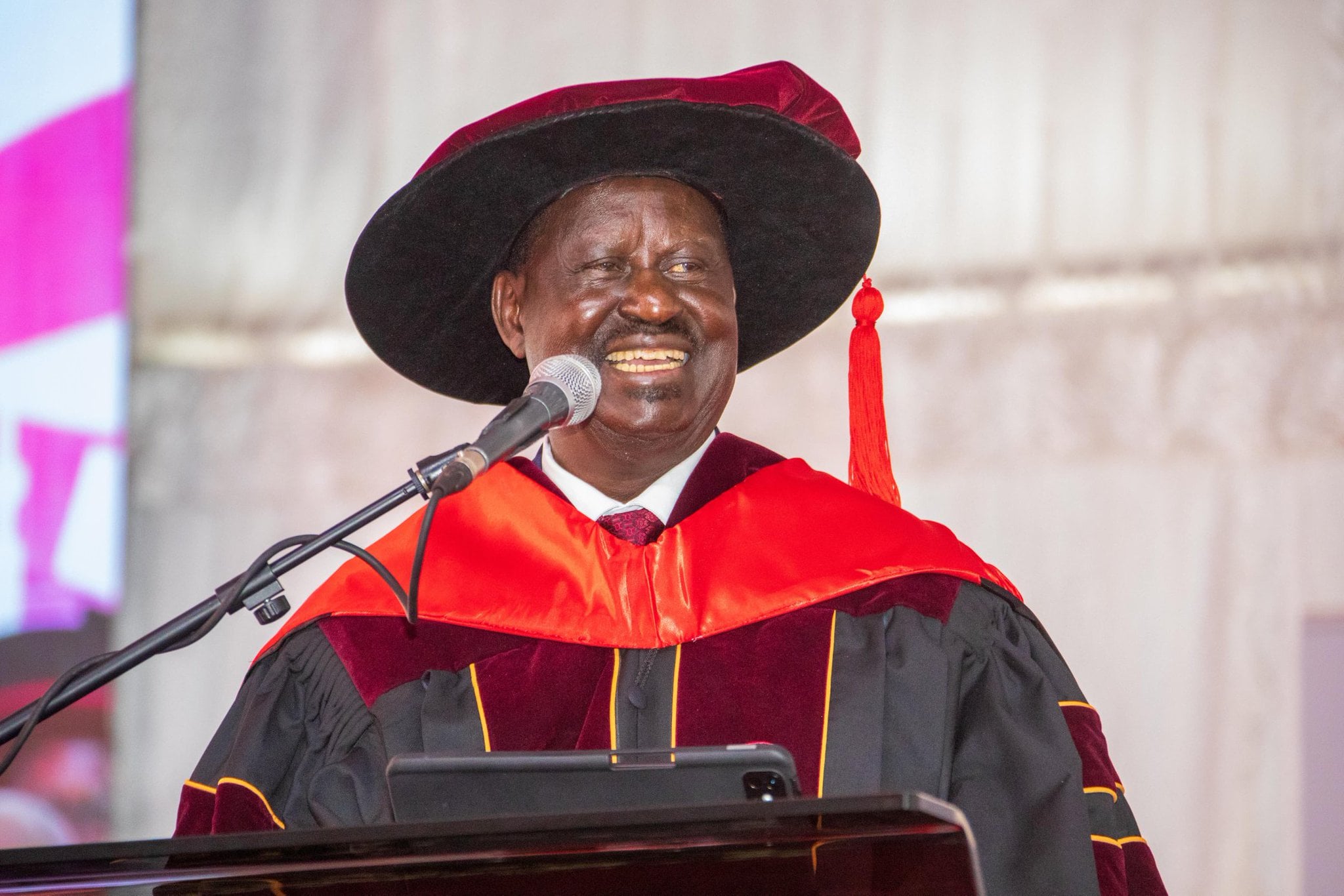
Kenya’s former Prime Minister Raila Odinga at a past graduation ceremony. PHOTO/Raila.

FacebookTwitterLinkedInRedditWhatsApp
Advertisement

Study hard, get your degree, and then step confidently into a stable, well-paid job. That’s long been the assumption about how to secure a livelihood: in neat, predictable stages. But it is increasingly out of touch with reality. Secure jobs are no longer guaranteed after obtaining a tertiary qualification.

Up-to-date and reliable data on graduate unemployment in Africa is hard to come by. A 2014 British Council study estimated that nearly one in four Nigerian graduates (23.1%) were unemployed. In Kenya, the study said, it took graduates an average of five years to secure their first job. In South Africa, graduate unemployment stood at just 5.8% in 2008. By 2023, this had more than doubled to 11.8%. When looking specifically at young graduates aged 20–29 – a useful proxy for those newly entering the job market – the figure is even starker: nearly one in three (30.3%) were unemployed in 2023.

These figures signal a crisis. The mismatch between graduates and opportunities makes it clear that it’s essential to find diverse ways of making a living.

So what do graduates do to generate livelihoods? We recently conducted research tracking more than 500 African tertiary graduates across 21 universities (nine in African countries and 12 in other countries) over five years to provide some answers.

The findings showed that graduates were piecing together livelihoods from multiple sources rather than walking the straight road of a career. Their paths were complex. Only 16% of the total sample moved smoothly from tertiary education into a job and remained in employment over the period of the survey.

Knowing this, universities can help provide graduates with the skills and resources they will need for the real world.

Graduates build portfolios of income

The study showed that African graduates are resourceful in generating livelihoods. From their responses we identified some trends.

First, they do more than one thing. Almost half of the respondents were engaged in more than one activity – for example, working while running a side business or pursuing further studies. A Ugandan graduate explained how he juggled salaried work, family farming projects and continued education.

Second, they make education itself a livelihood. Scholarships, postgraduate degrees and research opportunities provided both income and stability. Others use underemployment (jobs that don’t match their qualification, skills or ambitions) as stepping stones, gaining experience while waiting for better opportunities.

Third, entrepreneurship or self-employment has a role. While only a small minority relied solely on their own businesses, about a fifth of graduates supplemented their income in this way. Some sold goods, others started NGOs or social enterprises, and many saw entrepreneurship as a safety net in an unpredictable labour market.

But this isn’t just about necessity. Graduates are motivated by opportunity, passion projects, and the chance to build something of their own, often with family members. This challenges the common view that entrepreneurship in Africa is driven only by desperation. In reality, necessity and opportunity overlap, and both are part of how graduates make a living.

Beyond ‘waiting’ for an opportunity

The pathways described by graduates don’t fit the conventional picture of being “stuck” or “unemployed”. Instead, they are marked by movement, improvisation and continuous reinvention.

Even when underemployed, graduates often describe their jobs as dignified or at least as stepping stones. They are investing in their futures, sharpening skills and building networks.

This kind of agency (the capacity to navigate uncertainty and imagine alternative futures) is a crucial resource. It allows young Africans to find dignity and purpose in contexts where institutional support and job opportunities are limited.

What universities can do differently to prepare graduates

These findings raise tough questions for universities. If the education-to-employment pipeline is so complex, what role should higher education play in preparing graduates? Our research points to some answers:

First, universities must stop clinging to outdated concepts like “employability”. Degrees are not tickets to stable jobs. Instead, education should prepare students for diversified, non-linear livelihoods. This means teaching not just technical skills but also resilience, adaptability and entrepreneurial thinking.

Entrepreneurship education is one starting point. Courses on business planning, financial management and networking can help graduates who want to start or sustain ventures.

But skills alone are not enough. Without supportive ecosystems, such as incubators, access to finance and mentorship, many small businesses fail. Universities could act as hubs, linking students and graduates to government programmes, private sector partners and alumni networks. Partnerships between universities and government agencies, like South Africa’s National Youth Development Agency which funds business ventures, need to be forged.

Career services also need to evolve. Rather than focusing narrowly on job placements, universities should help students explore multiple career paths, build social capital and access opportunities for income diversification. Practical resources, like co-working spaces, short courses or “micro-credentials” that allow graduates to quickly pick up new skills, and seed funding could give graduates a head start.

Finally, alumni networks are a powerful but underused asset. Showcasing graduates who have successfully diversified their income can inspire others and change the prevailing narrative.

Education should no longer be seen simply as a bridge to wage employment, but as a platform for building flexible, multi-dimensional livelihoods.

A new story of graduate life

The African youth population is still growing, and the labour market will not suddenly expand to meet demand. That reality can sound daunting. But the stories of young graduates also show resilience, creativity and determination. They are not passively “waiting” for jobs – they are actively constructing futures, often against the odds.

Universities and other tertiary education institutions must catch up. By supporting entrepreneurship, fostering networks and recognising the reality of non-linear transitions, they can help graduates navigate uncertainty with confidence.

The future of work in Africa will not be defined by smooth transitions, but by complex entanglements. Recognising and supporting these entanglements may be one of the most important tasks of higher education in the decades ahead.The Conversation

Andrea Juan, Chief Research Specialist, Human Sciences Research Council and Adam Cooper, Chief Research Specialist, Human Sciences Research Council

This article is republished from The Conversation under a Creative Commons license. Read the original article.

Follow our WhatsApp Channel and join our WhatsApp Group for real-time news updates.
Why Many Young African Graduates Struggle To Secure Jobs Even With Good Degrees
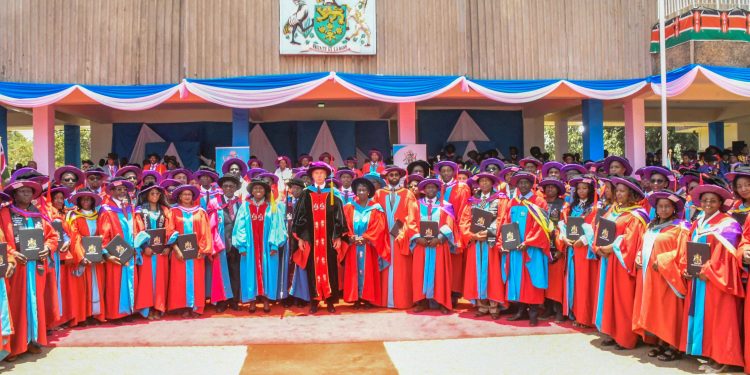
The University of Nairobi management during the institution’s 73rd graduation. PHOTO/UoN.


Tags: Foreign JobsUnemployment in AfricaUniversity Education
The Conversation

The Conversation

The Conversation is an independent news organization that publishes evidence-based articles written by experts to help readers understand diverse topics. We cover a wide range of areas including arts, culture, education, health, politics, science, and more¹. Their content is characterized by in-depth analysis, research, news, and ideas from leading academics and researchers. The Conversation aims to provide academic rigor with journalistic flair.

Related Posts

Treasury Invites Applications For Board Recruitment Across 39 State-Owned Enterprises

Opinion | How New Taxes on Bank Card Transactions Charges Will Raise the Costs for Ordinary Kenyans if Adopted by Parliament

June 1, 2026
Artificial Intelligence Esther Muoria Is A Seasoned Manager And Phd Holder Appointed By President William Ruto As The Tvet Principal Secretary.

Opinion | AI Mistakes That Could Destroy Kenya’s Future — Global Lessons Every Leader, Business and Citizen Must See Now

May 31, 2026
Health Cs Aden Duale Denies Claims Sha Will Shut Down. Ebola Storm Rages On

Opinion | Kenya Should Think Before Rejecting the Laikipia Ebola Facility

May 31, 2026
Low Wages Squeeze Kenyans As As Computer Misuse And Cybercrimes Act Establishes Penalties For Unauthorized Access To Computer Systems, As Well The Legal Cybersecurity Practices.

Opinion | Why Wage Increases Won’t Fix What’s Broken in Kenya’s Economy

May 29, 2026
ADVERTISEMENT

The Kenya Times Facebook

LATEST ARTICLES

  • Why Transgender Troops Can Now Serve in the U.S. Military
  • “I Couldn’t Care Less” Trump Responds After Iran Ends Talks With US
  • Jill Biden Reveals Regret Over Joe Biden’s 2024 Run in New Interview
  • Stars Abroad: Moses Shumah, Kenyan Striker Breaking Records in Zambia
  • Doctors Question Transparency of Trump’s Heart Test Results
  • Corazone Aquino: Kenyan Star Named After Philippines’ Former President
  • KMA Reveals How to Know Licensed Doctors After Deadly Kitale Surgery
  • Iran Ends All Negotiations With US, Vows to “Completely” Block the Strait of Hormuz
  • Wise vs Remitly vs Western Union: Best International Transfer in 2026
  • KDF Soldiers Take Charge as Protests Erupt in Nanyuki Over Ebola Quarantine Facility
  • End of an Era as Paris Lounge & Grill Rebrands, Kentwood Address Undergoes Renovation
  • Benny McCarthy Makes Changes to Harambee Stars Squad Days After Unveiling 24 Players
  • Ruto Delivers Weighty Apology During Madaraka Day Speech [FULL TEXT SPEECH]
  • Njeri Maina Explains Why President Ruto Can’t Be Impeached
  • Plane Crashes in Maasai Mara
ADVERTISEMENT

Company

About Us

Our Authors

Our Experts

Social Media

Policies

Privacy Policy

House Rules

Standards and Policies

Terms and Conditions

Subscription

My Account

Contact Us

Contact Us

Join Our Team

Advertise With Us

© Copyright 2026 | The Kenya Times | All Rights Reserved

Welcome Back!

Sign In with Facebook
Sign In with Google
Sign In with Linked In
OR

Login to your account below

Forgotten Password? Sign Up

Create New Account!

Sign Up with Facebook
Sign Up with Google
Sign Up with Linked In
OR

Fill the forms below to register

All fields are required. Log In

Retrieve your password

Please enter your username or email address to reset your password.

Log In
Your Privacy and Cookies
We use cookies on our website to give you the most relevant experience by remembering your preferences and repeat visits. By clicking “Accept”, you consent to the use of ALL the cookies.
Do not sell my personal information.
Cookie settingsACCEPT
Privacy & Cookies Policy

Privacy Overview

This website uses cookies to improve your experience while you navigate through the website. Out of these cookies, the cookies that are categorized as necessary are stored on your browser as they are essential for the working of basic functionalities of the website. We also use third-party cookies that help us analyze and understand how you use this website. These cookies will be stored in your browser only with your consent. You also have the option to opt-out of these cookies. But opting out of some of these cookies may have an effect on your browsing experience.
Necessary
Always Enabled
Necessary cookies are absolutely essential for the website to function properly. This category only includes cookies that ensures basic functionalities and security features of the website. These cookies do not store any personal information.
Functional
Functional cookies help to perform certain functionalities like sharing the content of the website on social media platforms, collect feedbacks, and other third-party features.
Performance
Performance cookies are used to understand and analyze the key performance indexes of the website which helps in delivering a better user experience for the visitors.
Analytics
Analytical cookies are used to understand how visitors interact with the website. These cookies help provide information on metrics the number of visitors, bounce rate, traffic source, etc.
Advertisement
Advertisement cookies are used to provide visitors with relevant ads and marketing campaigns. These cookies track visitors across websites and collect information to provide customized ads.
Others
Other uncategorized cookies are those that are being analyzed and have not been classified into a category as yet.
SAVE & ACCEPT
LOGIN | REGISTER
  • Login
  • Sign Up
  • Cart
No Result
View All Result
  • News
    • Latest News
    • Breaking News
    • Investigations
    • Explainers
    • Fact Check
  • Politics
    • Global Politics
    • Conflicts & Security
    • Elections
    • Diplomacy
    • Government & Policy
    • Political Analysis
  • Business
    • Global Economy
    • Markets
    • Technology
    • Startups
    • Energy
    • Finance
  • World News
    • Americas
    • Asia
    • Asia Pacific
    • Africa
    • Europe
    • Middle East
  • Africa
    • East Africa
    • West Africa
    • Southern Africa
    • Central Africa
  • Health
    • Global Health
    • Public Health
    • Health Policy
    • Medical Research
    • Diseases & Conditions
    • Mental Health
    • Nutrition
    • Climate & Health
    • Health Explainers
  • Sports
    • Athletics
    • Basketball
    • Boxing
    • Cricket
    • Football
    • Formula 1
    • Golf
    • Rugby
  • Weather
    • Climate Business
    • Climate Change
    • Climate Solutions
    • Living Green
  • Culture
    • Arts
    • Film & TV
    • Food
    • Lifestyle
    • Music
    • Travel
  • Opinion
    • Editorials
    • Letters
  • Behind The Brand
  • Contact Us

Not enough quota to unlock this post
Unlock left : 0
Are you sure want to cancel subscription?