The UK has warned citizens against traveling to nine areas in Kenya due to the threat of terrorism and security concerns in regions bordering Somalia and Ethiopia.
Issued through the Foreign, Commonwealth & Development Office (FCDO), the warning covers parts of northern and eastern Kenya, with different travel restrictions applying depending on the location.
The advisory, dated November 7, follows changes published on November 6, including a restriction on all but essential travel to Moyale Town and the Ethiopia border.
“FCDO now advises against all but essential travel to Moyale Town and up to 5km around it, including to the border with Ethiopia,” part of the advisory read.
Counties Where UK Advises Against All Travel
The FCDO advises against all travel to Mandera County, Tarbaj and Wajir East constituencies in Wajir County, except Wajir Town, as well as areas of Wajir County within 60km of Kenya’s border with Somalia.
In addition, travelers have been warned against all travel to Garissa County, except Garissa Town, Lagdera constituency and the areas of Balambala constituency located north and west of the main road running from Saka on the Tana River to its intersection with the C81 Road.
In Lamu County, the British government advises against all travel except to Lamu Island and Manda Island.
Also Read: US Opens Door for Kenyans Seeking Early Visa Interview Dates: How to Apply
Areas Against All but Essential Travel
The FCDO advises against all but essential travel to Garissa Town, Tana River County north of the Tana River as far as Saka, and areas within 15km of the east coast between the Tana River and the Galana (Athi-Galana-Sabaki) River.
Additionally, the restriction also covers Moyale Town and areas within 5km of it, including the border with Ethiopia.
Nairobi and Other Counties Outside Specific Restrictions
Travellers have further been cautioned to consult for travel guidance before departure to severl areas inclusing Nairobi, Kiambu, Murang’a, Nyeri, Kirinyaga, Embu, Tharaka-Nithi, Meru, Laikipia, Isiolo, Marsabit, Samburu, Turkana, West Pokot, Trans Nzoia, Uasin Gishu, Elgeyo-Marakwet, Nandi, Kakamega, Vihiga, Bungoma, Busia, Siaya, Kisumu, Homa Bay, Migori, Kisii, Nyamira, Nakuru, Narok, Bomet, Kericho, Nyandarua, Baringo, Machakos, Kajiado, Kitui, Makueni, Tana River, Kilifi, Mombasa, Kwale and Taita-Taveta.
Other areas listed include towns such as Eldoret, Nanyuki, Lodwar, Maralal, Kapenguria, Wote and Hola.
However, the UK has emphasized that travel to the areas does not mean that travel is entirely risk-free.
Also Read: Gunfire Intensifies as Kenya Feels Ethiopia’s War Heat
Ethiopia Clashes Force 50,000 to Flee into Kenya
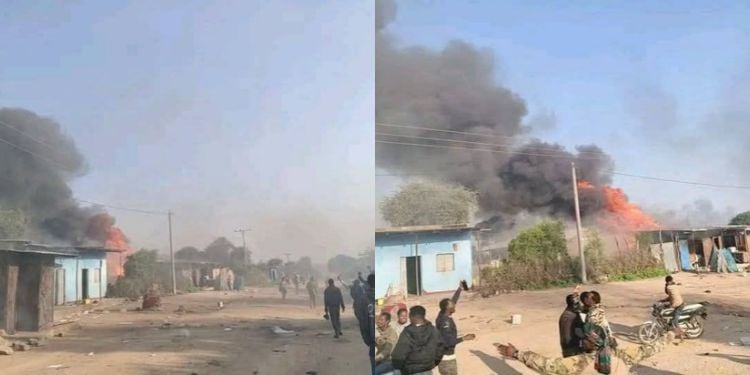
The travel advisory comes as nearly 50,000 people flee Ethiopia into Kenya following deadly clashes between Oromo and Somali communities in the Ethiopian border town of Moyale, triggering a humanitarian crisis in Marsabit County.
According to Reuters, the armed confrontations left at least nine people dead in the initial fighting.
The Kenya Red Cross reported that stray bullets linked to the fighting killed three people and injured 20 others on the Kenyan side and also disrupted cross-border trade and affected electricity supplies in Moyale.
The United Nations has also released US$3 million in emergency funding, while aid agencies are seeking US$8.9 million to support up to 50,000 displaced people over three months.
UN Emergency Relief Coordinator Tom Fletcher on November 6, 2026, announced the allocation of $3 million from the UN Central Emergency Response Fund (CERF).
“Intercommunal violence in southern Ethiopia has forced nearly 50k people to flee into Kenya. I have allocated $3M from the UN’s Global Emergency Fund CERF to help partners urgently deliver life-saving food, water, shelter, and health,” Fletcher said.
According to the International Organization for Migration (IOM), about 50,000 people had crossed into Kenya by October 29.
Follow our WhatsApp Channel and X Account for real-time news updates and subscribe to our YouTube Channel for in-depth interviews.