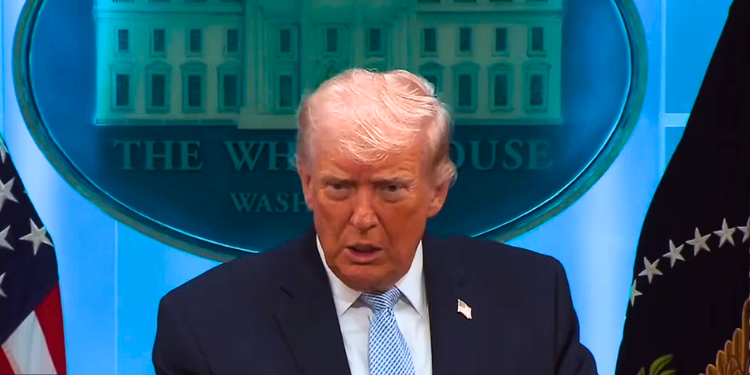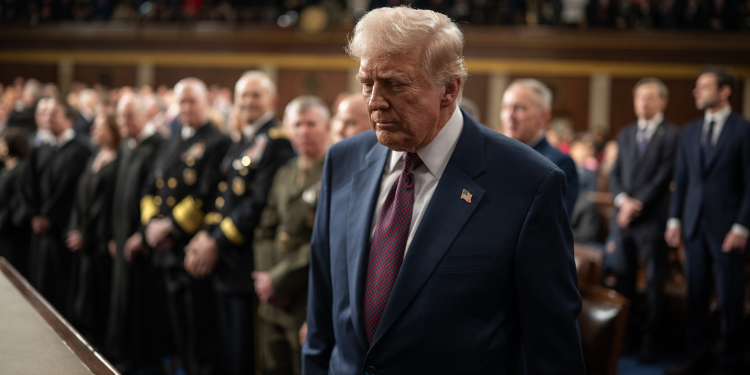
President Donald Trump met with a small group of advisers in the White House Situation Room over two and a half weeks in February 2026.
The meetings focused on whether the United States should join Israel in military action against Iran. Israeli Prime Minister Benjamin Netanyahu pushed for a joint campaign aimed at regime change.
Netanyahu made a detailed presentation on February 11. He argued that Iran was ready for a change in government and that U.S. and Israeli strikes could end the Islamic Republic.
He showed a video with possible future leaders, including Reza Pahlavi, the son of Iran’s last shah.
U.S. intelligence officials reviewed the plan quickly. They described the regime-change scenarios as unrealistic. According to a report by Jonathan Swan and Maggie Haberman for their forthcoming book Regime Change: Inside the Imperial Presidency of Donald Trump, the CIA called the ideas “farcical.”
Divisions in the inner circle
Vice President JD Vance raised the strongest objections inside the administration. He warned that the war would create chaos, raise gas prices, and bring political problems.
Reports state Vance described it as a disaster and worked to stop full U.S. involvement in a regime-change effort.
Also Read: Rubio Issues Stark Warning After U.S. Journalist Freed From Kidnapping in Iraq
Other advisers expressed concerns, but most did not push back hard against the president. Secretary of State Marco Rubio also questioned parts of Netanyahu’s pitch.
Trump listened to the intelligence warnings and the doubts from his team but followed his own view. He aligned closely with Netanyahu’s position.
The United States began major strikes with Israel in late February. The operation hit Iranian military and nuclear sites. It led to the death of Iran’s supreme leader and other senior figures. Six U.S. troops died in the fighting, along with many Iranian civilians.
Trump later said the military had met its main goals. On April 7, he agreed to a two-week ceasefire after Iran committed to reopen the Strait of Hormuz. Negotiations are set to continue in Islamabad.
The conflict lasted 18 days from the first U.S. strikes on February 28 until the ceasefire took effect. American B-2 bombers and F-35 fighters carried out repeated attacks on underground nuclear facilities at Natanz and Fordow.
Israeli forces targeted Iranian missile bases and Revolutionary Guard command centers. Iran responded with missile barrages toward Israel and U.S. bases in the Gulf, though most were intercepted.
Oil prices jumped more than 30 percent in the first week before falling back as the Strait of Hormuz stayed open under U.S. naval protection. Shipping companies rerouted vessels around Africa, adding days and costs to global supply chains.
Also Read: Trump Says Iran Will Stop Uranium Enrichment as US Moves to Remove ‘Nuclear Dust’
Inside Iran, power struggles began almost immediately after the supreme leader’s death, with different factions claiming control in Tehran. The U.S. has moved extra aircraft carriers to the region and kept thousands of troops on high alert in case the ceasefire collapses.
Why this matters
The meetings showed how Trump makes big decisions. He heard direct opposition from his vice president and negative assessments from intelligence agencies but chose to proceed.
This approach put U.S. forces into a conflict that changed the leadership in Iran but carried high costs in lives and regional stability.
The outcome affects oil supplies through the Strait of Hormuz, global energy prices, and U.S. relations in the Middle East.
The ceasefire gives time for talks, but the risks of renewed fighting remain if the sides cannot agree on longer-term terms.