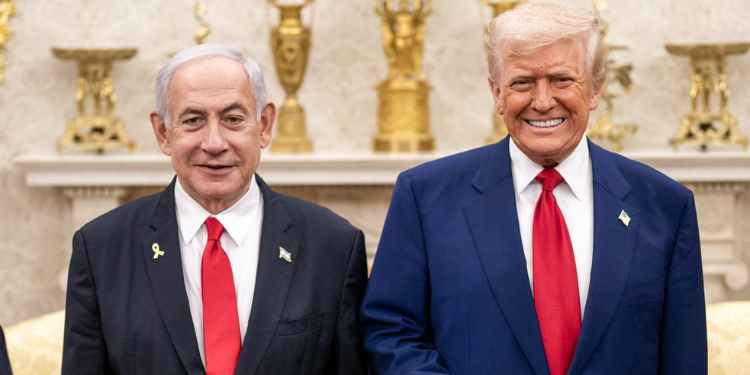
A reported late-night phone call between President Donald Trump and Israeli Prime Minister Benjamin Netanyahu has revealed growing differences over how to handle Iran.
The call, described by Israel’s Channel 12 as “lengthy and dramatic,” is said to have taken place amid heightened tensions following renewed conflict involving Iran.
According to the report, the two leaders disagreed on whether to continue military pressure or pursue a negotiated agreement aimed at limiting Iran’s nuclear program.
Disagreement Over Iran Strategy
According to the Daily Mail reports, Netanyahu pushed for maintaining or resuming military operations against Iran, arguing that diplomatic efforts would not be sufficient to prevent Tehran from advancing its nuclear capabilities. Trump, by contrast, is said to have favored a renewed diplomatic approach focused on securing a deal that would require Iran to abandon its nuclear ambitions.
The differing positions reportedly created tension during the call, with both leaders standing firm on their preferred strategy. One source quoted in the reporting described the conversation as “tense and unusually direct”.
The timing of the call comes after claims that early stages of the conflict included discussions about broader political outcomes inside Iran. These claims suggest that Israeli and U.S. strategy discussions may have extended beyond immediate military objectives.
Early Regime-Change Planning
The call followed a New York Times report alleging that early in the war, Israel, reportedly with Trump’s approval, considered an “audacious” plan aimed at reshaping Iran’s leadership structure after initial strikes.
The plan included the possibility of installing former Iranian President Mahmoud Ahmadinejad as a transitional figure if Supreme Leader Ayatollah Ali Khamenei were removed from power.
Also Read: Heartbreaking: Netanyahu Mourns IDF Commander Killed by Hezbollah Days Before His Wedding
The report said Israeli forces carried out strikes in Tehran that targeted senior leadership meetings and security infrastructure. One strike hit Ahmadinejad’s residence, where he was placed under guard by members of the Islamic Revolutionary Guard Corps. The guards were killed in the attack, while Ahmadinejad survived but later disengaged from further contact with Western intelligence channels.
A U.S. official involved in earlier negotiations was quoted as saying: “There was never a clear consensus on what comes after the strikes.”
The same reporting suggested that U.S. officials had warned against assuming that eliminating Iran’s top leadership would automatically trigger regime change, with senior figures reportedly skeptical of the plan’s viability.
Escalation and Regional Impact
The war, which began on 28 February 2026, has included sustained Israeli strikes on Iranian military and nuclear infrastructure, alongside Iranian retaliation targeting regional shipping and energy routes. Reports indicate that early Israeli strikes killed senior Iranian officials and disrupted command structures in Tehran, while Iran responded with attacks that affected maritime traffic, including incidents near key oil transit routes.
The Strait of Hormuz has reportedly faced intermittent closures during the conflict, contributing to global oil market instability and rising fuel prices. Analysts cited in the reporting say the conflict has evolved into a wider regional confrontation involving military operations, intelligence activity, and economic pressure.
Also Read: Democrats Gain Republican Support in Push to End Trump’s Iran War
Diplomatic Strain and Regional Uncertainty
The reported disagreement between Trump and Netanyahu comes at a sensitive moment for Middle East diplomacy. Iran remains at the center of ongoing security concerns, with Western governments divided over how to balance military deterrence and diplomatic engagement.
The phone call reflects a potential gap in strategy between two key allies. Netanyahu’s government has consistently argued that military pressure is necessary to prevent Iran from advancing its nuclear program, while Trump has, in recent statements, emphasized the need for a negotiated settlement.
A former U.S. official familiar with past discussions on Iran policy said, “The central issue has always been whether pressure alone works, or whether you need a deal on the table.”
The White House has not confirmed the details of the conversation, and Israeli officials have also not issued a formal statement addressing the claims. The account remains based on unnamed sources cited by media outlets, including reporting referenced by The New York Times.