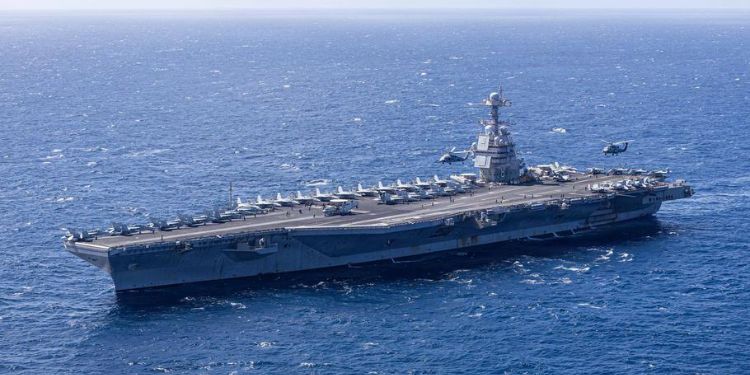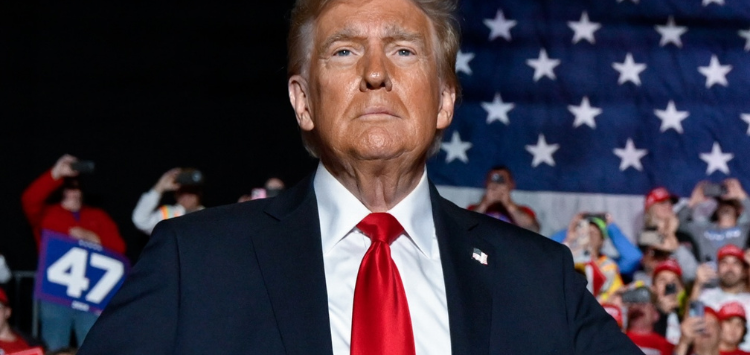
The United States (U.S) is weighing the deployment of thousands of additional troops to the Middle East as the war with Iran intensifies.
The deliberations come as Washington faces mounting security challenges across the region, including attacks on military bases and key shipping routes.
While no final decision has been made, the consideration highlights the scale of the conflict and the potential for the U.S. military’s role to extend beyond ongoing air and naval operations.
U.S. Military Deployment Options
According to Reuters, citing a U.S. official and three people familiar with the matter, the U.S. Pentagon is reviewing several options to reinforce its presence and protect strategic interests in the region.
Also Read: Over $200 Billion Budget Request for New War Awaiting Trump’s Approval.
Among the proposals being discussed are:
- Deployment of thousands of additional servicemen to key locations across the Gulf
- Securing critical infrastructure, including maritime routes such as the Strait of Hormuz
- Protecting U.S. bases and allied facilities from continued missile and drone attacks
According to the anonymous Reuters source, Trump’s administration is also assessing the possibility of positioning forces closer to high-risk zones to improve response and deterrence capabilities.
The officials also emphasize that the review remains ongoing and subject to change depending on developments on the ground.
Trump Issues Warning After Iran Retaliates Over South Pars Gas Field Attack
Trump has distanced himself from the Israeli strike on Iran’s South Pars Gas Field. In a statement dated March 19, Trump stated that the US had no prior knowledge of the attack and that Qatar was not involved.
He added that the Israeli strike targeted a relatively small section of the massive South Pars Gas Field, one of the world’s most significant natural gas reserves shared between Iran and Qatar.
“The United States knew nothing about this particular attack, and the country of Qatar was in no way, shape, or form involved with it, nor did it have any idea that it was going to happen,” read part of the statement.
Additionally, Trump argued that the attack was carried out “out of anger” over escalating tensions in the Middle East.
Trump claimed that Iran, unaware of the circumstances surrounding the strike, responded by targeting part of Qatar’s liquefied natural gas (LNG) infrastructure.
He described the retaliation as “unjustifiable and unfair,” stressing that Qatar was not involved in the initial incident.
Also Read: Ex-Counterterrorism Chief Under FBI Probe After Breaking with Trump Over Iran War
Trump further warned that while Israel would refrain from further attacks on the gas field, any additional Iranian strike on Qatar could provoke a major American response.
Expensive weapons and sustained operations
According to The Washington Post, the United States Department of War has formally asked the White House to approve the proposal before submitting it to Congress—an extraordinary figure that is already facing scepticism within the administration and on Capitol Hill.
Pentagon officials told lawmakers in a closed-door briefing last week that the conflict had already cost more than $11.3 billion in just the first six days, according to multiple sources familiar with the discussions.
Officials acknowledged that it does not include key expenses, such as pre-war troop deployments and equipment positioning, long-term operational and logistical costs, and replacement of expended munitions.
Separate briefings indicated that $5.6 billion worth of munitions were used in just the first two days of the campaign, underscoring the intensity of the early strikes.
Analysts say the real cost could be significantly higher. Estimates from the Center for Strategic and International Studies (CSIS) suggest the first 100 hours alone may have cost $3.7 billion, or nearly $900 million per day.