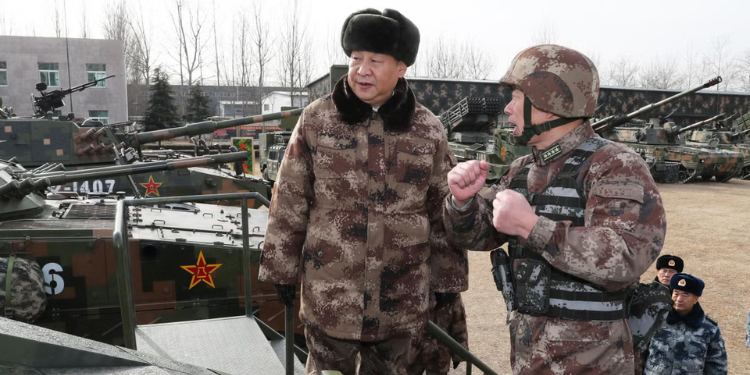
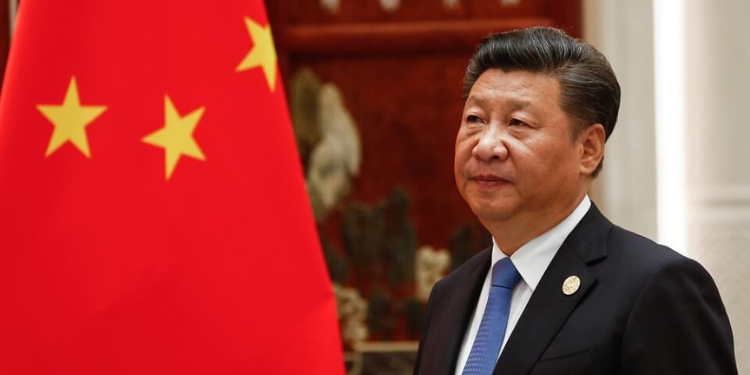
China has delivered a forceful warning to U.S. President Donald Trump, accusing the United States of fueling instability in the South China Sea and backing what it calls “provocative actions” by the Philippines.
In a public statement, the Chinese Embassy in the U.S. said that the United States is not a party to the South China Sea issue and has no right to interfere in maritime matters between the concerned parties.
China has also urged the U.S. to stop making remarks that could fuel the conflict between China and the Philippines regarding the South China Sea Issue.
“The U.S. needs to stop making fact-distorting and provocative remarks, and stop abetting and supporting the Philippines’ attempt of creating troubles in the South China Sea.”
China Warns Trump
In the statement, China has further warned Trump to keep off China’s territory, stating that Xianbin Jiao is part of China’s Nansha Qundao, and that China has indisputable sovereignty over Nansha Qundao, which includes Xianbin Jiao, and its adjacent waters.
China’s warning follows a December 12 incident near Xianbin Jiao, part of China’s claimed Nansha Qundao (Spratly Islands).
According to Chinese officials, the Philippines deployed a large number of ships into the waters surrounding Xianbin Jiao and intruded into its lagoon.
Philippine vessels, described as fishing ships, allegedly ignored repeated Chinese warnings, anchored deliberately, and carried out “dangerous maneuvers” including sudden course changes.
“The Philippines’ so-called fishing ships, despite China’s repeated dissuasion and warning, have deliberately anchored in the lagoon of Xianbin Jiao and repeatedly conducted dangerous maneuvers, including veering suddenly off course,” the statement read.
Chinese authorities claim Philippine personnel even threatened coast guard officers enforcing maritime law with knives, framing the Philippines ’ actions as a violation of international law and the Declaration on the Conduct of Parties in the South China Sea (DOC).
Also Read: Russia Suffers Heavily After Ukraine Destroys 179 Air Targets During Night Attack
The Chinese Embassy in the U.S. concluded by cautioning the Philippines of further provocations and to respect China’s sovereignty.
Philippines’ Position on the Dispute
The Philippines maintains that its actions in the South China Sea are consistent with international law, including the 2016 ruling by the Permanent Court of Arbitration, which invalidated China’s sweeping maritime claims.
The nation’s officials argue that Xianbin Jiao, known internationally as Sabina Shoal, lies within its Exclusive Economic Zone (EEZ) under the United Nations Convention on the Law of the Sea (UNCLOS).
According to Philippine authorities, fishing vessels operating near the shoal were exercising legitimate rights and that Chinese interference threatens livelihoods and regional stability.
The Philippines has accused China of using water cannons and cutting anchor lines of its boats, describing these actions as aggressive and dangerous.
The government has vowed to continue asserting its rights and has sought diplomatic backing from allies like the U.S to counter what it views as unlawful obstruction.
Strained U.S.–China Relations
The warning to President Trump comes amid mounting friction between the two powers.
Also Read: Zelenskyy Piles Pressure on Putin With Overnight Attacks on Russian Energy Sites
In recent months, the U.S has expanded export restrictions on advanced semiconductors and AI chips to China, citing national security concerns.
This move triggered retaliatory measures from China, including curbs on exports of rare-earth minerals critical to American tech manufacturing.
Military tensions have also grown, especially after a Chinese fighter jet came within 10 feet of a U.S. B-52 bomber over the South China Sea, an incident the White House called unsafe and reckless.
Earlier in December, U.S Navy destroyers conducted freedom-of-navigation operations near disputed reefs, prompting Chinese vessels to shadow and issue radio warnings.
The FBI and Department of Justice have also linked Chinese hackers to large-scale intellectual property theft, targeting sectors such as defense, aerospace, and pharmaceuticals.
Follow our WhatsApp Channel and X Account for real-time news updates.