
President William Ruto has endorsed plans to construct Nairobi’s first underground metro rail system as part of the Nairobi Metropolitan Mass Rapid Transit System (NMMRTS) following a progress briefing at State House by Transport Cabinet Secretary Davis Chirchir, Nairobi Governor Johnson Sakaja and officials from the national and county governments.
The endorsement comes days after the Nairobi City County Executive Committee, chaired by Governor Sakaja, approved the project, clearing the way for the implementation of its first phase.
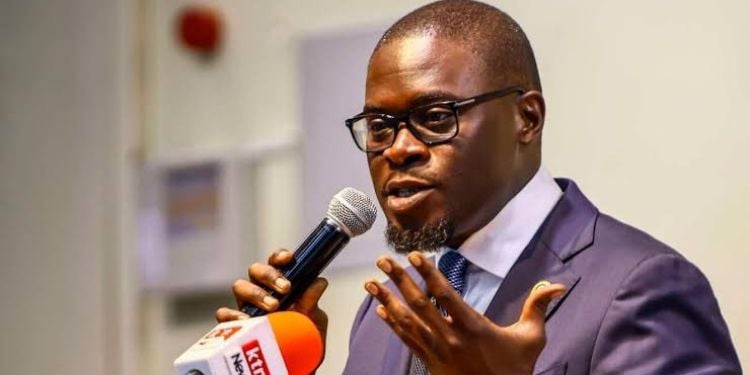
Speaking after the meeting on Friday, Governor Sakaja said the President had fully backed the proposal, describing it as a major milestone in Nairobi’s transport sector.
“It was a successful presentation, and the President endorsed it fully. This is by far the most consequential development this city will see,” Sakaja said.
Ruto Says Underground Railway Will Ease Traffic
President Ruto said the mass transit system would provide a long-term solution to the traffic congestion that has for years affected Nairobi and its surrounding areas.
“Our plan for the Nairobi Metropolitan Mass Rapid Transport System is the perfect solution to the traffic congestion and gridlock that face our capital city and the environs,” the President said.
The Head of State added that the underground metro would become the backbone of an integrated public transport system combining Bus Rapid Transit (BRT) and commuter rail services.
According to the government, the transport network is expected to serve nearly five million residents who collectively make more than 12 million trips across Nairobi every day.
Also Read: Nairobi Underground Railway to Feature 25 Stations Across Key Corridors Linking the CBD to Eastlands
County Approves First Phase of Underground Railway
The endorsement comes after the Nairobi County Executive Committee’s approved the implementation framework for Phase I of the system.
On his part, Sakaja described the metro as a key component of efforts to address the city’s growing transport challenges and improve mobility for residents.
“For far too long, the people of Nairobi, particularly our hardworking commuters from Eastlands and across the metropolitan area, have lost precious hours in traffic jams that slow down our economic growth,” Sakaja said.”
Today, we are moving from planning to implementation. The approval of Phase I of the NMRTS is our commitment to delivering a modern, fast, safe and dignified public transport system.”
If implemented, the Nairobi Metropolitan Mass Rapid Transit System will become Nairobi’s first underground railway and one of the largest public transport infrastructure projects in Kenya’s history.
The project is expected to ease congestion, shorten travel times and support the city’s expanding population and economy.
Also Read: Ruto to Unveil New Economic Blueprint to Succeed Vision 2030
First Phase to Link CBD and Eastlands
According to the 30-kilometer NMRTS plan presented to the Nairobi City County Executive Committee on July 21, 2026, the first phase of the project will comprise 25 stations linking the Central Business District (CBD) to Eastlands through a network of major transport corridors.
The system will feature a 10-kilometre underground CBD core that will serve as the city’s central transport spine. The underground section will have 10 stations located at Upper Hill, Kenyatta National Hospital (KNH), Parliament, City Hall, Kenyatta Avenue, Railways/Muthurwa, University Way, Museum Hill, Westlands and Sarit Centre.
Beyond the CBD, the railway will extend into Eastlands through four corridors designed to connect densely populated residential areas with the city centre.
The Eastlands Main Trunk will have four stations at Railways/Muthurwa, Jericho, Buruburu and Donholm, forming the primary passenger corridor into Eastlands.
Eastlands Branch One will serve Donholm, Umoja, Kayole and Komarock, providing rail access to some of Nairobi’s most densely populated estates.
Eastlands Branch Two will connect Muthurwa, Eastleigh, Kariobangi and Dandora, linking major residential and commercial centres.
The fourth corridor, Eastlands Branch Three, will run through Donholm, Savannah, Fedha and Embakasi, improving access to residential neighbourhoods, logistics hubs and employment centres.
Follow our WhatsApp Channel and X Account for real-time news updates.