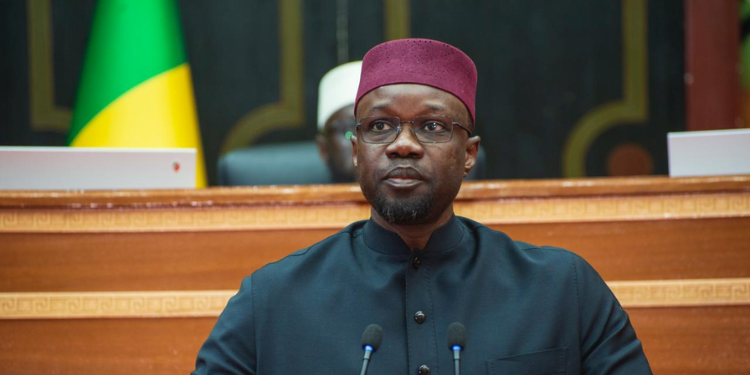

Senegalese President Bassirou Diomaye Faye has dismissed Prime Minister Ousmane Sonko and dissolved the government in a dramatic political split between the two allies who came to power together in 2024 following a wave of anti-establishment support.
The announcement was made in a presidential decree read on state broadcaster RTS on Friday evening by Oumar Samba Ba, minister and secretary-general of the presidency.
“By decree number 2026-1128 of May 22, 2026, the President of the Republic, His Excellency Bassirou Diomaye Faye, has put an end to the functions of Mr. Ousmane Sonko, Prime Minister, and as a result to those of the ministers and secretaries of state, members of the government,” Ba said during the televised statement.
Senegal’s president fires prime minister Sonko after months of tensions
He added that “the outgoing members of the government are in charge of handling the current affairs,” confirming the immediate dissolution of the administration pending the formation of a new government.
The move follows months of mounting tensions between Faye and Sonko, once considered inseparable political allies within the ruling Pastef movement that swept Senegal’s 2024 elections after years of opposition activism against former President Macky Sall’s administration.
Sonko, a highly influential opposition figure with a large youth following, had originally been expected to run for president himself before being barred from contesting the election due to a defamation conviction upheld by Senegal’s courts.
Also Read: Senegal Suspends Foreign Travels for Ministers Amid Rising Global Oil Prices
Faye, a close ally and fellow Pastef figure, was instead selected as the movement’s presidential candidate and went on to defeat the ruling coalition’s nominee.
The pair initially presented a united front after taking power, promising institutional reforms, economic sovereignty, and a rebalancing of Senegal’s relationships with international economic partners.
However, divisions gradually emerged over governance, economic policy, and the direction of the Pastef agenda.
In March, Sonko publicly hinted at a possible political rupture, stating that he would be prepared to withdraw Pastef from government and return to the opposition if the administration drifted away from the party’s founding principles.
His remarks intensified speculation over a widening power struggle between the president and prime minister.
Friday’s dismissal appears to formalize that split with Sonko reacting in a brief social media post:
“Praise be to Allah. Tonight I will sleep with a light heart in the Keur Gorgui neighborhood,” referring to his private residence in Dakar.
IMF acts after Senegal misreports debt data
The political fallout comes at a time when Senegal’s economy and financial stability have been under increasing pressure following revelations that public debt figures had been misreported.
According to a Reuters report, this prompted the International Monetary Fund (IMF) to freeze a $1.8 billion lending program with Dakar.
Subsequently, the IMF estimated Senegal’s debt burden at approximately 132% of gross domestic product by the end of 2024, significantly higher than earlier official figures.
Sonko had taken a particularly confrontational stance toward international financial institutions and foreign commercial agreements during his tenure as prime minister.
One of his signature policy initiatives involved auditing Senegal’s natural resource contracts, particularly in the oil, gas, and mining sectors.
In March, the ousted premier declared that a BP-linked agreement tied to the Greater Tortue Ahmeyim gas project was unfair to Senegal and announced the revocation of 71 mining licenses as part of a broader review of resource contracts.
He argued that renegotiating existing oil and gas agreements would help reduce domestic energy costs and strengthen state finances while expanding Senegal’s economic sovereignty.
At the same time, Sonko strongly opposed any restructuring of Senegal’s estimated $13 billion debt burden, accusing international financial actors of pressuring the country toward unfavorable arrangements.
Also Read: Meet Senegal’s Diomaye Faye, One of the Youngest Presidents in Africa and a Friend of Ruto
President Faye, while aligned with Sonko on several reform themes after taking office, had generally adopted a more restrained public posture on the debt crisis and relations with international lenders.
Pastef’s electoral victory in 2024 was widely viewed as a major shift in Senegalese politics, fueled by youth frustration, unemployment concerns, and anti-establishment sentiment.
Sonko remained one of the most popular and politically influential figures within that movement even after Faye assumed the presidency, leading many observers to closely watch signs of rivalry between the two men over the past several months.
No replacement prime minister had been announced by Friday evening, and the presidency did not immediately provide further details on the composition or timeline of a new government.
Under Senegal’s constitutional framework, the outgoing ministers are expected to continue handling day-to-day affairs until a new administration is formally appointed.