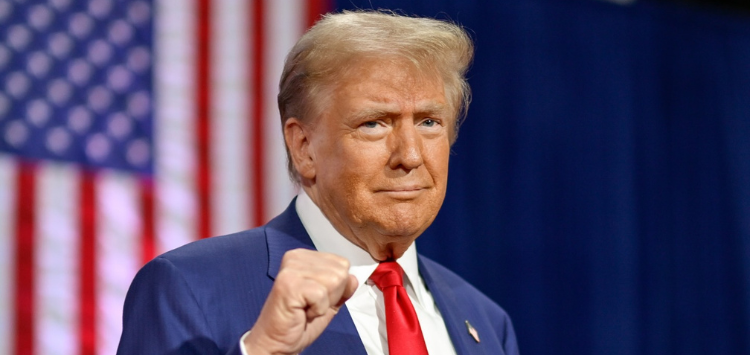
A new nationwide poll shows that most Americans support keeping birthright citizenship, placing President Donald Trump’s immigration agenda under renewed political pressure as the Supreme Court prepares to rule on his 2025 executive order seeking to end the practice.
According to a Reuters/Ipsos poll conducted between April 15 and April 20, 2026, 64% of respondents said they oppose ending birthright citizenship, while 32% said they support eliminating it.
The survey was conducted across the United States and included responses from 4,557 adults, with a margin of error of about 2 percentage points.
The findings come at a critical moment for the Trump administration, as the Supreme Court is expected to issue a landmark ruling by the end of June on whether the president’s order to end automatic citizenship for children born in the U.S. to non-citizen parents is constitutional.
Supreme Court Nears Landmark Decision
The case before the Supreme Court has become one of the most closely watched legal battles of the year. Trump’s 2025 executive order, which aims to restrict birthright citizenship, was challenged in multiple federal courts and has now reached the nation’s highest court.
During oral arguments in early April, several justices appeared skeptical of the administration’s position, though the court’s 6–3 conservative majority leaves the outcome uncertain.
Also Read: Trump Says Iran Sent Improved Deal 10 Minutes After Canceling Envoy Pakistan Trip
The ruling is expected to have wide implications not only for immigration policy but also for how citizenship rights are defined in the United States.
The decision could reshape long-standing interpretations of the Constitution’s 14th Amendment, which has historically guaranteed citizenship to nearly all individuals born on U.S. soil.
Public Opinion Split Along Party Lines
The Reuters/Ipsos poll shows a deep partisan divide on the issue. Only 9% of Democrats said they support ending birthright citizenship, compared with 62% of Republicans. At the same time, 36% of Republicans said they oppose ending the practice, showing some internal division within the party.
Independent voters were closer to the national average, with most expressing support for maintaining the current policy.
Also Read: Trump Receives Rare Support in Plan to Stop Birthright Citizenship
The issue has become a key point of debate in Trump’s broader immigration agenda, which has included stricter border enforcement and tighter visa rules since he returned to office.
Broader Supreme Court Agenda Adds Pressure
The birthright citizenship case is one of several major rulings expected from the Supreme Court before the end of its term in June. The court is also considering cases involving mail-in ballot deadlines, transgender athlete participation in school sports, and congressional redistricting rules in Louisiana.
Together, these cases are expected to shape national policy on voting rights, civil rights, and election rules ahead of the November 2026 midterm elections.
The court has, in recent years, issued major rulings that have expanded gun rights, limited affirmative action in college admissions, and reduced federal agency authority. Several of those decisions were supported by justices appointed during Trump’s first term.