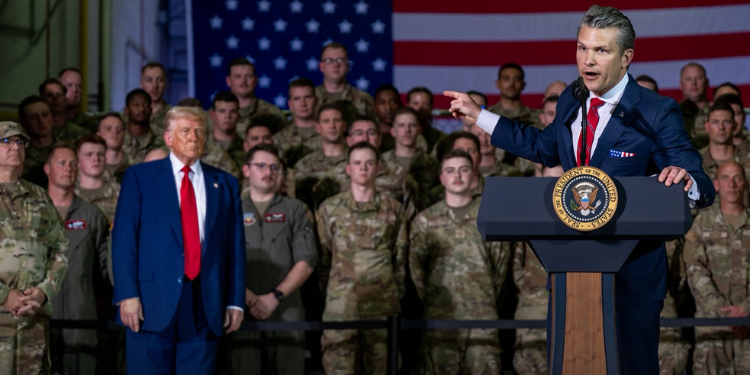
United States Southern Command (SOUTHCOM) commander Gen. Francis Donovan met with Defense Secretary Pete Hegseth at the Pentagon in a high-level meeting that comes amid mounting tensions between the United States and Cuba and the recent arrival of the USS Nimitz carrier strike group in the Caribbean.
According to MS NOW journalist Julia Jester, the meeting took place on Thursday, May 21, at Hegseth’s request.
It coincided with a series of developments involving Cuba, including increased U.S. military activity in the region, fresh sanctions pressure, and renewed comments from President Donald Trump and Secretary of State Marco Rubio about the future of the island’s government.
Hegseth holds key meeting
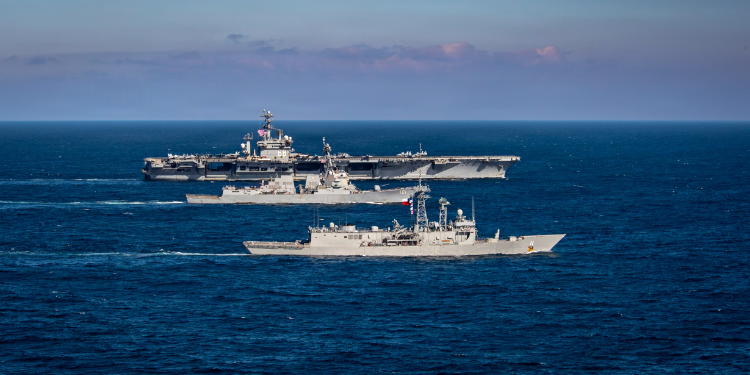
The Pentagon meeting came one day after the USS Nimitz entered the Caribbean as part of Operation Southern Seas 2026 alongside the destroyer USS Gridley and replenishment ship USNS Patuxent.
SOUTHCOM on Wednesday described the naval formation as representing “readiness and presence, reach and unmatched lethality, and strategic advantage.”
Also Read: White House Fuels Fresh Cuba Regime Change Speculation as Aircraft Carrier Arrives in Caribbean
The deployment also coincided with Cuba’s Independence Day celebrations, adding to speculation about the timing and symbolism of the U.S. military presence near the island.
Speaking to reporters on Thursday, President Trump, however, rejected suggestions that the deployment is intended to intimidate Havana.
“No, not at all,” Trump said when asked whether the aircraft carrier’s arrival was aimed at pressuring the Cuban government.
The president instead framed the move around humanitarian concerns, describing Cuba as “a failed country” struggling with severe shortages.
“They don’t have electricity. They don’t have money. They don’t have really anything. They don’t have food, and we’re going to help them along.”
He added that he wanted to “open Cuba for Cuban Americans so they can return and help.”
The Trump administration has, for months, intensified pressure on Havana through sanctions, maritime interdictions, and expanded regional military coordination.
According to reports cited by officials, Washington has imposed more than 240 sanctions on Cuba since January 2026 while also intercepting multiple oil tankers allegedly destined for the island.
U.S. officials claim those measures sharply reduced Cuba’s fuel imports, contributing to prolonged nationwide blackouts and worsening economic conditions.
At the same time, Secretary of State Marco Rubio acknowledged that talks with Cuban officials had produced limited progress despite recent diplomatic engagement.
Rubio confirmed that the U.S. ambassador held meetings with Cuban officials in recent weeks and disclosed that CIA Director John Ratcliffe had also traveled to the island earlier this year.
Still, Rubio delivered some of the administration’s toughest public remarks yet about Cuba’s leadership and economic system.
“Their system doesn’t work. Their economic system doesn’t work. It’s broken and cannot be fixed with the current political system,” Rubio told reporters.
He also warned that “Cuba will not be able to keep buying time or wait for us to yield.”
U.S. eyes attack-drone threat from Cuba
Meanwhile, reports earlier this week indicated that Cuba has acquired more than 300 military drones from Russia and Iran.
Axios reported last weekend that U.S. officials were monitoring concerns over the potential use of those systems near strategic sites, including the Guantanamo Bay Naval Base and areas close to Key West, Florida.
Politico later reported that SOUTHCOM had begun contingency planning exercises connected to possible future Cuba-related scenarios.
Also Read: Trouble in U.S. as Cuba Acquires 300 Drones in Plan to Target Florida, Guantanamo Bay
Rubio also declined to discuss whether the United States could seek the detention of Raúl Castro following renewed legal scrutiny connected to the 1996 downing of planes operated by the Brothers to the Rescue organization.
“I’m not going to talk about how we’re going to bring him here,” Rubio said. “If there’s an announcement, we’ll let you know afterward, not before.”
The meeting between Hegseth and Donovan comes as the Caribbean increasingly emerges as a major focus of U.S. military and diplomatic attention amid rising geopolitical competition involving Russia, Iran, and China in the Western Hemisphere.