The government has announced plans to use artificial intelligence (AI) to monitor the productivity and performance of public servants, with the results expected to guide promotions under sweeping reforms aimed at improving service delivery and accountability.
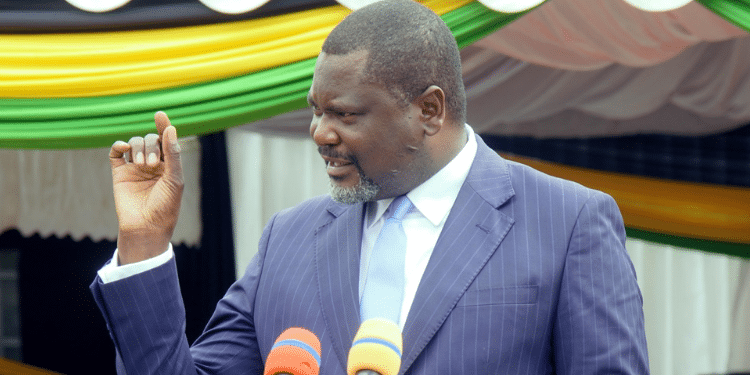
Speaking during the launch of the 2024/2025 Judiciary Performance Management and Measurement Understanding (PMMU) Evaluation Report on Friday, July 3, Public Service Cabinet Secretary Geoffrey Ruku said digital governance and innovation would play a central role in transforming the public service.
“As a government, we owe Kenyans an effective and efficient governance system, and advancing digital governance and innovation is non-negotiable,” he said.
AI to Measure Performance, Decide Public Servants’ Promotions
CS Ruku said AI would be deployed to enhance public service delivery, automate routine tasks and track Key Performance Indicators (KPIs) in real time.
“Moving forward, Artificial Intelligence will be instrumental in automating routine tasks and tracking Key Performance Indicators (KPIs) in real time,” he added.
Also Read: Govt to Increase Salaries for All Civil Servants in July
The reforms also signal a major shift in how civil servants will be assessed and promoted.
According to the government, career progression will no longer be determined primarily by seniority or years of service.
Instead, merit, demonstrated results and innovation will become the key factors in determining promotions in the public service.
CS Ruku said the reforms are intended to shift the focus from time spent in the office to the value delivered to citizens.
“We need to shift the focus from time spent at the workplace to the value delivered to Kenyans, and Artificial Intelligence will be vital in this regard,” he said.
He added that AI would also help identify operational bottlenecks, personalize civil service workflows and support human decision-making across government institutions.
Also Read: Govt to Introduce New Formula for Salaries and Promotions
He further noted that the government intends to reward high-performing and innovative public officers while taking action against those who consistently underperform.
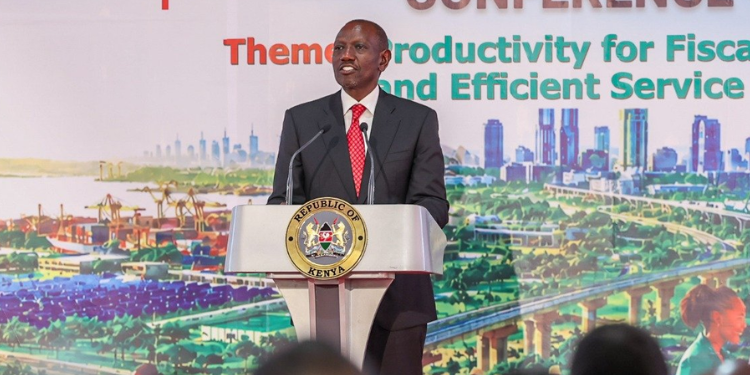
“As the President, H.E. William Samoei Ruto, directed during the National Productivity and Performance Conference last month, we need to institute whole-of-government public service workforce reforms. We must reward performers and innovators and sanction non-performers without apology,” he said.
Govt to Phase Out Automatic Salary Progression, Overhaul Performance Contracts
The announcement follows resolutions adopted at the First National Productivity and Performance Conference held from June 17 to 19, 2026, at the Kenya School of Government’s Lower Kabete Campus in Nairobi.
Under the resolutions, the government plans to progressively phase out automatic salary progression and career advancement for public servants, replacing them with a performance-based remuneration system across ministries, departments, agencies and county governments.
The reforms are intended to align promotions, salary progression and career advancement with measurable performance, productivity and service delivery outcomes.
In a parallel reform, the government also plans to overhaul the current performance contracting framework to strengthen productivity measurement across the public service.
Under Resolution 3 of the conference, the existing performance contracting system will be transformed into a performance and productivity contracting framework, with productivity indicators carrying significantly greater weight in the evaluation of public institutions and officers.
The resolution requires the government to re-engineer the current framework and increase the weighting of productivity indicators from the current 3 per cent to at least 50 per cent by June 2028.
Follow our WhatsApp Channel and X Account for real-time news updates.