White House Deputy Chief of Staff for Policy Stephen Miller has escalated tensions of a possible confrontation between the United States and Cuba after U.S. federal prosecutors indicted Cuban Revolution leader Raúl Castro.
Miller, in an interview on Wednesday, May 20, declared that President Donald Trump has brought the United States “closer than ever” to “freeing” Cuba, escalating rhetoric that is already fueling fears of a possible confrontation between Washington and Havana.
“Trump, through his leadership and his vision, has brought us closer than ever to the day when Cuba will be free,” Miller said during remarks praising the administration’s Cuba strategy.
He added that the island nation would eventually “no longer be a threat to America, but Cuba will be a friend and partner to America, which is essential for our national security.”
Trump says U.S. is ‘freeing up Cuba,’ won’t escalate
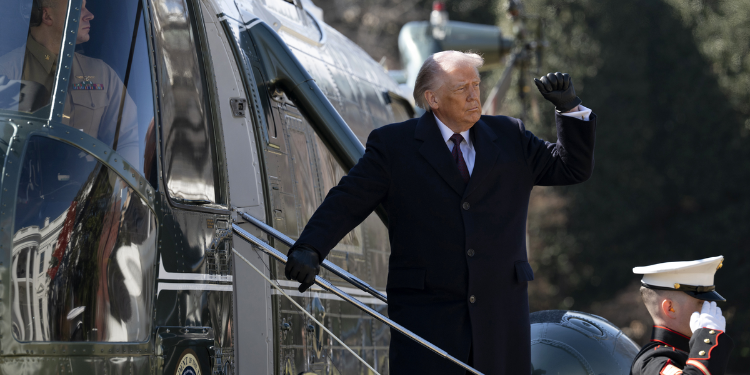
The comments came just hours after President Trump himself insisted there would be no immediate military escalation against the Caribbean nation, despite intensifying pressure from his administration.
“There won’t be escalation. I don’t think there needs to be,” Trump told reporters Wednesday while simultaneously claiming the United States was “freeing up Cuba.”
The administration’s messaging, however, has increasingly blurred the line between humanitarian pressure, diplomatic engagement, and outright regime-change rhetoric.
Also Read: Trump Explains How Raul Castro Indictment is a Win for Cuban-Americans
Earlier Wednesday, the U.S. Department of Justice unsealed criminal charges against former Cuban President Raúl Castro over the 1996 shootdown of two planes operated by the exile group Brothers to the Rescue, an incident that killed four people, including three Americans.
Federal prosecutors allege Castro personally approved the use of deadly force against the civilian aircraft. The indictment marked one of the most dramatic escalations in Washington-Havana relations in decades.
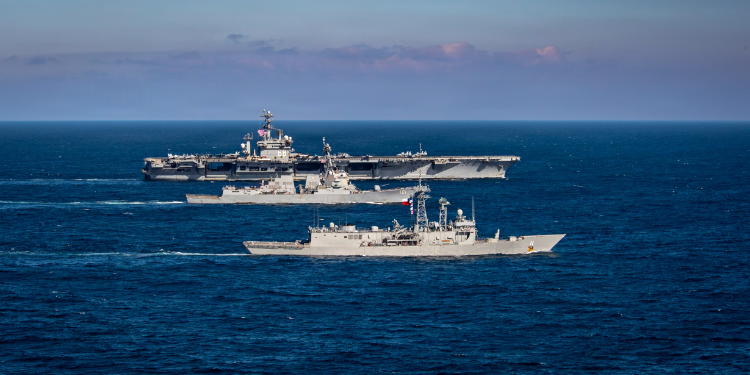
Aircraft carrier USS Nimitz arrives in the Caribbean
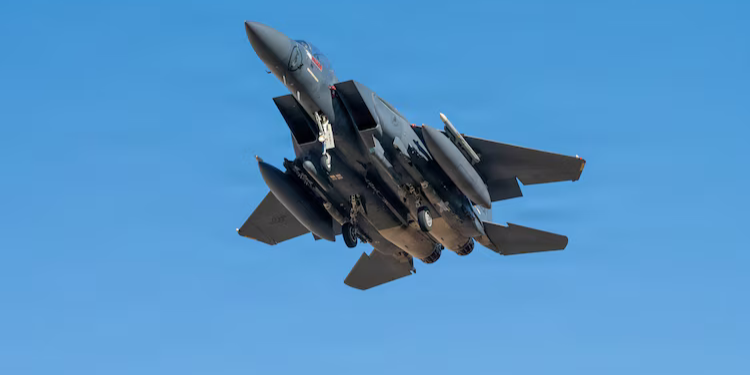
At nearly the same time, U.S. Southern Command (SOUTHCOM) announced that the USS Nimitz Carrier Strike Group had entered the Caribbean, a move Cuban officials and regional analysts immediately interpreted as a show of force.
“The aircraft carrier USS Nimitz (CVN 68), the embarked Carrier Air Wing 17 (CVW-17), USS Gridley (DDG 101), and USNS Patuxent (T-AO 201) are the epitome of readiness and presence, unmatched reach and lethality, and strategic advantage. USS Nimitz has proven its combat prowess across the globe, ensuring stability and defending democracy from the Taiwan Strait to the Arabian Gulf.”
The deployment comes amid broader Trump administration efforts to tighten economic pressure on Havana through sanctions, fuel restrictions and financial isolation measures that have worsened Cuba’s ongoing humanitarian and energy crisis.
Despite the increasingly aggressive posture, Trump has recently attempted to balance threats with suggestions of diplomacy.
Also Read: Trouble in U.S. as Cuba Acquires 300 Drones in Plan to Target Florida, Guantanamo Bay
The president has earlier claimed Cuba is “asking for help” and hinted at possible negotiations with Havana, while also insisting the communist-run island is “a failed nation.”
Secretary of State Marco Rubio also offered the island nation a proposed $100 million humanitarian aid package tied to political reforms, including expanded internet access and food assistance.
Cuban officials reacted cautiously, accusing Washington of trying to exploit the island’s economic suffering for political leverage.
In Havana, President Miguel Díaz-Canel sharply condemned the indictment against Castro as a “political maneuver without any legal basis,” warning earlier this week that any military assault on Cuba would trigger “a bloodbath with incalculable consequences.”
The White House has denied that military intervention is imminent, and U.S. officials earlier this month told the Associated Press there are currently no plans for immediate military action against Havana despite Trump’s repeated comments suggesting “Cuba is next.”