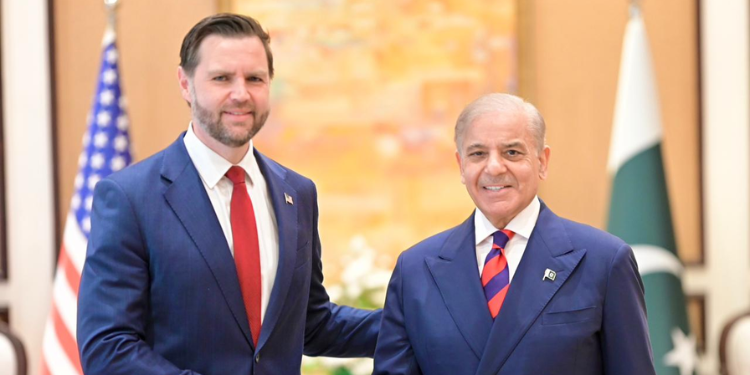
U.S. Vice President JD Vance has reportedly canceled a planned visit to Pakistan as uncertainty grows over whether a new round of ceasefire talks between the United States and Iran will take place.
The trip had been expected to yet again position Vance at the center of negotiations in Islamabad, but a U.S. official said Vance’s visit was called off as prospects for talks became unclear.
This comes as President Donald Trump on Tuesday, April 21, said the United States is extending its ceasefire with Iran at Pakistan’s request as he waits for a unified proposal from the Islamic Republic.
“Based on the fact that the Government of Iran is seriously fractured, not unexpectedly so and, upon the request of Field Marshal Asim Munir, and Prime Minister Shehbaz Sharif, of Pakistan, we have been asked to hold our Attack on the Country of Iran until such time as their leaders and representatives can come up with a unified proposal,” said Trump.
“I have therefore directed our Military to continue the Blockade and, in all other respects, remain ready and able, and will therefore extend the Ceasefire until such time as their proposal is submitted, and discussions are concluded, one way or the other.”
The announcement came as last-minute ceasefire talks between the U.S. and Iran looked uncertain, and a two-week truce was set to expire Wednesday.
Iran has indicated it has not made a final decision on whether to participate in the talks, citing unresolved disputes with Washington.
U.S. and Iran hold firm positions
Foreign Ministry spokesperson Esmail Baghaei on Tuesday told state television there has been “no final decision” on attending, citing “unacceptable actions” by the United States, including its ongoing naval blockade.
Separately, Iran has informed the U.S. through Pakistani intermediaries that it will not attend the talks, describing them as “a waste of time,” according to reports by the semi-official Tasnim news agency.
Iranian sources cited Washington’s refusal to ease its demands, the continued blockade in the Strait of Hormuz, and the failure to extend the ceasefire to include fighting involving Hezbollah in Lebanon as key reasons for the decision.
Also Read: Trump Fires Back at Iran, Accusing Them of Repeated Ceasefire Violations
Pakistani officials, including Prime Minister Shehbaz Sharif, have been working to secure agreement from both sides for a second round of negotiations.
Security has been tightened in Islamabad as authorities prepared for the possibility of high-level talks.
Despite these efforts, U.S. President Donald Trump earlier expressed reluctance to extend the truce, saying in an interview, “I don’t want to do that.” Trump had also warned that “lots of bombs” could follow if no agreement is reached before the deadline.
Both sides have maintained firm public positions ahead of the deadline. Iran’s chief negotiator has said Tehran has “new cards on the battlefield,” while U.S. officials say multiple options remain on the table even if talks collapse.
Iran’s envoy to the United Nations said Tehran has received indications that Washington may be willing to lift its blockade of Iranian ports, a key condition for resuming negotiations.
Strait of Hormuz at the center of dispute
However, the United States has not provided any public confirmation, as control of the Strait of Hormuz remains a central issue in the negotiations.
The United States imposed a blockade to pressure Iran to allow unimpeded passage through the vital shipping lane, which handles roughly 20% of global oil and gas flows under normal conditions.
Also Read: Iran Claims Oil Tanker Entered Its Waters Despite US Threats
Iran’s actions in the Strait have contributed to a sharp rise in oil prices, with Brent crude trading near $95 per barrel, up more than 30% since late February.
Even as diplomatic efforts continue, military activity has intensified. The Pentagon on Tuesday said that U.S. forces boarded a sanctioned oil tanker, the M/T Tifani, in international waters without incident. Ship-tracking data placed the vessel in the Indian Ocean between Sri Lanka and Indonesia.
The U.S. military has also seized an Iranian container ship in recent days, marking the first interception under its current blockade campaign. Iran has described such actions as piracy and a violation of the ceasefire.
U.S. special envoy Steve Witkoff and senior adviser Jared Kushner were expected in Washington for consultations on next steps, according to a U.S. official.
Pakistan has remained actively involved in mediation efforts, engaging with both U.S. and Chinese diplomats to keep negotiations alive.
The first round of talks held earlier in April ended without agreement, and no date has been confirmed for a second round.
With the ceasefire deadline approaching and positions hardening on both sides, the prospect of renewed conflict remains a growing concern.