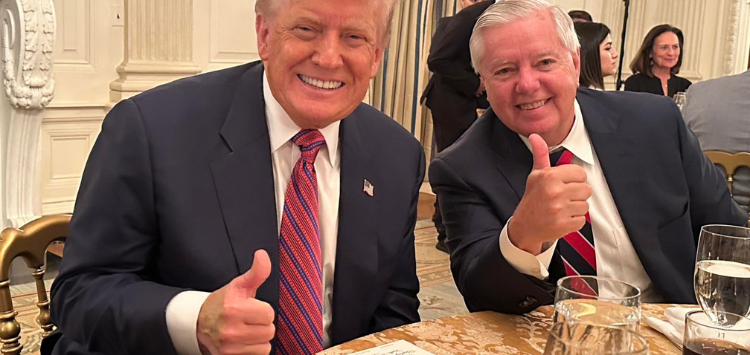

U.S. President Donald Trump has announced that the ceasefire between Israel and Lebanon will be extended by three weeks following a meeting at the White House with senior representatives from both countries.
In a Truth Social post issued after the Oval Office talks on Thursday, April 23, Trump said the discussions “went very well” and confirmed that the United States would work with Lebanon to help it “protect itself from Hezbollah.”
He described the meeting as “historic” and said Washington would continue to play a central role in facilitating negotiations between the two sides.
Trump announces extension of Israel-Lebanon ceasefire
The meeting was attended by Vice President J.D. Vance, Secretary of State Marco Rubio, U.S. Ambassador to Israel Mike Huckabee, and U.S. Ambassador to Lebanon Michel Issa, along with high-ranking Israeli and Lebanese representatives.
Trump said he expects to host Israeli Prime Minister Benjamin Netanyahu and Lebanese President Joseph Aoun in the near future as part of continued diplomatic engagement aimed at stabilizing the border and advancing talks toward a broader agreement.
“The meeting went very well! The United States is going to work with Lebanon in order to help it protect itself from Hezbollah. The ceasefire between Israel and Lebanon will be extended by three weeks. I look forward in the near future to hosting the Prime Minister of Israel, Bibi Netanyahu, and the President of Lebanon, Joseph Aoun,” Trump said.
Also Read: Israel Presses Lebanon to Confront Hezbollah Despite Ongoing Military Tension
The extension follows a U.S.-brokered cessation of hostilities that began on April 16 for an initial period of 10 days, intended to create space for direct negotiations between Israel and Lebanon.
The agreement, reached after talks on April 14, outlined a framework under which both countries would work toward conditions conducive to long-term peace, mutual recognition of sovereignty, and enhanced security along their shared border.
Under the terms of the ceasefire, Israel agreed not to carry out offensive military operations against Lebanese targets by land, air, or sea during the truce period, except in cases of self-defense against imminent or ongoing threats.
Lebanon, for its part, committed to taking steps to prevent non-state armed groups from launching attacks against Israeli targets.
The agreement emphasized that only Lebanon’s official security institutions—including the Lebanese Armed Forces, Internal Security Forces, and other state agencies—should be authorized to bear arms within the country.
Both sides also agreed to engage in good-faith negotiations, facilitated by the United States, with the aim of reaching a comprehensive agreement addressing security concerns and unresolved border issues.
Ongoing strikes
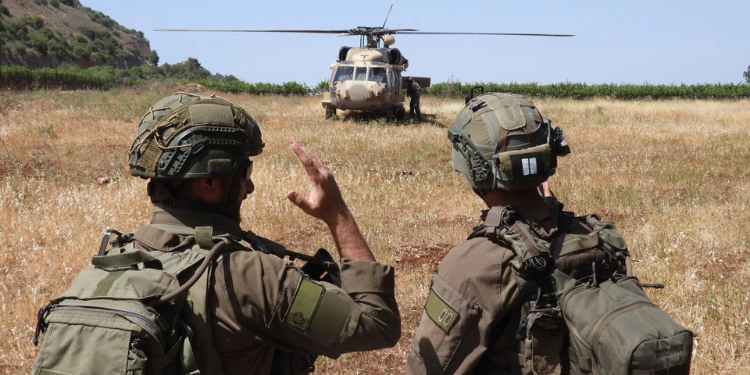
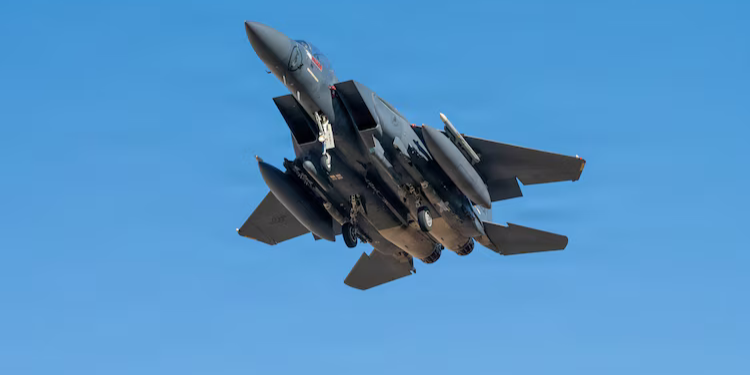
Despite the ceasefire, hostilities have continued along the border. The Israeli military on Thursday said it carried out strikes in southern Lebanon targeting individuals it described as fighters from Hezbollah who had attempted to launch a surface-to-air missile toward an Israeli aircraft.
It said the individuals were killed in the operation and accused Hezbollah of violating the ceasefire understandings.
Hezbollah, on its part, said it launched rockets toward northern Israel in response to Israeli actions, stating that the attacks were carried out “in defense of Lebanon and its people” following what it described as Israeli strikes on towns in southern Lebanon during the truce period.
The Israeli military said sirens sounded in areas near the border and that air defense systems intercepted several projectiles that crossed into Israeli territory.
Also Read: Netanyahu Defies European Pressure, Orders Expansion of Israel’s Lebanon Campaign
The exchange of fire comes amid the fragility of the ceasefire, with both sides accusing each other of breaches while maintaining their participation in the U.S.-facilitated process
Reports from southern Lebanon have also indicated casualties in recent days, including incidents involving civilians and local infrastructure.
The ceasefire framework allows for extensions if both parties agree and if progress is made in negotiations, particularly in Lebanon’s efforts to assert control over armed groups operating within its territory.
The three-week extension announced by Trump marks the first such prolongation of the agreement since it came into effect.
Earlier, the United States said it would continue to facilitate direct negotiations between Israel and Lebanon, with the objective of resolving outstanding issues, including the demarcation of the international land boundary and the establishment of long-term security arrangements along the border.
U.S. officials have said the ceasefire is intended to create conditions for diplomacy while reducing the risk of further escalation.
The agreement also calls for international support to help Lebanon strengthen its state institutions and ensure that only official forces are responsible for national defense and security.
Further talks between Israeli and Lebanese representatives are expected to continue during the extended ceasefire period, with the United States maintaining its role as mediator.
No specific timeline has been announced for a comprehensive agreement, but officials have indicated that negotiations will proceed in parallel with efforts to maintain the truce on the ground.