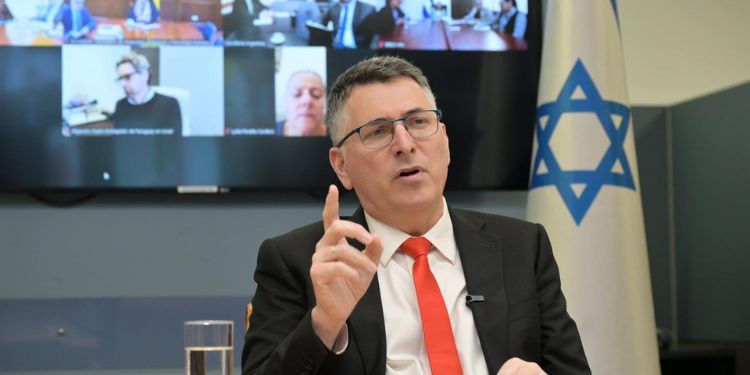
Israel’s Foreign Minister Gideon Sa’ar has called on Lebanon to cooperate with Israel in confronting Hezbollah, describing the Iran-backed group as the primary barrier to peace and stability for both countries.
According to Al Jazeera on April 22, Sa’ar urged Lebanon to pursue joint efforts with Israel to counter Hezbollah as talks between the two sides prepare to resume in Washington, D.C.
Speaking on April 22, ahead of the second round of rare direct negotiations scheduled for April 23, Sa’ar said such cooperation is necessary and would benefit Lebanon even more than Israel.
“This cooperation is needed by you even more than by us,” Sa’ar said. “It requires moral clarity and the courage to take risks. But there is no real alternative for ensuring a future of peace for you and for us.”
Sa’ar has repeatedly framed the situation by asserting that Israel and Lebanon “don’t have any major disputes” other than Hezbollah, which he describes as undermining Lebanese sovereignty while posing a direct security threat to northern Israel.
Ceasefire Holds Uneasily Along the Border
The remarks come despite a U.S.-brokered 10-day cessation of hostilities that followed weeks of intense fighting.
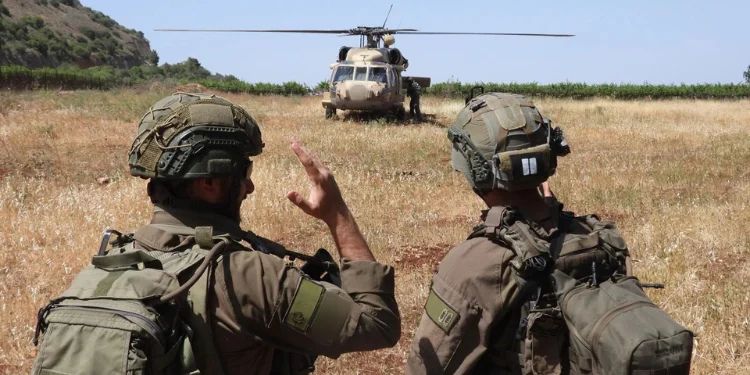
While the truce has reduced large-scale confrontations, it remains fragile. Israeli forces continue to hold positions in parts of southern Lebanon as a security measure, and Defense Minister Israel Katz has warned that troops will respond with “full force” to any threats.
On April 22, the Israeli military reported that two Hezbollah operatives were killed in southern Lebanon. According to the Israeli account, the individuals crossed a ceasefire line near the Wadi Saluki area, approached troops in a threatening manner, and were struck by an airstrike.
Also Read: Netanyahu Defies European Pressure, Orders Expansion of Israel’s Lebanon Campaign
How the Current Confrontation Unfolded
Hezbollah, a powerful Shia militant and political movement in Lebanon, entered the wider regional conflict on March 2 in support of its main backer, Iran.
This triggered intensified rocket fire, drone attacks, and cross-border clashes with Israel. In response, Israel launched a large-scale military campaign that included expanded airstrikes across Lebanon and a ground operation in the south.
The stated aims included weakening Hezbollah’s military capabilities near the border, rocket launchers, anti-tank positions, and infrastructure, and establishing a forward defense zone to protect Israeli communities in the north.
The confrontations resulted in heavy casualties, with more than 2,000 deaths reported in Lebanon, widespread displacement on both sides of the border, and extensive damage to villages and towns in southern Lebanon.
Also Read: Israel Army Forces to Remain in Lebanon, Says Ceasefire is Temporary
Washington Talks Mark Unusual Diplomatic Step
Israel and Lebanon have no formal diplomatic ties and have technically remained in a state of war since 1948.
The current negotiations mark the first direct talks in decades, with the first round taking place on April 14, at the U.S. State Department, with American representatives, including Secretary of State Marco Rubio, mediating.
The second round, scheduled for April 23, is expected to address:
- Security arrangements along the shared border
- Measures to prevent future violations
- Hezbollah’s military presence south of the Litani River
- Steps toward a more permanent agreement, potentially involving Israeli withdrawal in exchange for Lebanese state control and the disarmament of non-state armed groups.
Lebanon Caught Between Diplomacy and Armed Reality
Hezbollah holds strong political influence within Lebanon’s divided political system and maintains a well-armed force that operates separately from the Lebanese Armed Forces.
Any effort by Beirut to confront or disarm the group risks deepening internal divisions in a country already struggling with economic collapse, political paralysis, and post-conflict reconstruction.
Israeli leaders insist that lasting peace requires the removal of Hezbollah’s military presence from the border region, either through Lebanese action or coordinated international steps.
The coming days will test whether diplomacy can stabilize the fragile ceasefire or whether ongoing incidents and mutual distrust will result in renewed escalation.
Regional and international actors, including the United States and Iran, are closely monitoring developments.