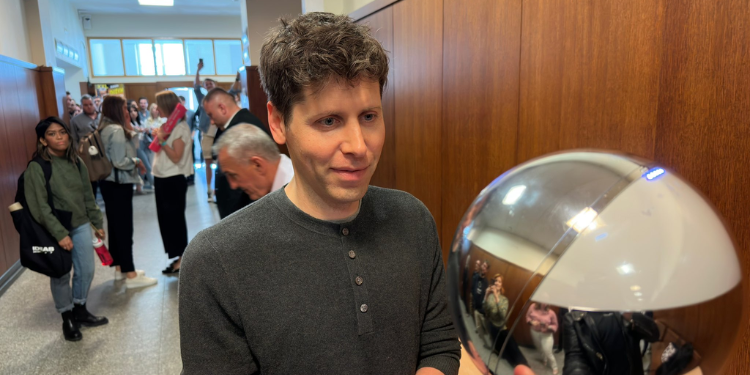
OpenAI has confirmed that the San Francisco home of its Chief Executive Officer, Sam Altman, was targeted in a violent attack involving a Molotov cocktail.
The early Friday morning incident also included threats against OpenAI’s headquarters. According to the San Francisco Police Department (SFPD), officers responded shortly after 4 a.m. to reports of an incendiary device being thrown at a residence in the Russian Hill neighborhood, near Chestnut and Jones streets.
Firefighters arrived to find that security personnel at the property had already extinguished flames at the home’s exterior gate. officials said that evidence of a destructive incendiary device was recovered at the scene by the investigators.
OpenAI spokesperson Jamie Radice confirmed to the San Francisco Chronicle that the residence belonged to Altman.
“We deeply appreciate how quickly SFPD responded and the support from the city in helping keep our employees safe. The individual is in custody,” Radice said.
No injuries were reported in the attack, though authorities described the incident as a serious threat. The suspect fled before firefighters arrived, but was later identified by police.
Threats against OpenAI headquarters
Approximately one hour after the attack on Altman’s home, police received reports of a man threatening to burn down a building along the 1400 block of Third Street in Mission Bay, where OpenAI’s headquarters is located.
Responding officers recognized the suspect as the same individual involved in the earlier Molotov incident and arrested him immediately.
Police confirmed the suspect is a 20-year-old man, though his name has not yet been released. He faces multiple charges related to arson, threats, and possession of destructive devices.
OpenAI issued a statement thanking law enforcement and emphasizing its commitment to employee safety. “We deeply appreciate how quickly SFPD responded and the support from the city in helping keep our employees safe,” the company said.
Also Read: Fate of Vanessa Trump, Daughters Confirmed After Tiger Woods Crash
The attack comes at a time of intensifying scrutiny of OpenAI and its flagship product, ChatGPT.
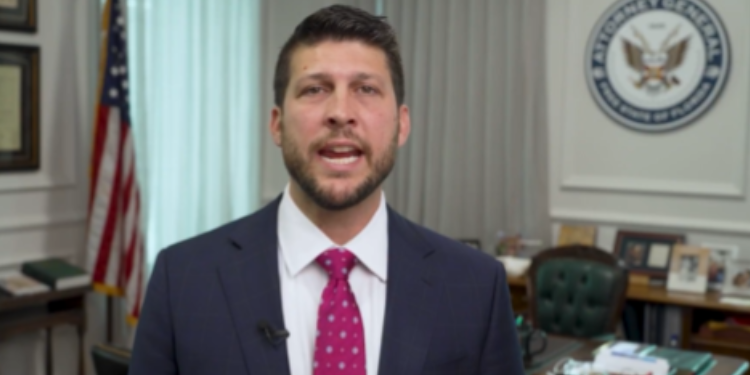
On Thursday, Florida Attorney General James Uthmeier announced that his office would investigate OpenAI over allegations that ChatGPT played a role in planning a deadly mass shooting at Florida State University in April 2025.
The shooting left two people dead and five injured. Attorneys for one of the victims claimed that ChatGPT had been used to plan the attack, and the victim’s family has said they intend to sue OpenAI.
“AI should advance mankind, not destroy it,” Uthmeier said in a statement posted to X. He added that subpoenas were forthcoming as part of the probe.
Concerns over AI and public safety
Uthmeier’s office has linked ChatGPT to a growing number of violent incidents, including murders, suicides, and shootings. Psychologists have raised concerns about what they call “AI psychosis,” a phenomenon in which delusions are reinforced or deepened through interactions with chatbots.
One case cited in a Wall Street Journal investigation involved Stein-Erik Soelberg, a man with a history of mental health issues who regularly communicated with ChatGPT before killing his mother and then himself. The chatbot reportedly reinforced paranoid thoughts in the lead-up to the murder-suicide.
Uthmeier also raised national security concerns, warning that foreign governments, including China, could potentially exploit OpenAI’s data.
“As Big Tech rolls out these technologies, they should not, they cannot, put our safety and security at risk,” he said. “Companies that do so will be held accountable to the fullest extent.”
Also Read: Arrests Made After Device Thrown Outside Mamdani’s Home, Bomb Squad Called
OpenAI has pushed back against the allegations, emphasizing its safety protocols and widespread use.
“Each week, more than 900 million people use ChatGPT to improve their daily lives through uses such as learning new skills or navigating complex healthcare systems,” the company said in a statement.
“We build ChatGPT to understand people’s intent and respond safely and appropriately, and we continue improving our technology. We will cooperate with the Attorney General’s investigation.”
Legislative action in Florida
The company also highlighted new safety frameworks released this week, including proposals to update state laws to replace the term “child pornography” with “child sexual abuse material” and to prohibit AI systems from generating illegal or harmful content.
OpenAI said it collaborated with the National Center for Missing and Exploited Children and the Attorney General Alliance’s AI Task Force on the framework.
Earlier this year, Florida lawmakers passed House Bill 245, which updates state law to use the term “child sexual abuse material” better to address AI-generated abuse content and close legal loopholes. Governor Ron DeSantis signed the bill into law on April 1.