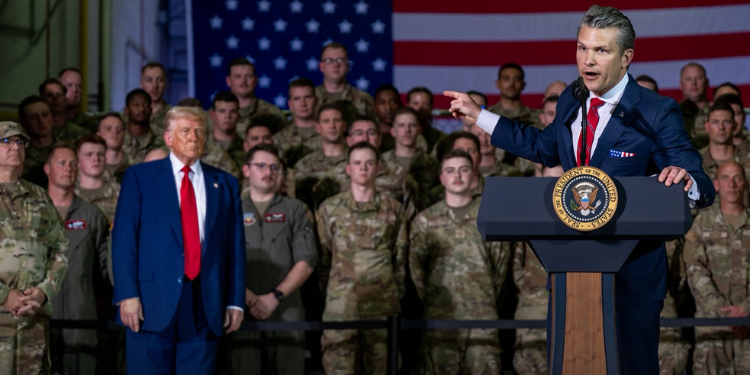
Nearly 160 recruits at Lackland Air Force Base have fallen ill with the flu in recent weeks, just months after Defense Secretary Pete Hegseth ended the military’s long-standing mandatory flu vaccination policy.
CBS News reported on Thursday, June 18, that the outbreak has hit the 37th Training Wing, which runs basic military training for all enlisted recruits entering the Air Force, Space Force, Air Force Reserve, and Air National Guard.
Close-quarters training environment linked to rapid spread
The base, part of Joint Base San Antonio, houses thousands of trainees in close quarters where they eat, sleep, and train together.
An Air Force spokesperson told the publication the 37th Training Wing and the 59th Medical Wing have been managing a localized influenza outbreak among trainees for the past three weeks.
The New York Times first reported the scale of the problem, with at least 159 recruits sickened, according to accounts shared with multiple outlets.
Vaccination rates drop after policy change
Only about 40 percent of Air Force trainees have chosen to get the flu shot since the mandate ended, sources familiar with the situation said.
That figure is slightly below the national average for adults this past flu season, which the Centers for Disease Control and Prevention put at 46 percent.
Hegseth announced the policy change in April and said the Pentagon was “seizing this moment to discard any absurd, overreaching mandates that only weaken our warfighting capability.”
He specifically mentioned ending the universal flu vaccine requirement. “Your body, your faith and your convictions are not negotiable,” Hegseth added.
Debate over personal choice and military readiness
The move gave service members more personal choice but came as the military entered the 2025-26 flu season.
Pentagon officials have since clarified that individual services and certain agencies can still require the vaccine in specific situations after risk assessments.
Chief Pentagon spokesman Sean Parnell said exceptions to the new policy were granted where needed to protect operational readiness, lethality, force generation and at-risk groups.
The Army, Navy, Air Force, National Security Agency and Defense Health Agency handle their own implementation.
At Lackland, commanders have now ordered flu vaccinations for recruits as part of efforts to contain the outbreak.
Also Read: Man Arrested After Breach at Foreign Airport Left US Military Plane Damaged
Symptomatic trainees are being isolated and treated with antiviral drugs such as Tamiflu. Medical teams are also monitoring anyone who may have been exposed.
Lackland is the Air Force’s largest training wing. Recruits live in dormitory-style settings known to speed up the spread of respiratory illnesses.
Officials have not said exactly when the first cases appeared, but the surge started after the April policy shift.
Death of trainee under investigation
On Wednesday, the Air Force announced the death of Keon McDaniel, a trainee in his sixth week of basic training.
McDaniel suffered a medical emergency on June 12 and was taken to Brooke Army Medical Center. He died on June 16. The cause remains under investigation, and it is not clear whether flu played any role.
The Air Force has stressed that it is focused on treating the ill and preventing further spread. A Pentagon spokesperson referred questions about the outbreak back to the Air Force.
Also Read: U.S. Vaccine Funding Freeze Sparks Fears of Massive Loss of Lives in Poor Countries
This is not the first time a military training base has dealt with respiratory outbreaks. Close living conditions, stress and the mixing of people from across the country have long made such facilities vulnerable.
What stands out this time is the coincidence with the end of mandatory flu shots.
Hegseth’s decision was meant to be a major push to roll back what he and other Trump administration officials have called unnecessary government requirements on service members
Services can still step in with mandatory measures when outbreaks threaten training pipelines or overall mission capability.
Officials have not released a full breakdown of how many cases are mild versus more serious, but the sheer number has required a coordinated medical response.