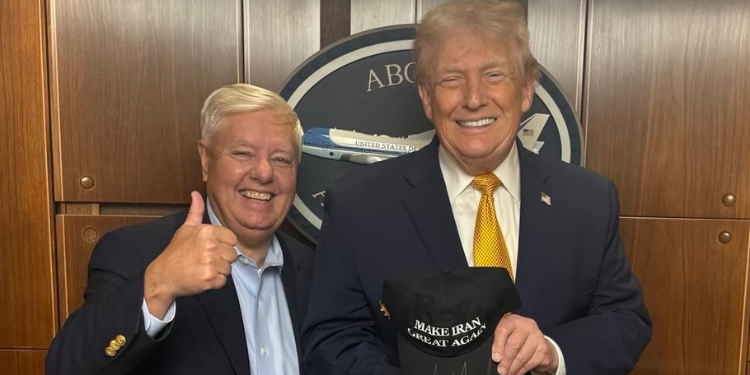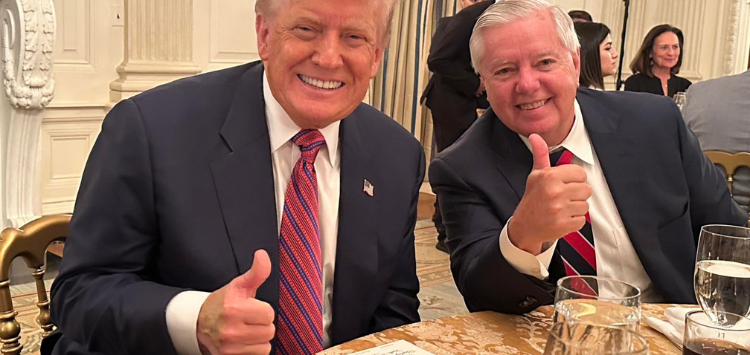
US Senator Lindsey Graham has raised sharp concerns about Pakistan’s role as a mediator in the ongoing US-Iran diplomatic efforts to end the war, arguing that the country’s political stance toward Israel and recent security allegations make it unsuitable for such a role.
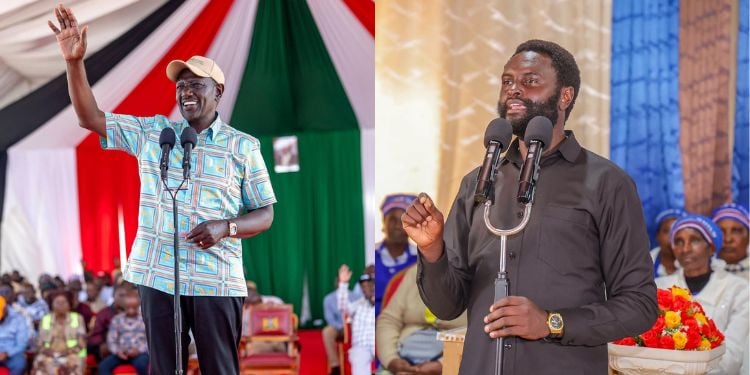
Graham made the remarks while reacting to a public post quoting Pakistan’s Defense Minister Khawaja Asif, who allegedly dismissed the idea of Pakistan joining any agreement involving Israel.
The post included comments attributed to Asif that rejected the Abraham Accords framework and described it as incompatible with Pakistan’s core ideological position.
Graham Questions Pakistan’s Neutrality
In his response, Graham questioned whether Pakistan could be trusted as a neutral broker in the ongoing, sensitive Middle East negotiations.
He pointed to what he described as long-standing hostility toward Israel within segments of Pakistan’s political leadership and broader state policy positions.
“It has been apparent to me for quite a while that Pakistan as a mediator is more than problematic,” Graham said. “Their animosity towards Israel is long-standing. It is undeniable that Iranian military aircraft are being housed on Pakistani air bases, and past rhetoric from the highest Pakistani officials against Israel is disturbing.”
Khawaja Asif reportedly said Pakistan could not enter agreements involving Israel because of what he called “fundamental ideological differences.”
Also Read: Iran Removes Toll on Strait of Hormuz, Introduces New Hidden Charges
In the quoted remarks, Asif also questioned the trustworthiness of Israel and stated that Pakistan’s passports do not recognize Israel by name.
Graham argued that such positions raise questions about whether Pakistan could fairly participate in negotiations to end the war between the US and Iran.
He stressed that any mediator involved in discussions aimed at ending the war should be able to engage with all parties in a balanced manner, including Israel.
Trump Pushes Wider Middle East Deals
The senator referenced the ongoing geopolitical tensions in the Middle East and President Trump’s call to expand the Abraham Accords frameworks and include more countries on board to have an agreement with Israel.
He suggested that Washington is increasingly focused on ensuring that any country involved in mediation efforts maintains at least a baseline level of neutrality toward all parties.
Claims Iranian Jets Used Pakistani Bases
Graham also raised security-related concerns and said that Iranian military aircraft were being sheltered at Pakistani air bases during the Epic Fury operation, in which the U.S. and Israel targeted Iranian military assets, including fighters.
He used the claim to reinforce his argument that Pakistan’s role in regional security dynamics is deeply complicated.
CBC News reported earlier this month that Pakistan quietly allowed Iranian military aircraft to park on its airfields, potentially shielding them from American airstrikes, according to U.S. officials with knowledge of the matter.
According to the publication, soon after President Trump announced the ceasefire with Iran in early April, Tehran sent multiple aircraft to Pakistan Air Force Base Nur Khan.
Also Read: No Rushing into a Deal: Trump Changes Tune on Push for Immediate Iran Deal
However, a senior Pakistani official rejected the claims, saying that “Nur Khan base is right in the heart of the city, with a large fleet of aircraft parked there, and cannot be hidden from the public eye.”
Historically, Pakistan has followed a policy of not recognizing Israel, consistent with the wider stance of many Muslim-majority nations that do not maintain formal diplomatic ties with Tel Aviv.
The United States continues to balance pressure campaigns on Tehran with intermittent efforts to end the war, which started early this year.
The war has driven up and raised gas prices after Iran closed the Strait of Hormuz, through which nearly 20 percent of global oil passes.
Debate Grows Over Mediator Credibility
Graham’s remarks hint at growing political scrutiny in Washington over which countries should be trusted as intermediaries in any renewed US-Iran engagement. Supporters of his position argue that mediators must be perceived as neutral by all sides.
But critics say excluding key regional players narrows diplomatic options and ignores existing geopolitical realities in which countries with complicated relationships still have a role to play in backchannel negotiations.