Iranian officials have stated that there will be no toll on ships passing through the Strait of Hormuz, while confirming that vessels will need to pay for maritime services and environmental measures.
The announcement came during a foreign ministry press briefing in Tehran. It follows weeks of tension over access to the strategic waterway, which carries about 20 percent of global seaborne oil and gas shipments.
Official Position
Foreign ministry spokesman Esmail Baghaei addressed the issue directly in response to a question from ABC News.
“There is no toll,” Baghaei said. “We need to pay attention to the words we use. We’re not after money. Iran and Oman need to create protocols for the safe passage of ships, and this will be based on international laws.”
Baghaei added that costs would apply for services such as navigation and ecosystem preservation in the Persian Gulf and the Sea of Oman. He said these payments should not be viewed as tolls.
This marks Iran’s first detailed public response to recent United States comments suggesting a possible deal to reopen the strait as part of efforts to end the current conflict.
New Management System
Iranian and Omani officials have held meetings to discuss joint management of the strait. Iran describes the effort as a responsible action by the coastal states.
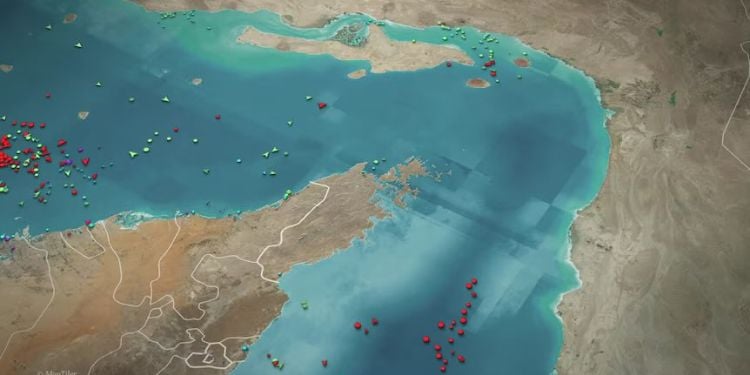
Traffic through the strait has fallen sharply since Iran restricted access earlier this year using forces from the Islamic Revolutionary Guard Corps. Daily vessel counts dropped from 125 to 140 before the conflict to only a few ships.
The restrictions have raised oil prices and affected global energy supplies, including fuel, fertilizer, and food costs in many countries.
Legal Questions
Associate professor of international law at Flinders University, Hossein Esmaeili, said coastal states hold certain rights over their territorial waters in international straits.
Esmaeili noted that countries can regulate passage for safety and pollution control. He added that they cannot charge for innocent passage itself, although environmental or service fees sometimes appear in practice.
Also Read: Rubio Warns NATO to Prepare ‘Plan B’ if Iran Keeps Strait of Hormuz Shut
Iran says it has a legal right to manage the Strait of Hormuz and argues that its actions are intended to improve security in the Persian Gulf after what it describes as 50 years of instability.
Why This Matters
The Strait of Hormuz remains one of the world’s most important energy routes. Any changes to how ships move through it can directly affect global oil markets, shipping costs, and overall energy security for many countries that depend on steady fuel supplies.
A proposed framework deal would see Iran restore safe transit in exchange for the end of a US naval blockade of Iranian ports. Nuclear matters would be discussed separately in a later phase.
The payments now under discussion add a financial layer to these negotiations. Shipping companies and oil exporters must weigh the new costs against the risks of trying to avoid them. Oman’s involvement as a co-coastal state may shape the final system that emerges.