The Trump administration is scrambling behind closed doors as the grinding reality of its war with Iran exposes deep cracks in America’s military arsenal and economic playbook.
Weeks into the conflict, the Pentagon planners are said to be facing the following alarming fact: the U.S. has already launched more than 850 Tomahawk cruise missiles against Iranian targets, using up the stockpiles of the weapon that the Pentagon officials in classified sessions have referred to as “alarmingly low.”
What was meant to be a swift display of force has become a costly grind with production lines struggling to keep up and allies in Taiwan and Europe quietly voicing concerns about the diversion of resources.
The figures paint a dramatic picture.
Each Tomahawk has a 1,000-pound warhead and costs more than $3 million. The Navy had budgeted only 57 of the missiles for the upcoming fiscal year before the fighting began.
Now, with hundreds expended in relentless strikes on command centers, missile sites, and hardened bunkers, the cupboard is looking bare. One insider familiar with the assessments says that the Navy will feel this hit for years.
Also Read: Trump Is Losing Iran War, Marine Veteran Says as He Points Out Key Sign
However, The Pentagon played brave when the Daily Mail contacted them for a comment, noting the military has all it needs to win the ongoing war with Iran.
‘The Department of War has everything it needs to execute any mission at the time and place of the President’s choosing and on any timeline,’ Pentagon spokesman Sean Parnell is quoted by the publication on Friday, March 27.
Adding to the headache, Iran has tightened its grip on the Strait of Hormuz, the narrow chokepoint that normally carries about one-fifth of the world’s oil supply.
Tanker traffic has slowed to a crawl amid threats from Iranian forces, sending Brent crude prices spiking above $110 a barrel and rattling everything from gas pumps in the Midwest to factory floors in Asia.
Global markets are on edge, with analysts saying that continued disruptions could send prices even higher and could throw already unstable economies into further chaos.
In the White House and the Pentagon, there is a new mood of damage control, replacing earlier predictions of a rapid victory.
Defense Secretary Pete Hegseth and top military brass have huddled with lawmakers on Capitol Hill, floating the idea of a massive supplemental spending bill, potentially $50 billion or more, to ramp up weapons output.
Defense contractors like RTX, which builds the Tomahawks, have been summoned for talks about quadrupling production. But even optimistic timelines indicate it might take months, if not years, to rebuild what’s been spent in a matter of weeks.
The strain is rippling far beyond the Persian Gulf. Officials in the Indo-Pacific are watching nervously as long-range strike capabilities critical to any showdown with China are siphoned off to the Middle East.
Taiwan has voiced private concerns about the depletion, according to reports, fearing that a distracted and understocked America might embolden Beijing.
Even partners in Europe are recalculating their own defense needs in light of the unexpected burn rate.
Trump says U.S. is winning the Iran war
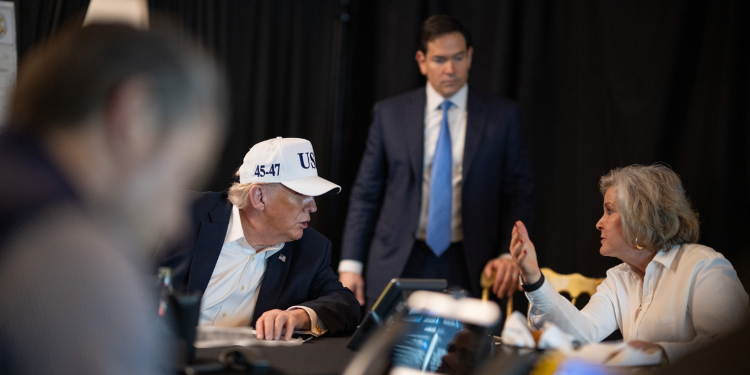
President Trump has continued to project strength in public. He has insisted the U.S. has the firepower to finish the job and that negotiations with Tehran could still yield results.
On Truth Social and in brief remarks, he has downplayed the shortages, citing recent meetings with industry executives as evidence that American manufacturing muscle will rise to the occasion. “We’re going to make more, and better, and faster than anyone,” he said in one recent post.
Also Read: Panic as Trump Is Warned of Severe Consequences for American Lives Over Massive Iran Bombing Plan
The toll in lives and dollars is growing. There were unexpected consequences in those early strikes, including casualties among civilians. At least 13 U.S. military personnel have died since the Iran war began late last month.
Lawmakers from both parties are beginning to ask tougher questions about the strategy: What’s the end game? How long can this pace be sustained without withdrawing from other global commitments?
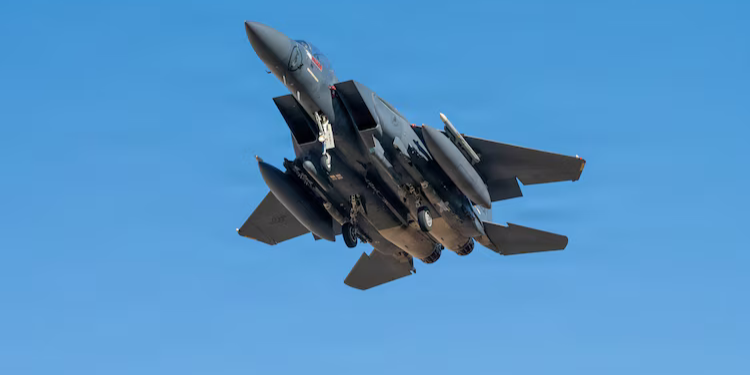
At the moment, the administration is proceeding on multiple fronts, urging allies to help enforce freedom of navigation in the Strait, accelerating alternative strike options like stealth fighter missions, and leaning on diplomacy to ease the oil chokehold.
President Trump recently announced he had put on hold the plan to strike Iran’s power plant for at least 10 days. He noted that positive talks were underway. On Thursday, he told Fox News that Iran had asked for days, but he decided to give them three more days.