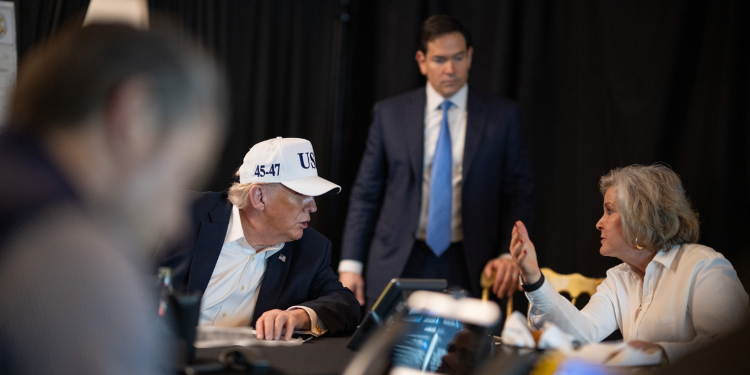
There are clear signs that President Donald Trump is either losing or has lost the war with Iran, according to a Marine veteran serving in the Congress. Rep. Seth Moulton, a Marine Corps veteran and Democratic congressman from Massachusetts, said the U.S. is losing its conflict with Iran and will have to negotiate with Tehran even if fighting stops today.
Moulton made the remarks on Wednesday, March 25, just hours after President Donald Trump posted on Truth Social concerning rescheduling a summit with Chinese President Xi Jinping.
The meetings, originally postponed due to the military operation in Iran, are now scheduled for May 14 and 15 in Beijing. Trump said he and First Lady Melania Trump will host Xi and his wife for a return visit in Washington later this year.
Moulton based his argument on the problems in the Strait of Hormuz, noting that if Iran’s war ends today, it means Trump will have to negotiate with Iran to have American ships sail through this canal.
Sign Trump is losing the war.
Moulton believes Trump’s scheduled meeting with his Chinese counterpart is to seek help over the matter of the Iran war.
“Really? Because if we were to stop today, we would have to negotiate with the Iranians to reopen the strait, which, just to be clear, was open before Trump started his war,” Moulton said.
“That’s why he’s even begging the Chinese to help him with the Strait. That’s how pathetic it’s become. He is losing this war without question, and we’ve got to put a stop to this before it gets much worse.”
Also Read: Iran War Pushes Trump Into FISA U-Turn
The strait carries roughly one-fifth of global oil shipments. Before the U.S. and Israeli strikes on Iranian nuclear and military sites in late February, traffic moved normally.
After the attacks, Iran mined sections of the waterway, fired on vessels, and effectively shut down most commercial shipping.
Oil prices reacted sharply. Brent crude rose more than 40 percent in the opening weeks, driving up gasoline costs for American drivers and increasing expenses for airlines, trucking companies, and manufacturers.
U.S. Navy forces moved into the region to protect shipping and challenge the Iranian moves, but clearing mines and securing the route has proven difficult.
Few allies have sent significant help in the form of minesweepers or escorts, leaving American ships to bear most of the burden.
Moulton, who served in Iraq as a Marine, used his military background to shed more light on the situation. He noted that the president has repeatedly claimed progress or victory in the ongoing war with Iran, yet the alleged need to ask China for ”assistance” on the strait shows the opposite.
Also Read: Tense Moment as Netanyahu Hurriedly Bombs Iran Over Fears of a New Trump Deal With Tehran
The conflict heightened after U.S. airstrikes targeted Iranian facilities. Iran hit back with missiles and drones across the region and turned the Strait into a contested zone.
Deadlines for Iran to reopen the waterway have passed with little change. Shipping remains heavily disrupted, forcing reroutes around Africa and higher insurance costs for any tankers still willing to transit the area.
At home, the price spikes have added pressure on household budgets already dealing with inflation in food and other goods.
Energy markets show Asian buyers scrambling for alternative supplies, sometimes tapping reserves or paying premiums for distant sources.
Trump says positive talks with Iran are underway.
Trump has spoken about ongoing talks aimed at ending the hostilities and getting oil flowing again. Yet Iranian actions against merchant vessels continue, and the flow through the strait stays far below pre-conflict levels.
Moulton argued that continuing the current approach endangers more American resources without a clear endgame.
He called for steps to halt the fighting before the costs, in dollars, disrupted trade, and potential lives rose further.