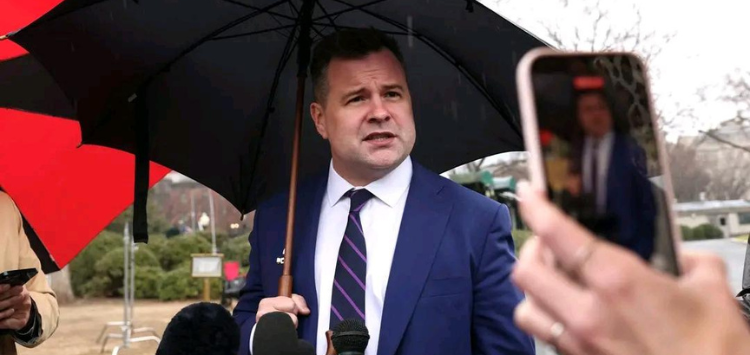
President Trump said on Monday, April 20th, that he disagreed with Energy Secretary Chris Wright’s statement that gas prices may not drop below $3 per gallon until next year. Trump made the comments in a phone interview with The Hill.
“No, I think he’s wrong on that. Totally wrong,” Trump said. When asked when he believes gas prices will drop, Trump said “as soon as this ends,” referring to the conflict with Iran.
Wright appeared on CNN on Sunday and gave a more cautious timeline because of ongoing shipping restrictions in the Strait of Hormuz.
“I don’t know. That could happen later this year. That might not happen until next year,” Wright said. He added, “But prices have likely peaked and they will start going down. Certainly, with a resolution of this conflict, you will see prices go down. Prices across the board on energy prices will go down.”
The comments from Trump and Wright show clear differences within the administration on when drivers can expect relief at the pump. Treasury Secretary Scott Bessent said last week that gas prices could reach the $3 range this summer.
Also Read: Trump Make Bold Moves to Ensure Republicans Win Midterm Election
Gas Prices Rise as Conflict Continues
The average price of gas in the United States stood at $4 per gallon on Monday morning, according to AAA data. This marks the first time prices have hit that level since 2022 following Russia’s invasion of Ukraine.
Oil prices climbed after the U.S. seized an Iranian vessel near the Strait of Hormuz on Sunday. Brent crude, the international benchmark, reached around $94 per barrel. West Texas Intermediate, the main U.S. benchmark, stood at roughly $88 per barrel.
Iran has imposed restrictions on shipping through the Strait of Hormuz, a critical waterway for global oil transport. The United States has enforced a blockade on all Iranian ports. Trump addressed the blockade directly in his interview with The Hill.
“The blockade is very powerful, very strong. They lose $500 million a day with the blockade up,” Trump said. “We control it. They don’t control it.”
Asim Munir’s Message to Trump
Reuters reported on Monday that Pakistan’s Army Chief Asim Munir told Trump the U.S. blockade on Iranian ports is a hurdle to negotiations. Trump responded that Munir “didn’t recommend anything on the blockade.”
Vice President JD Vance is set to lead the U.S. delegation to Islamabad for meetings with Pakistani and Iranian negotiators. Iran’s Foreign Ministry said on Monday that “no decision” has been made on whether to hold talks with the U.S.
Also Read: US to Refund Up to $166 Billion in Trump-Era Tariffs After Supreme Court Ruling
The rise in oil and gas prices comes as the global oil industry faces pressure from the Iran conflict. Higher energy costs affect transportation, manufacturing, and household budgets across the country.
Why this matters
The public disagreement between President Trump and Energy Secretary Wright on the timing of lower gas prices adds uncertainty at a time when American drivers are paying $4 per gallon. The conflict with Iran has directly pushed up costs through shipping restrictions and the U.S. blockade, which Trump says costs Iran $500 million daily.
Resolution of the Strait of Hormuz issues and the port blockade could bring prices down, but the path forward depends on the outcome of Vance’s talks in Pakistan and Iran’s willingness to negotiate. Until then, households and businesses continue to face elevated energy expenses with no confirmed timeline for relief.