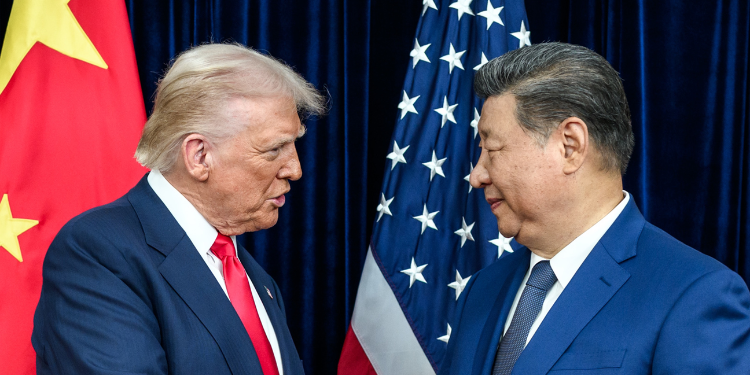
President Donald Trump has issued a sharp warning to China, saying the country will face “big problems” if it supplies weapons to Iran.
The comments, made to reporters on Saturday, April 12, before boarding a helicopter on the White House lawn, come as U.S. intelligence reports on Friday suggested Beijing may be preparing to deliver advanced air defense systems to Tehran.
“China is preparing to ship weapons to Iran,” Trump said while departing the Joint Base Andrews for Miami, Florida. “Well, if China does that, China is going to have big problems, okay?”
The president’s remarks come amid growing concerns in Washington that Beijing could deepen its military ties with Iran at a time when U.S. forces remain deployed near the Gulf.
Trump added that the United States has “totally defeated” Iran militarily and insisted that America “wins no matter what” regardless of whether Tehran agrees to a deal.
Intelligence reports lift the lid on China preparing to send arms to Iran secretly
According to CNN, U.S. intelligence assessments indicate China may send man-portable air defense systems (MANPADs) to Iran in the coming weeks.
These shoulder-fired anti-aircraft weapons are seen as critical to Iran’s efforts to rebuild its air defenses, much of which have been destroyed in U.S. and Israeli strikes.
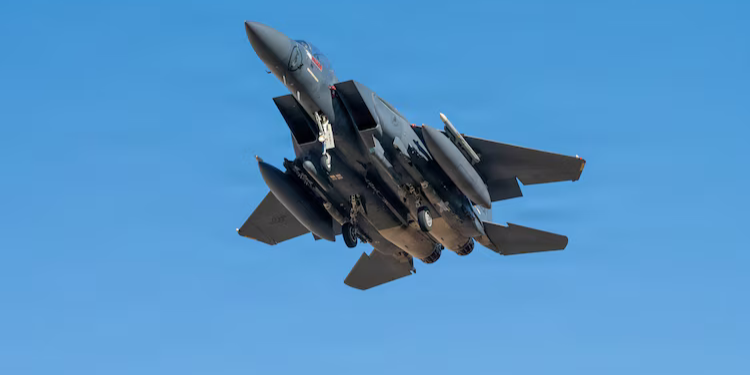
Iran’s Islamic Revolutionary Guard Corps (IRGC) has credited a “new, advanced defense system” with shooting down U.S. aircraft earlier this month, including an F‑15E fighter jet and Black Hawk helicopter.
Also Read: Trump Says US Will Start Clearing Hormuz for China and European Allies
If confirmed, it would mark the first time in more than two decades that U.S. fighter jets were downed by enemy fire.
China has, however, denied the allegations, with the Chinese Embassy in Washington saying in a statement on Friday that “China has never provided weapons to any party to the conflict.”
“We urge the U.S. to refrain from making baseless allegations, maliciously drawing connections, and engaging in sensationalism. We hope that relevant parties will do more to help de-escalate tensions,” the embassy said.
China officially stopped selling weapons directly to Iran in 2005, though it had previously supplied missiles, aircraft, and artillery.
In recent years, Beijing has remained cautious about involvement in Middle Eastern conflicts, though it played a role in nudging Iran toward accepting the current ceasefire deal.
Iran, heavily sanctioned by the West, relies on both China and Russia as strategic allies. Russia has provided intelligence support, while China has largely stayed on the sidelines until Pakistan sought its help in mediating the conflict.
Strait of Hormuz tensions
The IRGC Navy on Saturday evening issued fresh warnings about the Strait of Hormuz, declaring that any military vessels attempting to cross the Gulf waterway “will be dealt with severely.”
In a statement carried by Iran’s semi-official Tasnim news agency, the IRGC said only civilian vessels would be permitted under specific conditions.
The IRGC also denied U.S. military claims that two American vessels had transited the strait earlier in the day.
Trump, meanwhile, told reporters that Iran had “probably dropped some water mines” in the strait and that U.S. forces were “sweeping” the area.
Also Read: Netanyahu Vows to Keep Fighting Iran After Another Country Threatens Him With 4,596-Year Jail Term
He criticized NATO for not assisting in the effort, saying the U.S. would open the strait because “we have a lot of other countries in the world that do use it that are either afraid, or weak, or cheap.”
Direct talks between U.S. and Iranian delegations are continuing in Islamabad, Pakistan, at the Serena Hotel. Sources describe the discussions as entering a “critical phase,” with the main sticking point being the Strait of Hormuz.
Iranian negotiators, represented by Abbas Araghchi, Mohammad Bagheri Kani, and Parliament Speaker Mohammad Baghalibaf, are reportedly showing some flexibility.
The U.S. side includes Vice President J.D. Vance, Jared Kushner, and Witkoff. However, Iranian officials insist that American demands remain “unacceptable,” particularly regarding full access to the strait.
Tasnim reported that “this is the last chance for the Iranian team to reach a common framework in this round of talks.”
Despite the urgency, sources in Tehran say no comprehensive agreement has been reached, with significant gaps remaining over maritime security.