The U.S. Treasury Department has warned several governments, including China, that Iranian front companies processed $9 billion in transactions during 2024 through banks primarily in Hong Kong and the United Arab Emirates.
According to a letter dated April 14, 2026, the Treasury shared the information with the governments of China, Hong Kong, the UAE, and Oman. Intelligence identified banks in their jurisdictions that facilitated the activity.
“Despite the comprehensive sanctions that the United States has imposed on Iran, the regime continues to exploit the international financial system through front companies, shadow banking, deceptive practices, and permissive conduits,” Treasury said in the letter.
U.S. warns China, UAE, and others about Iranian banking
The department urged governments to work with banks under their supervision to identify Iran‑related financial activity and immediately cease such transactions.
“The Treasury Department encourages you to work with banks in your jurisdiction to identify any Iran‑related financial activity, including through front companies and other evasive tactics, and immediately cease such activity in light of the significant illicit finance risks this activity poses,” the letter said.
Also Read: China Warns US Over 50% Tariffs Linked to Iran Claims
Treasury also advised that U.S. correspondent banks had been alerted to the activity to exercise enhanced vigilance. The department warned that enforcement actions could be taken against those involved.
“These include enforcement actions for sanctions violations that may involve a U.S. person; secondary sanctions against foreign financial institutions for certain activities with Iran; and the ability to require enhanced due diligence and reporting on all transactions of a defined scope that are processed through the U.S. financial system,” Treasury said.
“Now is the time to finally disable Iran’s ability to support terrorism, threaten the region and global markets, and seek to continue its nuclear and ballistic missile program, which the U.N. has prohibited. My hope is for your swift action to identify and stop any illicit activity linked to Iran to avoid further action from Treasury.”
However, the correspondence did not include a signature.
Blockade
The warning comes as the U.S. enforces a naval blockade of Iranian ports and coastal areas. More than 10,000 U.S. airmen, sailors, and Marines are involved, supported by dozens of aircraft and a dozen warships, according to U.S. Central Command (CENTCOM).
During the first 24 hours of the blockade, six merchant vessels were directed to turn around and re‑enter Iranian ports.
No ships successfully passed the blockade, CENTCOM said. Officials reported that five of the ships were carrying oil. No shots were fired, and no ships boarded.
Also Read: Trump Pulls Plug on Iranian Oil Sales After U.S. Naval Blockade
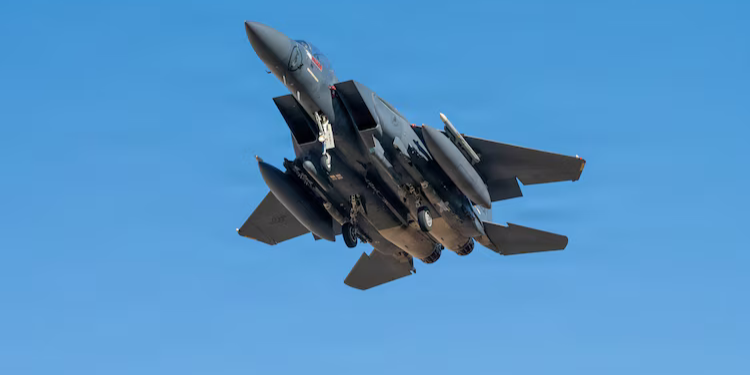
The U.S. military is using more than 100 fighter and surveillance aircraft and over a dozen ships to enforce the blockade.
Officials said the plan is to interdict ships as they enter the Gulf of Oman after transiting the Strait of Hormuz, rather than block passage through the strait itself. Ships are identified using surveillance systems and directed by radio to return to Iranian ports.
China has criticized the blockade. Foreign Ministry spokesperson Lin Jian called it “dangerous and irresponsible,” warning that it would escalate tensions.
“We urge relevant parties to honor the ceasefire agreement, stick to the direction of peace talks, and take concrete actions to de‑escalate the situation so that normal traffic via the Strait will be able to resume as soon as possible,” Lin said.
President Donald Trump told the New York Post that talks with Iran could resume in Pakistan within days. “Something could be happening over the next two days, and we’re more inclined to go there,” Trump said, referring to Pakistan’s army chief Field Marshal Asim Munir.