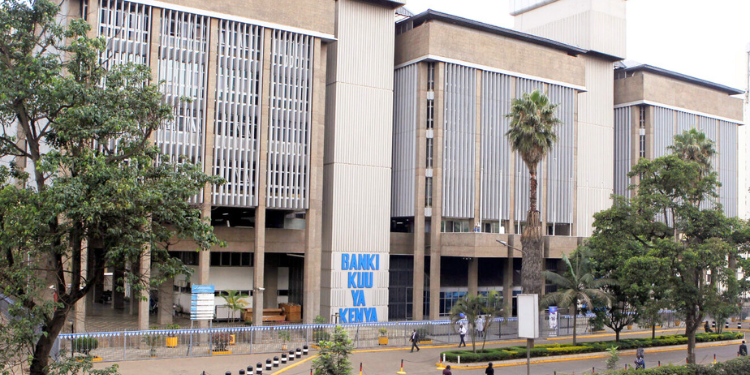

The Kenya Bankers Association (KBA) has called on the Central Bank of Kenya (CBK) to retain the benchmark rate at its current level when the Monetary Policy Committee (MPC) meets on Tuesday, February 10, 2026.
The bankers argue that holding the rate steady will help banks complete the shift to the new risk-based lending framework while supporting economic growth.
In a research note released ahead of the meeting, the banking industry says current economic conditions support keeping the policy rate unchanged.
They argue that a policy shift now would force fresh repricing of loans, increase uncertainty for customers, and slow credit uptake.
Interest Rates Still Adjusting
Commercial lending rates have continued to decline following earlier policy easing by the CBK.
KBA says the full impact of previous cuts is still working its way through the economy.
Private-sector credit has begun to recover, but banks say the rebound remains fragile.
Non-performing loans are still high in key sectors, limiting banks’ appetite for aggressive lending.
Banks say keeping the benchmark rate unchanged would give lenders time to stabilise their loan books under the new pricing framework, while shielding borrowers from sudden increases in loan repayments.
External Gains Reduce Pressure on MPC
Kenya’s improving external position has strengthened the case for policy stability ahead of the Monetary Policy Committee meeting.
Banks say stronger foreign exchange inflows and a narrower current account deficit have reduced pressure on the Central Bank of Kenya to adjust the benchmark rate.
Diaspora remittances have remained strong, providing a steady source of foreign currency and supporting the shilling.
Export earnings have also improved, easing demand for dollars.
As a result, foreign exchange reserves remain at comfortable levels, giving the CBK a buffer against external shocks and global market volatility.
Also Read: Ruto Announces Relocation of Dandora Dumpsite in Major Nairobi Transformation
Banks argue that the stable shilling has helped limit imported inflation, especially for fuel and manufactured goods.
With external risks contained and inflation within target, the banking industry says there is no urgent need for a policy shift, reinforcing calls for the MPC to retain the Benchmark Rate.
Kenya’s Foreign Exchange Reserves Remain Strong
Kenya’s foreign exchange reserves remain at comfortable levels, easing pressure on the CBK.
CBK data shows reserves stood at about USD 12.4 billion (Ksh1.597 trillion) in early February 2026, equivalent to 5.3 months of import cover, well above the statutory minimum of four months.
Diaspora remittances totaled over USD 5 billion (Ksh644 billion) in 2025, making them Kenya’s largest source of foreign exchange and a key buffer for the shilling.
Treasury bill auctions in early February were heavily oversubscribed, with bids more than double the amount on offer, signaling strong investor confidence.
Diaspora remittances remained a key support in 2025, totaling just over USD 5 billion for the year.
Also Read: Kenyan Star Angella Okutoyi Launches Fundraiser as She Completes Studies in Alabama
Banks say these figures show the economy has enough external cushioning, giving the MPC room to retain the Benchmark Rate.
Lessons From Past MPC Decisions
Banks say their call for keeping the policy rate unchanged is based on lessons from past decisions by the Monetary Policy Committee.
In earlier periods, sudden changes in interest rates led to confusion in the credit market.
When rates were raised quickly, banks had to reprice loans, making borrowing more expensive and reducing demand for credit.
This also increased repayment pressure for households and businesses.
On the other hand, past rate cuts have shown that it takes time for lower interest rates to fully affect the economy, as banks adjust cautiously, especially when bad loans remain high.
Follow our WhatsApp Channel and X Account for real-time news updates.